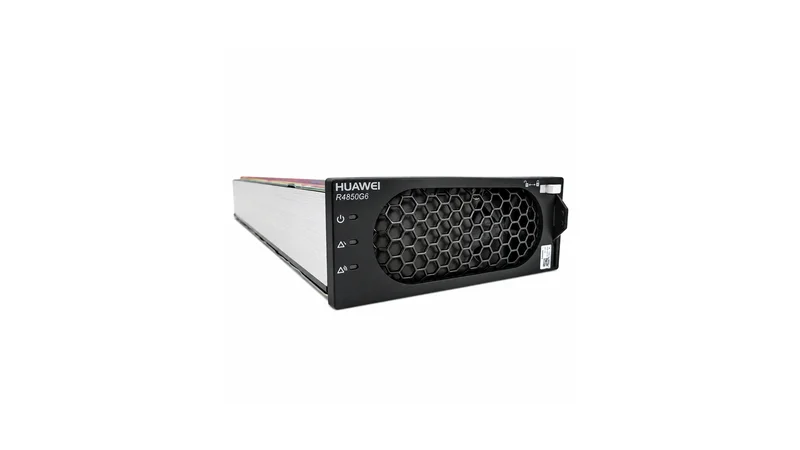
Power Conversion Topology & 98% Efficiency Benchmark
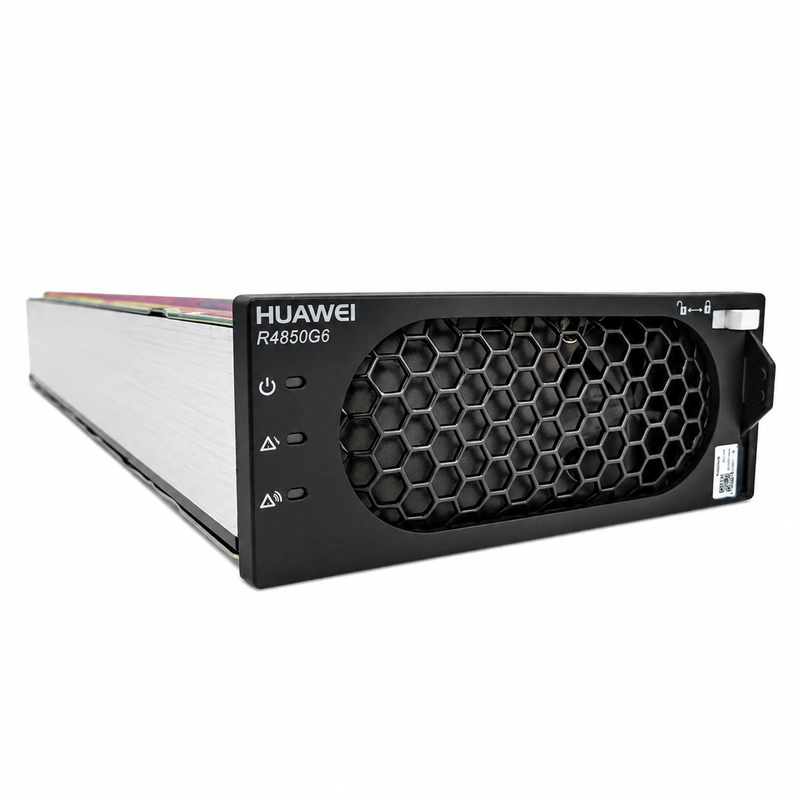
The Huawei R4850G6 redefines high-density telecom power conversion by transitioning from legacy silicon-based hard-switched architectures to an advanced digital LLC resonant topology utilizing wide-bandgap (WBG) gallium nitride (GaN) and silicon carbide (SiC) semiconductors. Operating in tandem with an interleaved continuous conduction mode (CCM) active power factor correction (PFC) front end, the module achieves a certified peak conversion efficiency of greater than or equal to 98.0%. This represents a monumental engineering milestone compared to standard 96% Platinum-rated units, effectively slashing internal thermal waste dissipation by 50% under equivalent 3000W load conditions. The primary bridge utilizes zero-voltage switching (ZVS) across the entire operating envelope, while the secondary stage employs low-loss active synchronous rectification driven by ultra-fast digital control algorithms.
By curtailing thermal losses from approximately 125W in conventional 96% rectifiers down to less than 61W in the R4850G6 at full load, system integrators can dramatically downscale site climate control footprints. The reduced parasitic junction heating within the power train yields lower junction-to-case thermal resistance (Rth_jc), directly suppressing semiconductor degradation mechanisms such as electromigration and gate oxide wear out. Furthermore, the input power factor exceeds 0.99 at rated loads, paired with a total harmonic distortion (THD) of less than or equal to 5% that strictly complies with IEC 61000-3-2 harmonic emissions limits, preventing reactive power penalties and upstream transformer overheating in dense telecom central offices.
Peak conversion efficiency verified at ≥ 98.0% between 30% and 80% rated load profiles
Interleaved active PFC topology delivering PF ≥ 0.99 and THD ≤ 5% at rated operating voltage
Over 50% internal thermal dissipation reduction compared to standard 96% efficiency rectifiers
Input Grid Resilience & Voltage Derating Dynamics
Telecommunications infrastructure increasingly deploys into fringe grid zones plagued by severe brownouts, voltage spikes, and phase imbalance. The R4850G6 addresses these hostile AC operating realities through an ultra-wide continuous single-phase operating input window of 85V AC to 300V AC across 45Hz to 65Hz. The module maintains full rated 3000W output power across the nominal utility band from 176V AC to 300V AC. When grid stability degrades below 176V AC, an integrated multi-tiered digital control loop initiates graceful linear power derating down to 85V AC, sustaining 40% to 50% DC load support rather than tripping off-line like standard legacy power modules.
Catastrophic utility anomalies are counteracted by hardened front-end circuit design. The R4850G6 features sustained input overvoltage survival ratings up to 415V AC phase-to-neutral, ensuring module integrity during neutral-loss incidents on three-phase four-wire distributions. Transient protection combines heavy-duty metal oxide varistors (MOVs) and gas discharge tubes capable of absorbing differential-mode surges up to 3kV and common-mode surges up to 5kV (8/20μs pulse standard per ITU-T K.21 and IEC 61000-4-5). An automated undervoltage/overvoltage hysteresis circuit prevents rapid on/off cycling during grid edge instability, protecting both the DC busbar and connected downstream radio equipment.
Uncompromised 3000W (50A continuous at 53.5V DC default float) from 176V AC to 300V AC
Controlled linear power derating down to 85V AC to prevent premature battery reserve discharge
415V AC sustained overvoltage survival envelope with 3kV/5kV surge suppression architecture
Digital Telemetry, Precision Current Sharing & CAN Bus Architecture
At the core of the Huawei R4850G6 is a high-speed Digital Signal Processor (DSP) coordinating primary-side resonant timing, secondary synchronous rectification, and closed-loop feedback telemetry at microsecond execution intervals. This fully digital architecture eliminates the analog drift, thermal gain variation, and potentiometer aging common to legacy rectifiers. It enables active autonomous current sharing with precision better than ±3% across paralleled modules on a unified -48V DC busbar, without requiring dedicated external load-share analog interconnections. This active balancing prevents individual module thermal overstress when scaling subracks to hundreds of amperes.
The integrated digital telemetry operates over an isolated high-speed Controller Area Network (CAN) bus physical layer, communicating natively with Huawei SMU02B, SMU02C, and third-party telecom supervisory controller units. The CAN link provides bidirectional, non-blocking telemetry including real-time AC input voltage, input frequency, DC output voltage, individual module phase currents, internal heatsink thermal maps, and fault flags. This granular telemetry enables predictive maintenance frameworks, where sub-millivolt output trimming is dynamically controlled from the central supervisory controller to coordinate temperature-compensated battery float and boost charging regimens.
Digital DSP inner/outer regulation loops delivering active parallel current sharing < ±3%
Native CAN bus communication interface enabling full telemetry and remote firmware diagnostics
Dynamic voltage trimming range from -42V DC to -58V DC with -59V DC overvoltage latching
Thermal Architecture, Acoustic Optimization & Reliability Standards
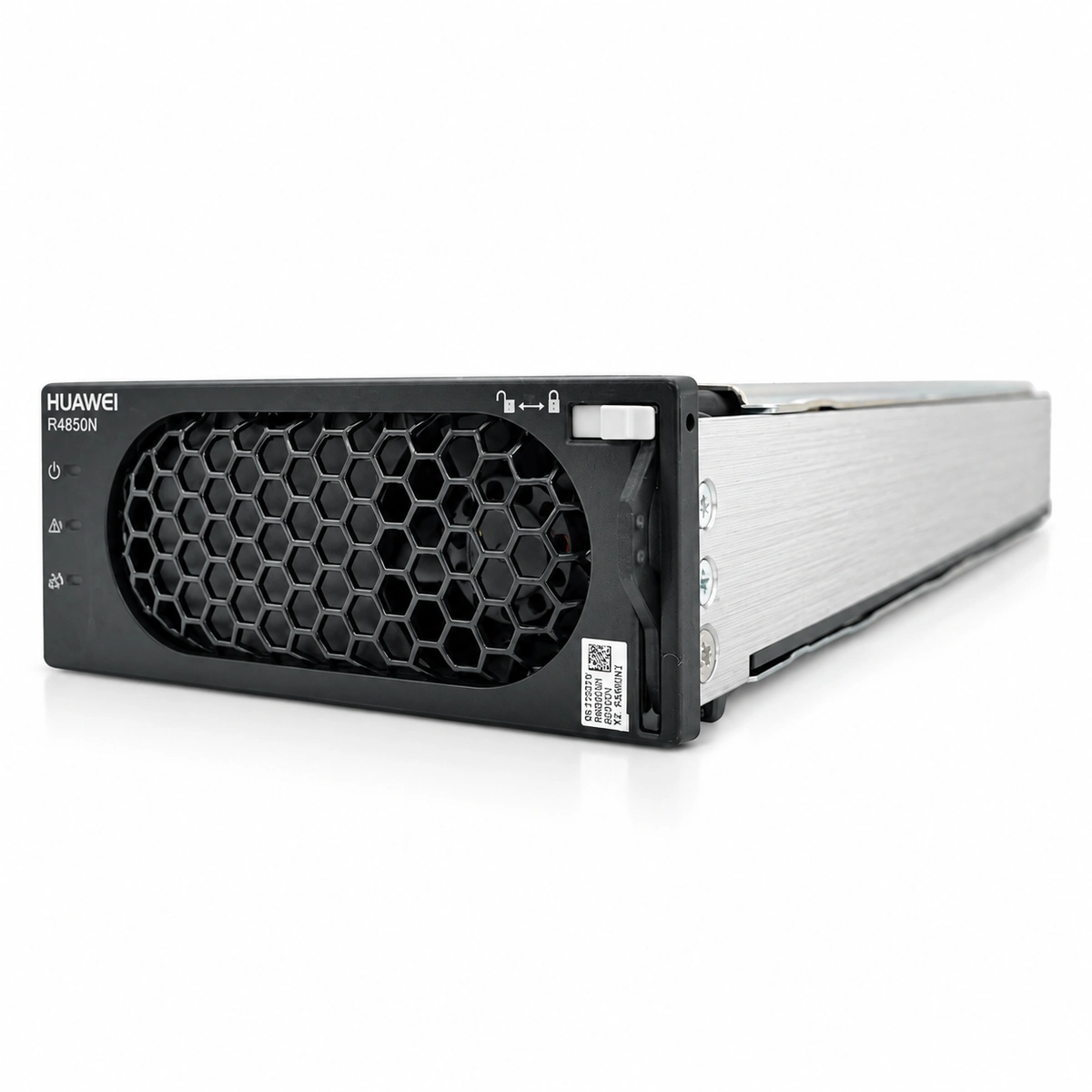
The R4850G6 packages 3000W of power into a compact 1U form factor (40.8mm H x 105mm W x 281mm D) weighing under 1.7kg, resulting in a volumetric power density exceeding 42 W/in³. Thermal management relies on an engineered front-to-back straight-through wind tunnel chassis driven by an intelligent, variable-speed brushless DC (BLDC) fan. Controlled by internal DSP-managed temperature probes, the fan operates along a smooth pulse-width modulation (PWM) curve that balances junction cooling with acoustic mitigation. Under typical telecom office thermal baselines (< 30°C at 50% load), the module operates at an acoustic noise emission of ≤ 45 dBA, satisfying strict environmental noise ordinances in urban street-cabinet installations.
Carrier-grade reliability requires continuous operation under demanding climate categories. The R4850G6 delivers un-derated 3000W output continuously across an operating ambient temperature envelope of -40°C to +55°C. From +55°C to +75°C, the module executes intelligent thermal foldback derating to protect critical silicon components while preserving site load survivability. Conformal-coated internal multilayer printed circuit boards (PCBs) prevent moisture condensation and airborne particulate bridging in high-humidity tropical deployments. The overall platform delivers a verified Mean Time Between Failures (MTBF) exceeding 500,000 hours at Telcordia SR-332 benchmark standards.
Full rated 3000W continuous output up to +55°C, with operational derating extending to +75°C
Intelligent PWM-controlled BLDC fan maintaining noise emissions ≤ 45 dBA in typical profiles
Carrier-grade MTBF > 500,000 hours with conformal PCB coating for tropicalized deployment
Subrack Ecosystem Integration & Dynamic Energy Optimization
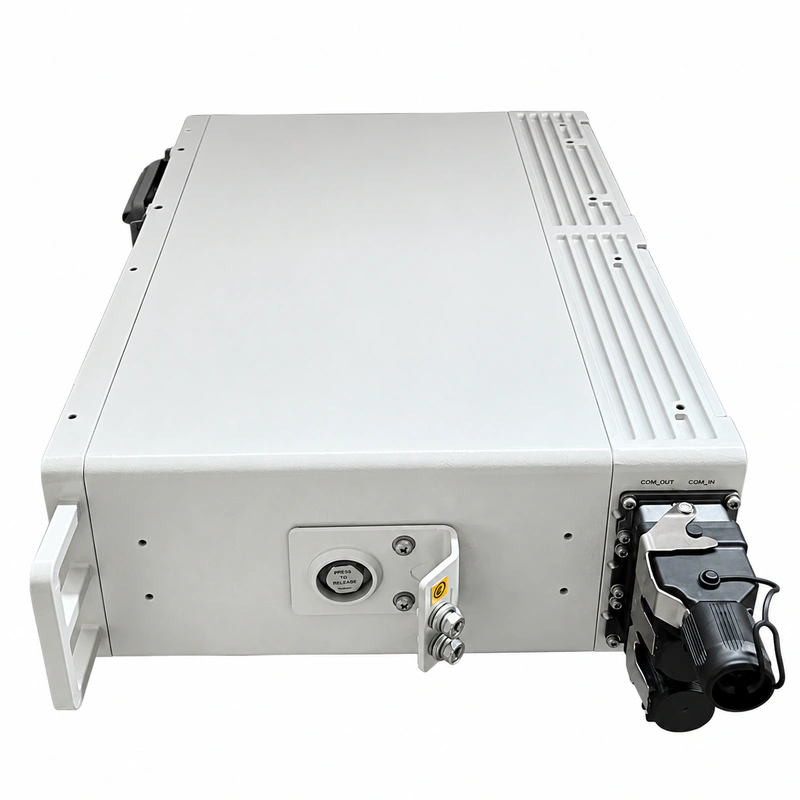
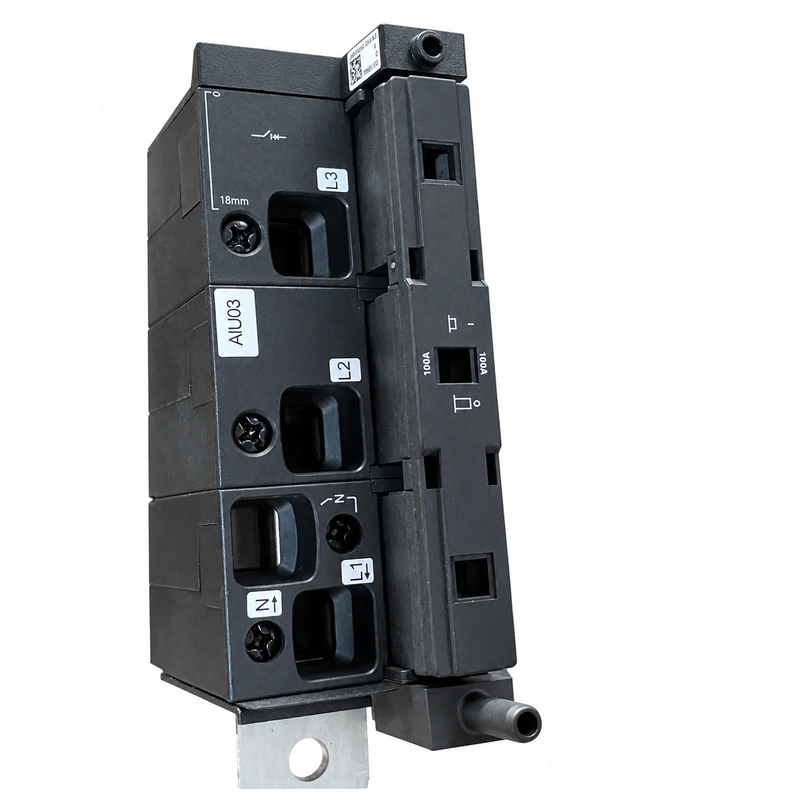
System-level efficiency requires more than component-level benchmarks; it demands intelligent platform integration. The Huawei R4850G6 features a universal hot-pluggable rear edge-connector integrating high-current DC blades, AC pin sockets, CAN bus lines, and module detection interlocks. This physical architecture provides native drop-in compatibility across the entire spectrum of Huawei embedded power subracks, including the ETP48100, ETP48200, ETP48300, ETP48400, and ETP48600 series, as well as macro-shelves such as the TP48600B and MTS9000 modular power cabinets.
When deployed in multi-module configurations, the R4850G6 supports intelligent system-level hibernation cycling orchestrated by the SMU02 supervisory system. Telecom traffic profiles exhibit significant diurnality: during off-peak night hours, aggregate site current requirements can plummet below 20% of rated capacity, which historically drops legacy power systems into low-efficiency operating regimes. The SMU02 controller monitors total bus current and commands redundant R4850G6 modules into deep micro-watt sleep modes, keeping active rectifiers loaded in their optimal 40% to 75% efficiency zones. This dynamic module hibernation guarantees that real-world, aggregate site conversion efficiency consistently exceeds 97.5% across the full 24-hour load curve.
Seamless hot-plug integration into Huawei ETP48100 through ETP48600 and MTS cabinet series
Automated supervisory hibernation cycling preserving > 97.5% site-level composite efficiency
Zero-downtime hot-swap capability eliminating field replacement operational interruptions
Carrier-Grade Procurement, Quality Verification & TCO Lifecycle Strategy
Securing genuine, top-tier power hardware is paramount to avoiding site outages and cascading equipment failures. As legacy networks modernize for 5G Massive MIMO, swapping out aging 92% to 96% efficient rectifiers with the R4850G6 provides a demonstrable Return on Investment (ROI) within 18 to 24 months solely through electrical OPEX savings and reduced cabinet air-conditioning loads. Procurement specifications must mandate rigorous authenticity verification, including algorithmic checks of factory-assigned MAC/serial codes against manufacturing databases and physical inspection of laser-etched heatsink serials to combat counterfeit or re-screened units in the secondary supply chain.
Quality assurance protocols require that all procurement lots undergo automated full-load burn-in testing on regenerative electronic load banks to validate thermal stability, transient recovery profiles, and CAN communication responsiveness prior to shipping. Global telecommunications network operators, turnkey contractors, and regional infrastructure providers can engage the engineering supply team at RICEWIND for certified inventory, factory-direct test records, and comprehensive logistics support. For volume procurement allocations, project pricing, and specialized power shelf customization, contact the official RICEWIND technical procurement team directly via Email at lee@ricewind.com or by Phone/WhatsApp at +86 17621197907.
Mandatory 100% full-load burn-in verification on automated electronic load banks prior to shipment
Hardware authenticity validation via factory serial databases and internal component profiling
Direct engineering procurement contact: lee@ricewind.com and Phone/WhatsApp +86 17621197907
Engineering Procurement & Technical Desk
For technical datasheets, custom power topology design, or volume export quotations, reach out to HEFENGQI engineers.