Section 1: Architectural Evolution: 2U High-Density Form Factor & Space Economics
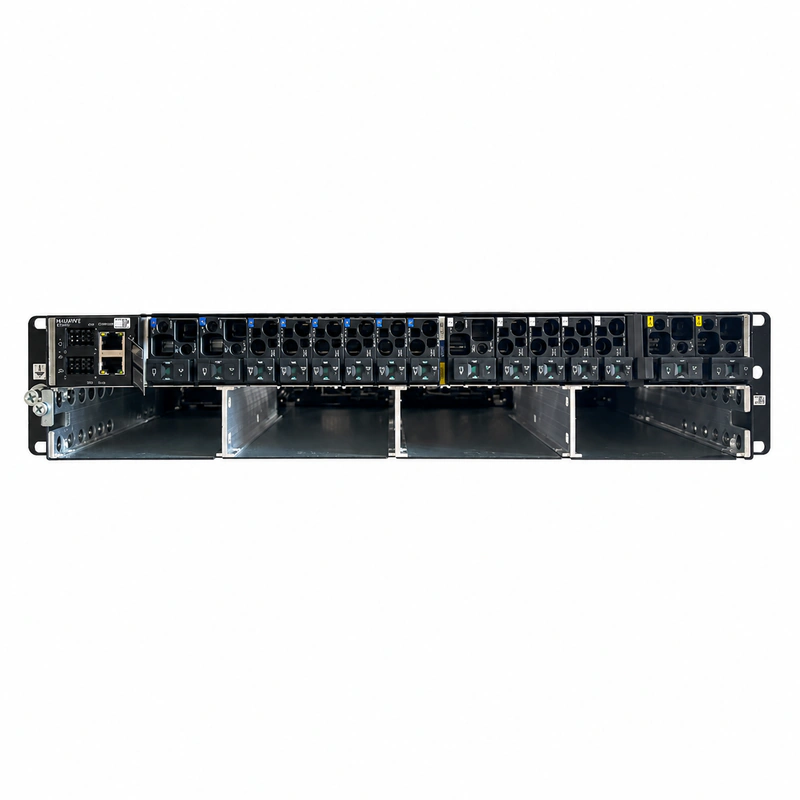
The shift toward dense massive-MIMO 5G rollouts and space-constrained outdoor telecommunication shelters necessitated a fundamental paradigm shift in primary DC power conversion. Legacy -48VDC telecom plants traditionally required 5U to 9U of rack real estate to deliver 200A capacities, consuming valuable vertical pitch otherwise reserved for optical line terminals (OLTs), baseband units (BBUs), and dense wavelength division multiplexing (DWDM) gear. The Huawei ETP48200-C2A6 subrack platform circumvents these spatial bottlenecks by concentrating a full 200A (12 kW at -48VDC) delivery envelope within an ultra-compact standard 19-inch 2U profile, measuring precisely 88.9 mm in height, 482.6 mm in width, and 330 mm in depth. With an unpopulated chassis mass of less than 10 kg, it achieves an exceptional volumetric power density exceeding 14.8 W/cubic inch, allowing operators to deploy high-capacity DC power into shallow-depth outdoor integrated cabinets that cannot accommodate legacy 450 mm to 600 mm subracks.
Structurally, the chassis is fabricated from high-tensile, corrosion-resistant galvanized sheet steel with optimized internal ribbing to withstand severe structural torsion and seismic shock profiles matching ETSI EN 300 019-2-4 Class 4.1 requirements. The mechanical layout incorporates a horizontal partition dividing the front face into two functional zones: the left quadrant houses four high-density 1U x 1U rectifier bays alongside a dedicated SMU02C controller slot, while the right quadrant integrates the comprehensive AC input switchgear, DC output distribution arrays, and dual-tier disconnection contactors. Thermal isolation barriers run between the high-temperature power electronics bay and the DC distribution compartment to prevent heat conduction from localized copper busbars into sensitive supervisory digital control logic.
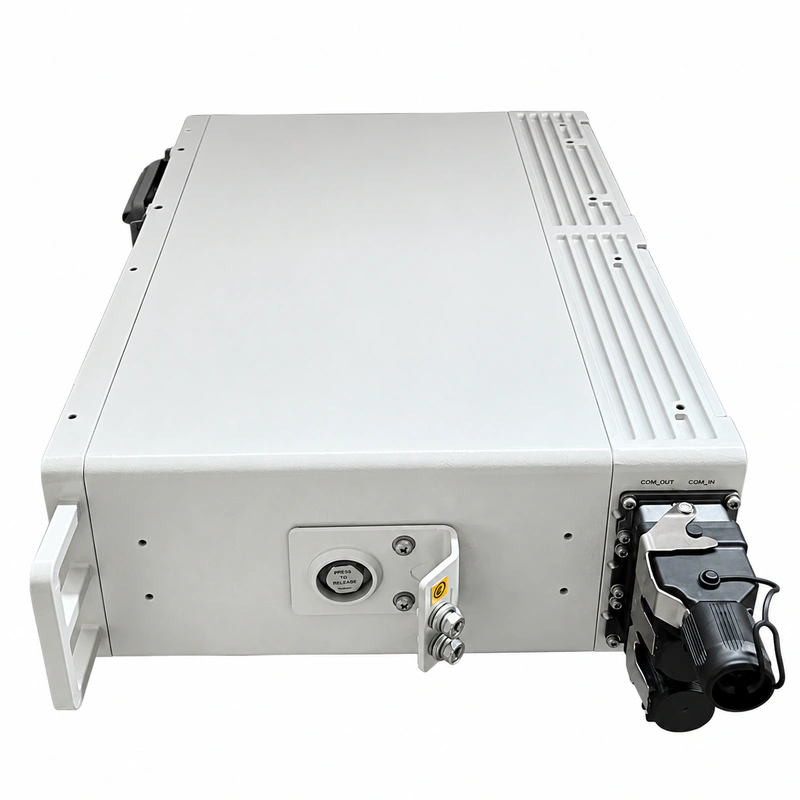
From an installation and maintenance ergonomics perspective, the ETP48200-C2A6 employs a strict front-access, front-cabling philosophy. Conventional power plants frequently demand rear access for battery connection terminations, grounding bus tie-ins, and AC feed routing—an architectural flaw that forces operators to specify deep, swing-frame enclosures. In the ETP48200-C2A6, all incoming AC terminals, DC load branches, dual battery lugs, alarm dry-contact headers, and communication buses are fully accessible from the front plane. Forced cooling utilizes a straight front-to-back airflow channel with optimized intake perforations designed to eliminate thermal eddy currents, enabling seamless drop-in integration into sealed outdoor cabinets featuring internal air-to-air heat exchangers or thermoelectric cooling systems.
Section 2: Rectifier Scalability & High-Efficiency Parallel Conversion
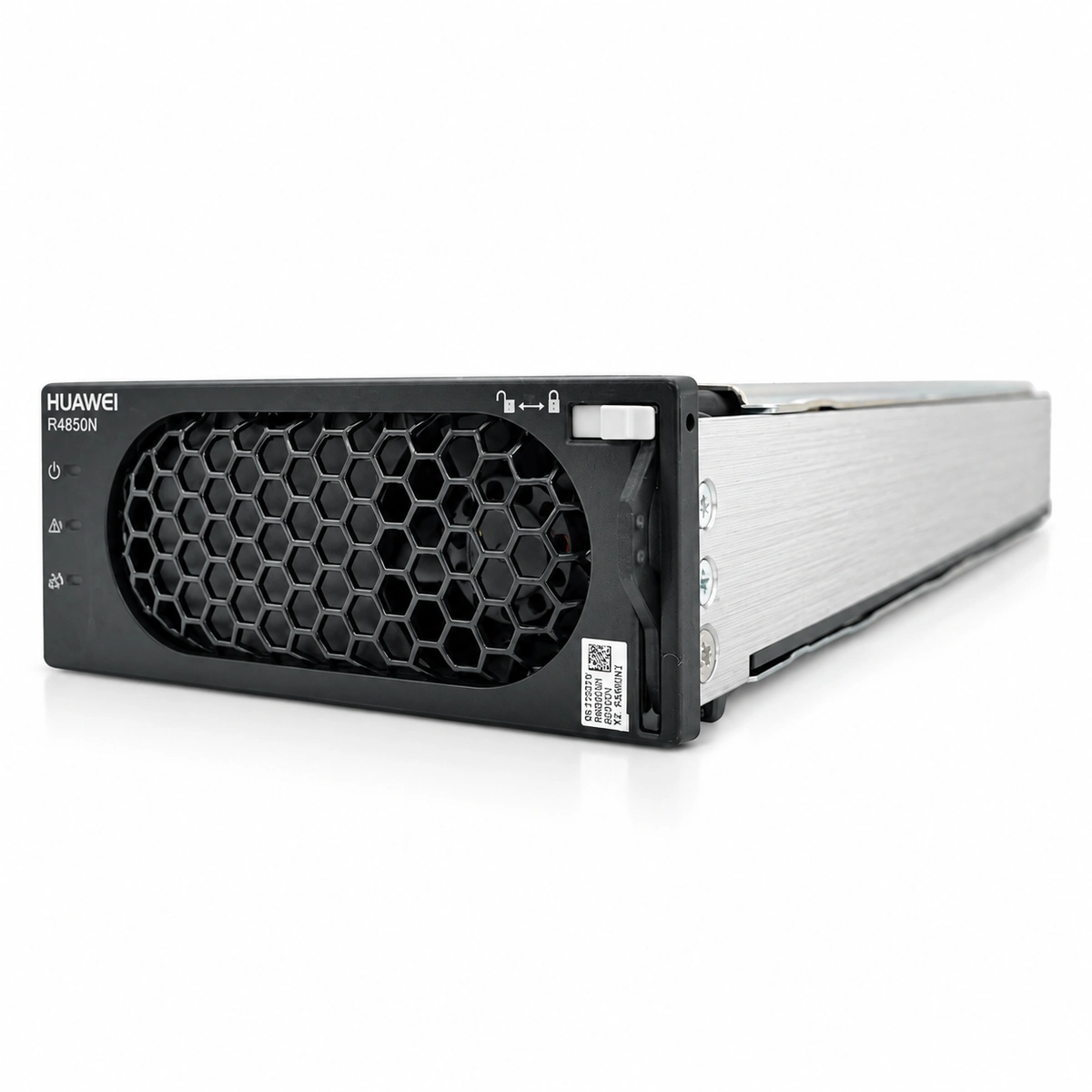
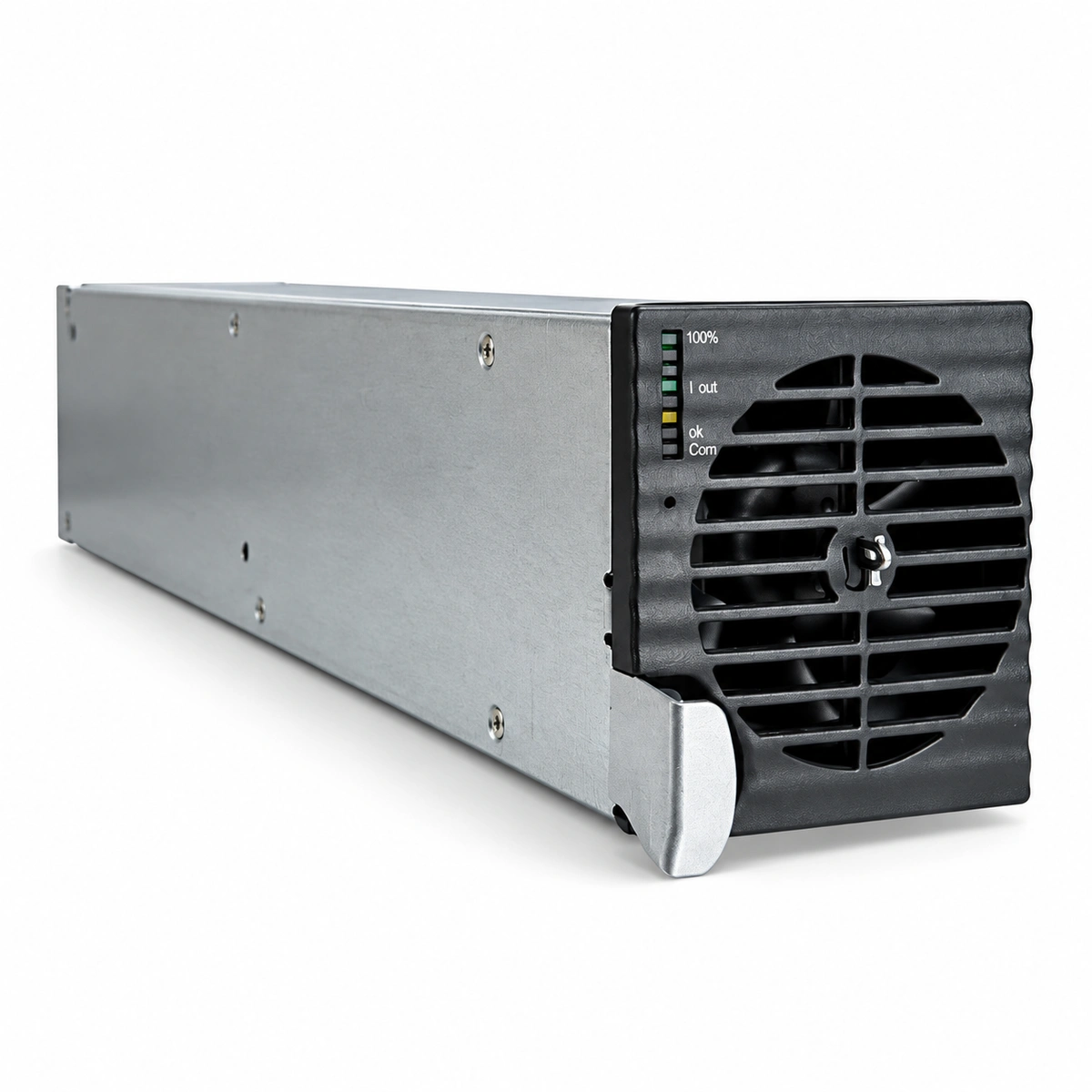
The core conversion engine of the ETP48200-C2A6 comprises up to four hot-swappable 1U Huawei 50A switch-mode rectifiers, typically populated with the ultra-efficient R4850G2 module, standard R4850N1, or specialized R4850G6 units. Operating in an active parallel N+1 or N+2 configuration, four R4850G2 modules provide 200A continuous output current at nominal -48VDC (adjustable from -42VDC to -58VDC via software commands from the SMU02C). The R4850G2 employs an advanced interleaved totem-pole power factor correction (PFC) stage coupled with a full-bridge LLC resonant DC-DC converter utilizing high-frequency digital signal processing (DSP) control. This architecture yields a peak thermodynamic conversion efficiency of 96.5% and maintains an efficiency profile exceeding 95.0% across a wide load band between 20% and 90% of rated capacity, drastically minimizing parasitic thermal dissipation inside outdoor sealed enclosures.
Active digital current sharing across the rectifier cluster is governed over a dedicated internal Controller Area Network (CAN) bus. The SMU02C continuously polls each rectifier's output parameters, dynamically adjusting local pulse-width modulation (PWM) setpoints to ensure an inter-module load imbalance of less than +/- 3% of the nominal current rating across the entire operational range. This prevents individual module thermal over-stress and ensures balanced MTBF degradation across all semiconductors. Dynamic response to step load transients is exceptional: when subjected to a load step change from 50% to 100% or 100% to 50%, the output voltage stabilizes within 200 microseconds, with dynamic overshoot and undershoot strictly constrained to within +/- 1.0% of the nominal voltage.
The AC input envelope is engineered to survive volatile utility grids commonly encountered in edge topologies. The system supports single-phase 220/230VAC (L-N-PE) and three-phase 380/400VAC (L1-L2-L3-N-PE) topologies without internal hardware reconfiguration. The operating voltage window spans 85VAC to 300VAC. Between 176VAC and 290VAC, the rectifiers output 100% of their rated power (3000W per R4850G2). Below 176VAC, an internal microcontroller executes a linear derating algorithm to safeguard the primary PFC boost stage from destructive input currents: P_out(V_in) = P_rated * ((V_in - 85) / (176 - 85)), guaranteeing continuous, brownout-free operation down to 85VAC where the module reliably outputs approximately 40% (1200W) of rated load. Built-in overvoltage protection automatically clamps the module if input spikes cross 300VAC, with self-recovery hysteresis once voltage normalizes below 290VAC.
Section 3: Intelligent Power Distribution & Two-Stage Disconnection Topology
DC power distribution inside the ETP48200-C2A6 is architected around absolute operational survivability, featuring dual battery interface branches alongside a dedicated two-stage low voltage disconnection scheme. The battery subsystem interfaces via two heavy-duty 125A DC miniature circuit breakers (MCBs), allowing direct integration with two parallel strings of Valve-Regulated Lead-Acid (VRLA) batteries or modern smart Lithium Iron Phosphate (LiFePO4) energy storage modules. Current shunts integrated directly on the negative return path provide continuous high-precision bidirectional measurement of charge and discharge currents, critical for accurate State of Charge (SOC) computation and thermal runaway mitigation during high-rate replenishment.
The load distribution segment is physically separated into two distinct tiers controlled by high-capacity magnetic latching contactors: Load Low Voltage Disconnection (LLVD) and Battery Low Voltage Disconnection (BLVD). The LLVD sub-bus accommodates non-critical and secondary communication hardware via two 63A MCBs and two 32A MCBs. During a catastrophic AC mains failure, the battery bank discharges to sustain the total load. Once the battery terminal voltage decays to the software-configured LLVD threshold (typically -43.2VDC to -44.0VDC for VRLA, or 46.0VDC for 15-cell LiFePO4), the SMU02C disengages the LLVD contactor. This sheds power to energy-intensive non-essential equipment such as auxiliary air handlers, secondary microwave links, and high-frequency 5G radio frequency units (RRUs), immediately slashing the site's total current drain by up to 60% to 75%.
The remaining critical reserve is channeled entirely through the BLVD bus, which feeds core transport systems, optical transponders, and BBU control modules via two 16A MCBs and one 10A MCB. By shedding non-essential loads at the LLVD setpoint, the operational autonomy of the core transmission link is extended by a factor of 3x to 5x. If utility power is not restored and the battery continues discharging to its absolute safe cutoff threshold (typically -40.5VDC to -42.0VDC for VRLA), the SMU02C trips the BLVD contactor. This complete battery isolation prevents catastrophic cell polarity reversal, deep-discharge chemical degradation, and fire hazards. Once the AC mains recovers, the SMU02C executes a soft-start sequence, recharging the batteries while systematically reconnecting the BLVD and LLVD contactors under strict inrush-current dampening controls.
Section 4: Central Supervisory Architecture: SMU02C Network Telemetry & Smart Battery Management
The nerve center of the ETP48200-C2A6 is the 1U hot-swappable SMU02C supervisory controller. Outfitted with an intuitive multi-line back-lit LCD interface, status LEDs (Run, Alarm, Fault), and an integrated 4-button navigational keypad, it allows full commissioning, diagnostic retrieval, and parameter adjustment without requiring an external service laptop. For machine-to-machine and network integration, the SMU02C provides an industrial connectivity array comprising one Fast Ethernet port (10/100Base-TX RJ45), two RS485 communication serial channels, a dedicated internal CAN bus for rectifier orchestration, a USB host interface for configuration cloning and offline firmware updates, and eight configurable digital dry-contact input/output terminal blocks for passive environmental integration.
Northbound OSS integration is implemented via standardized carrier protocols, including SNMPv1, SNMPv2c, and high-security SNMPv3 with SHA-based authentication and AES-256 payload encryption, ensuring seamless interoperability with third-party network management systems as well as Huawei's NetEco energy management platform. The SMU02C embeds an HTTPS-accessible web server delivering dynamic real-time telemetry, historical log graphs, active alarm visualization, and relay mapping. Industrial IoT and utility SCADA environments can simultaneously extract telemetry through Modbus-RTU over RS485 or Modbus-TCP over Ethernet, facilitating continuous remote visibility of phase voltages, active power, total load current, rectifier operating temperatures, and sub-circuit breaker trip alarms.
Battery health management implemented within the SMU02C firmware utilizes advanced electro-chemical compensation algorithms. For lead-acid storage, the controller deploys continuous temperature compensation: V_comp = V_float_nominal - (T_cell - 25°C) * N * k, where N is the cell count and k is the configurable temperature coefficient (typically 3.0 to 5.0 mV/°C/cell), systematically preventing thermal runaway in unconditioned desert enclosures and sulfation in sub-zero environments. For lithium battery banks, the SMU02C communicates directly with the battery management system (BMS) over RS485/CAN, extracting real-time cell-level SOC, State of Health (SOH), individual cell voltages, and thermal gradients. Automated battery capacity tests can be scheduled during off-peak traffic hours, whereby the controller marginally lowers rectifier output voltage to force a controlled partial battery discharge, benchmarking actual discharge curves against factory degradation maps to flag aged blocks long before catastrophic cell failure occurs.
Section 5: Mission-Critical Deployment Paradigms & Harsh Environmental Durability
Engineered to withstand rigorous operational environments, the ETP48200-C2A6 is rated for continuous full-capacity deployment across an industrial temperature range from -40°C to +65°C. At temperatures exceeding +55°C, intelligent thermal protection routines initiate controlled thermal derating without dropping load power abruptly, preventing site outages during extreme heat waves in non-air-conditioned outdoor base station cabinets. The internal PCBA assemblies are treated with thick, industrial-grade conformal coatings that meet IPC-CC-830 standards, delivering complete protection against Class 3C3 atmospheric contaminants, including hydrogen sulfide, sulfur dioxide, chlorine salts, conductive particulate settlement, and condensing relative humidity levels up to 95%.
Lightning strikes and transient surges represent the single largest cause of edge telecom site failures. To counter severe transient line events, the ETP48200-C2A6 integrates multi-stage, high-energy surge protection devices (SPD) directly within the 2U footprint. The AC input is shielded by an integrated Class C/Class D combined surge arrester rated for a nominal discharge current (In) of 20kA (8/20 microseconds) and a maximum discharge current (Imax) of 40kA (8/20 microseconds) in both common and differential modes. The -48VDC distribution bus is decoupled through a parallel 10kA/20kA DC SPD. Both SPDs feature visual degradation status indicators and electrical micro-switches tied to the SMU02C alarm processor, immediately dispatching critical telemetry traps to the network operating center (NOC) upon sacrificial element depletion.
Primary real-world deployment topologies include 4G/5G macro cell towers where power lines share towers with active massive-MIMO antennas, remote microwave transmission repeaters positioned on exposed mountain summits, and Fiber-to-the-Home (FTTH) central offices driving high-density OLT shelves. Furthermore, the unit is widely deployed across smart electrical utility substations as an auxiliary communications power bank, complying fully with IEC 61000-4 electromagnetic compatibility (EMC) standards for immunity against electrostatic discharges (ESD), electrical fast transients (EFT), and power-frequency magnetic fields generated by high-voltage switchgear switching operations.
Section 6: Procurement Due Diligence, Genuine Hardware Verification & 10-Year TCO Analysis
Given the prevalence of gray-market, refurbished, and counterfeit power equipment in global supply chains, rigorous engineering procurement verification protocols must be executed prior to site commissioning. Genuine Huawei ETP48200-C2A6 chassis must exhibit laser-etched OEM manufacturing data matrices, factory QA pass holographic seals across chassis split seams, and high-precision zinc-plated sheet stamping free of manual shearing abrasions. Rectifier modules must be audited through the SMU02C controller interface: genuine R4850G2 modules broadcast verified electronic serial numbers, authenticated hardware revision codes, and cryptographic firmware signatures over the internal CAN bus that register precisely in Huawei NetEco management databases. Any discrepancy in module telemetry or missing digital certificates signals counterfeit or gray-market modified hardware.
A 10-year Total Cost of Ownership (TCO) financial model clearly validates the selection of the high-efficiency ETP48200-C2A6 system over lower-tier, low-efficiency alternatives. When operating a continuous 100A (-48VDC, 5.35 kW) average load at a standard macro site, upgrading from a legacy 90% efficient power system to an ETP48200-C2A6 outfitted with 96.5% efficient R4850G2 rectifiers slashes wasted energy dissipation from 594 Watts to just 194 Watts per site. This 400W delta yields annual direct electrical savings of approximately 3,504 kWh. In an outdoor cabinet cooled by an active air conditioner with a Coefficient of Performance (COP) of 2.5, this energy reduction avoids an additional 1,401 kWh of cooling load annually. At an average enterprise industrial tariff of $0.15/kWh, the total annual OPEX reduction equates to approximately $735 per site, fully amortizing the initial capital cost of the subrack within 24 to 30 months.
System reliability metrics are equally compelling: with a certified Mean Time Between Failures (MTBF) exceeding 450,000 hours (over 51 years continuous) per rectifier module at 25°C, field maintenance dispatches are virtually eliminated. For certified procurement, genuine factory-warranted stock allocation, and complete technical systems integration including custom DC breaker provisioning, contact the official engineering distribution team at RICEWIND. Technical inquiries, subrack customization requests, and project quotation tenders should be directed to the technical sales desk via email at lee@ricewind.com or via Phone / WhatsApp / WeChat at +86 17621197907.
Engineering Procurement & Technical Desk
For technical datasheets, custom power topology design, or volume export quotations, reach out to HEFENGQI engineers.