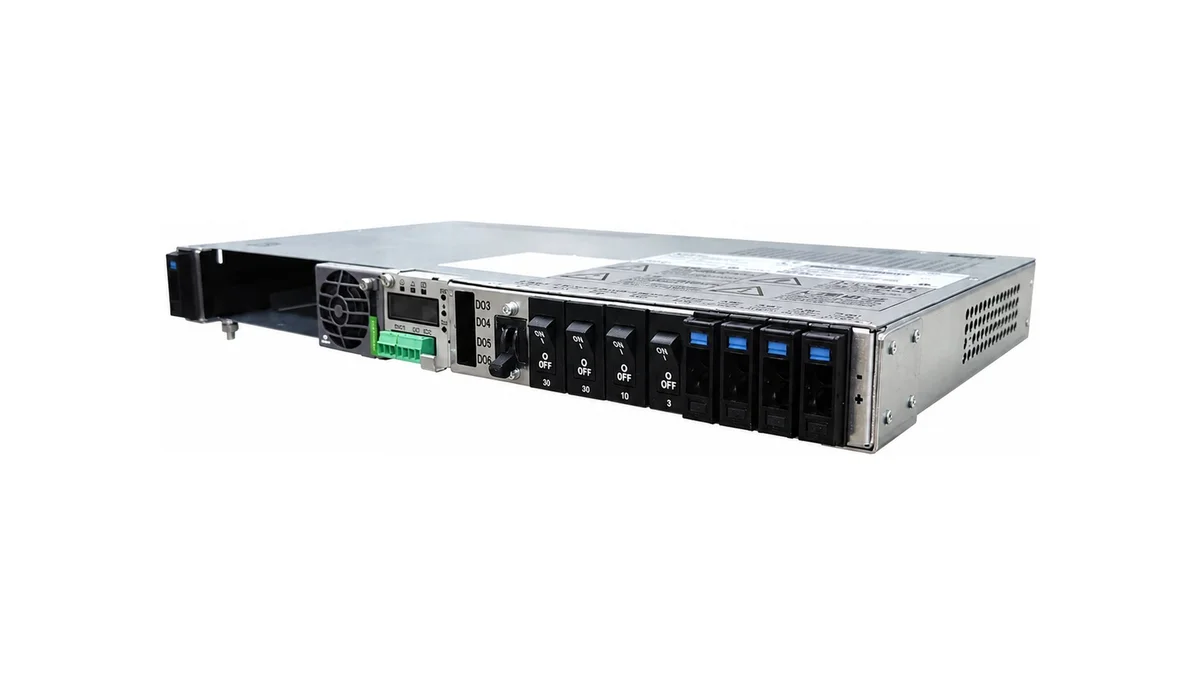
Section 1: Physical Topology & Compact Subrack Mechanical Engineering
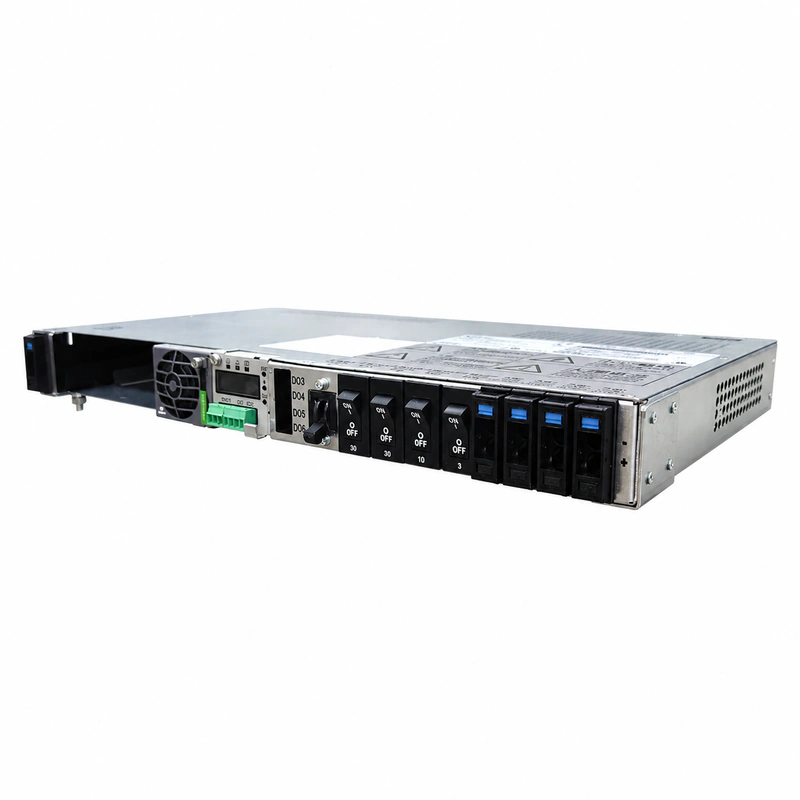
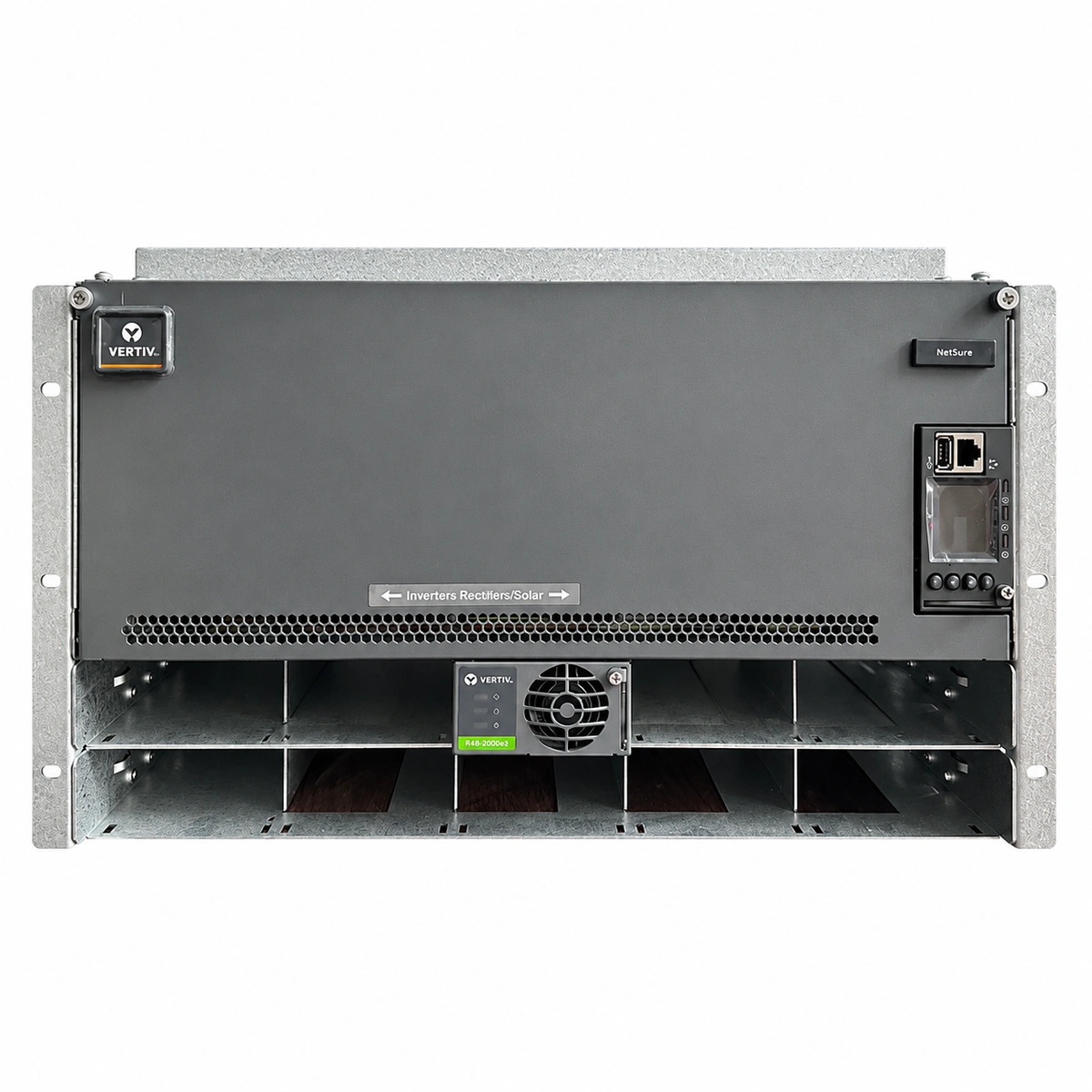
The Vertiv NetSure 2100 A31-S2 is engineered as an embedded subrack platform that conforms strictly to EIA-310-D and ETSI 19-inch rack-mount mechanical standards. The structural chassis occupies a minimal front-to-back footprint of approximately 280 mm with a standard 482 mm subrack width, rendering it ideal for integration into shallow outdoor communication enclosures, modular roadside cabinets, and space-constrained telecom shelters. The chassis is fabricated from high-grade cold-rolled sheet steel (SPCC) treated with electro-galvanized coatings and electrostatically applied industrial powder finish. This metallurgy yields superior torsional rigidity, resistance to mechanical resonance under heavy vibration profiles, and long-term protection against atmospheric corrosion in environments conforming to ETSI EN 300 019-1-3 Class 3.2.
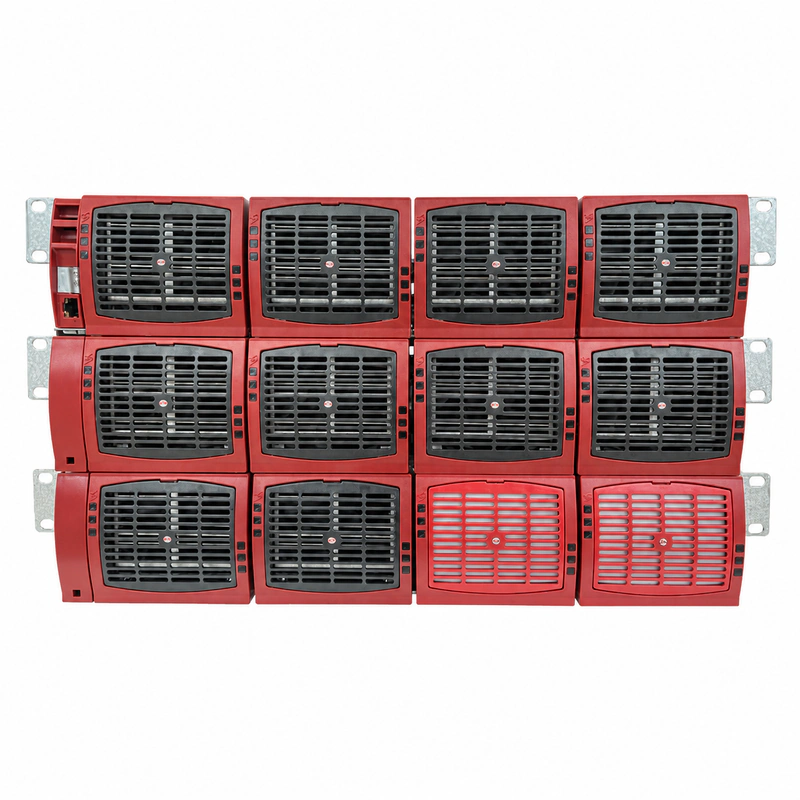
The mechanical architecture is partitioned into three functional functional bays: the modular rectifier power shelf, the central supervisory control module recess, and the integrated DC power distribution unit (PDU). The rectifier module slots are equipped with self-aligning blind-mate mechanical guides and heavy-duty blind-mate backplane connectors. These connectors feature staggered pin assignments that guarantee first-make, last-break protective grounding (PE) engagement prior to the energization of line and neutral AC contacts, ensuring field safety during live hot-swap procedures. Latching mechanisms on the rectifier front fascias deliver tool-less extraction while maintaining positive mechanical retention to prevent displacement under vehicular vibration or seismic events.
Thermal management within the chassis relies on an engineered, laminar front-to-back forced-air flow path. The internal air channels are decoupled from adjacent subrack payloads: cool intake air is drawn exclusively through perforated front grilles directly over the heatsinks of the power semiconductors, and hot exhaust air is expelled through the rear baffle matrix. This directional flow eliminates internal thermal recirculation and bypasses sensitive DC distribution circuit breakers and microcontrollers. Acoustic noise is minimized using pulse-width-modulated (PWM) intelligent fan speed algorithms embedded within each rectifier module, prolonging bearing service life and fulfilling strict municipal noise criteria for street-level cabinet installations.
Section 2: Electrical Grid Adaptability & Multi-Stage Surge Protection
The NetSure 2100 A31-S2 is designed to withstand extreme utility grid instability, accepting a continuous single-phase AC input voltage window ranging from 85VAC to 300VAC (nominal 220VAC/240VAC, 50Hz/60Hz). The internal power processing stages provide full rated DC power output across the wide input window of 176VAC to 300VAC. When the supply drops between 176VAC and 85VAC, the power stage transitions dynamically into linear derating mode. The output power scales according to the linear relationship P_out = P_rated * ((V_in - 85VAC) / (176VAC - 85VAC)), which guarantees continuous DC bus availability to connected radio units and microprocessors without triggering nuisance low-voltage AC brownout trips.
Power quality metrics are governed by an advanced continuous-conduction-mode active power factor correction (CCM-APFC) front-end topology. The input power factor is maintained at or above 0.99 from 50% to 100% of full load, while Total Harmonic Distortion of the input current (THDi) is suppressed below 5% at rated operating output. This attenuation prevents harmonic resonance across weak feeder transformers, neutral conductor overheating, and nuisance tripping of upstream residual current devices (RCDs). The rectifiers feature sustained over-voltage withstand capabilities, safely tolerating sustained 300VAC utility swells without component breakdown or accelerated electrolytic degradation.
Transient voltage surge suppression (TVSS) is implemented via a coordinated multi-stage protection network situated immediately adjacent to the AC input terminals. The design incorporates high-energy metal oxide varistors (MOVs) paired in series with gas discharge tubes (GDTs) between Line-to-Neutral, Line-to-Ground, and Neutral-to-Ground. This achieves a coordinated nominal discharge current capacity of In = 10kA to 20kA and a maximum discharge current of Imax = 40kA under standard 8/20 microsecond impulse waveforms (Class C / Type 2 surge suppression per IEC 61643-11). Integrated thermal disconnectors isolate degraded surge elements from the circuit to prevent sustained arc flashover, while signaling a supervisory dry contact to register an urgent maintenance event.
Section 3: DC Distribution Hierarchy & Dual LVD Low-Voltage Disconnect Engineering
The direct current distribution core utilizes high-purity T2 electrolytic copper busbars (electrical conductivity rating >= 99.9% IACS). Engineered with cross-sectional profiles sized for conservative current density constraints below 2.0 A/mm2, the main busbars demonstrate negligible voltage drops of less than 100mV across the full 120A continuous load spectrum. This conservative busbar design keeps the system thermal rise under full operational load below 25K above ambient, suppressing thermal migration to magnetic-hydraulic breakers and preventing nuisance thermal tripping in unconditioned ambient deployments.
The NetSure 2100 A31-S2 features a dual-level Low Voltage Disconnect (LVD) architecture driven by heavy-duty bistable latching contactors. The system provides independent control loops for Load Low Voltage Disconnect (LLVD) and Battery Low Voltage Disconnect (BLVD). In the event of an extended utility outage, the controller prioritizes uptime for critical transmission and optical transceivers by first isolating high-consumption, non-critical loads at the programmable LLVD threshold (typically configured between -44.0VDC and -46.0VDC). As the battery strings deplete further, the BLVD contactor operates at the critical threshold (typically -42.0VDC to -43.2VDC) to completely disconnect the energy storage bank.
This dual-action cutoff prevents deep cell over-discharge, irreversible lead-acid plate sulfation, and catastrophic lithium battery BMS lockouts. The distribution breaker assembly accommodates dual battery branch inputs (supporting 2x 63A or 1x 100A DC MCBs) along with a modular array of critical load DC branch circuit breakers, such as 4x 16A, 2x 32A, and 1x 10A configurations. All branch circuit breakers employ DC-rated magnetic-hydraulic mechanisms characterized by precise trip curves that operate independently of ambient temperature fluctuations, delivering absolute selective fault coordination that isolates branch short circuits without collapsing the primary -48VDC bus.
Section 4: Advanced Supervisory Control & Battery Lifecycle Optimization
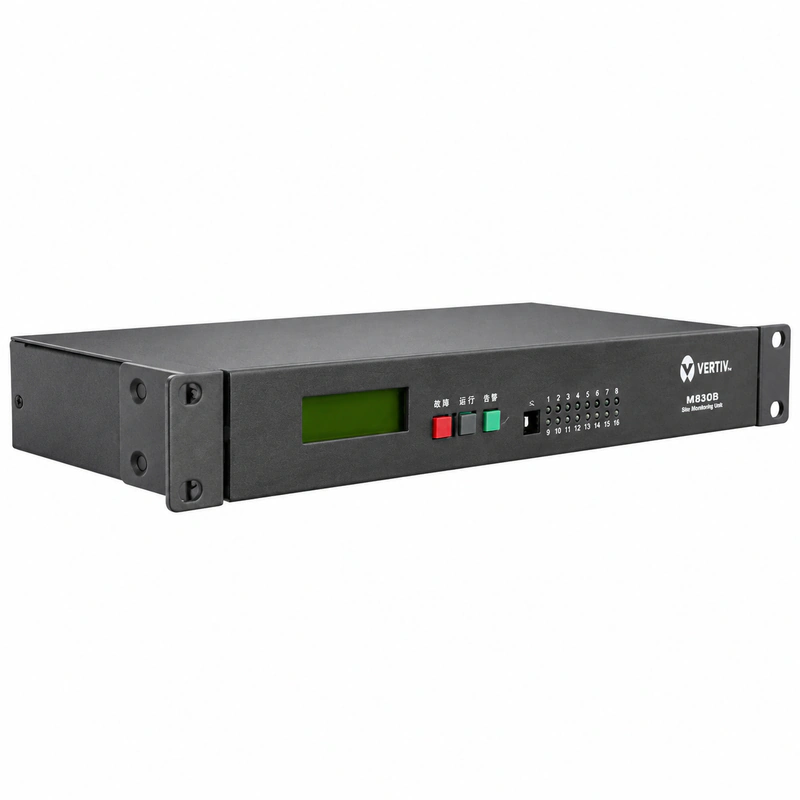
The intelligence of the NetSure 2100 A31-S2 is driven by the Vertiv M221S or NCU supervisory controller. The monitoring unit interfaces with an intuitive backlit LCD screen and four-button tactile keypad, complemented by high-visibility multi-color system status LEDs displaying Power, Normal, Major, and Minor alarm classifications. The controller manages data acquisition and status tracking for DC output voltage, individual rectifier current shares, branch distribution load currents, ambient temperatures, and external alarm digital inputs, executing autonomous closed-loop control algorithms without requiring upstream supervisory polling.
Battery management algorithms implemented within the controller enhance energy storage life across Valve Regulated Lead-Acid (VRLA) and Lithium Iron Phosphate (LiFePO4 / LFP) chemistries. The system performs high-precision autonomous three-stage charging: constant-current bulk charge, constant-voltage float charge, and periodic equalization charge. An external negative temperature coefficient (NTC) thermal probe feeds real-time battery core temperature data to the controller, which modulates the float voltage dynamically via an adjustable temperature compensation coefficient (-3.0 to -5.0 mV/cell/°C). This compensation avoids thermal runaway in extreme heat while preventing permanent capacity loss from persistent undercharging in sub-zero ambient regimes.
Advanced battery lifecycle diagnostics include automated scheduled capacity testing, battery state-of-health (SoH) tracking, and conductance degradation alerting. For comprehensive site telemetry, the supervisor integrates dual 10/100M Ethernet interfaces alongside RS232/RS485 serial communication ports. It natively executes secure remote communication protocols including SNMPv2c/SNMPv3, HTTPS, SSH, and Modbus-RTU/TCP, delivering seamless integration with telecommunication network operations center (NOC) OSS platforms. In addition, programmable dry-contact alarm relays provide hardwired integration for legacy Remote Terminal Units (RTUs) and site alarm panels.
Section 5: Deployment Topologies & Extreme Environmental Operations
The NetSure 2100 A31-S2 is deployed across diverse telecommunications and industrial power infrastructures. In modern 4G and 5G cellular topologies, it serves as the central DC power plant within Centralized Radio Access Network (C-RAN) Baseband Unit (BBU) aggregation racks and outdoor distributed micro-stations. The subrack continuously supplies regulated -48VDC to high-draw BBU pools and multi-carrier Remote Radio Units (RRUs). The system's fast dynamic load recovery time (less than 200 microseconds for a 25% to 75% step load variation) ensures bus stability during rapid RF transmission power bursts, eliminating transient under-voltage triggers across active antenna transceivers.
In enterprise optical broadband access and transport architectures, the platform provides stable -48V power to Optical Line Terminals (OLT), optical transport networking (OTN) muxponders, and Synchronous Digital Hierarchy (SDH) multiplexers. For roadside Intelligent Transportation Systems (ITS) and video surveillance networks, the NetSure 2100 subrack operates reliably inside compact roadside cabinets, driving pan-tilt-zoom security camera matrices, traffic signal controllers, and edge industrial Ethernet switches. In high-voltage utility electrical substations, it serves as an ultra-reliable DC source for micro-SCADA telemetry nodes, protective relays, and field automation equipment.
Engineered for harsh operating environments, the system performs across an industrial temperature range of -40°C to +65°C. Full un-derated 120A output power is sustained continuously up to +45°C or +50°C, depending on the rectifier module population. Printed circuit board assemblies (PCBAs) undergo conformal coating to resist high relative humidity levels from 5% to 95% non-condensing, salt-spray corrosion, and airborne conductive dust ingress. Operating altitude capability spans 0 to 4000 meters, with standard thermal derating coefficients of 1% capacity reduction per 100 meters applied between 2000 and 4000 meters above sea level to account for reduced thin-air convective cooling efficiency.
Section 6: Procurement Verification, Genuine OEM Module Identification & TCO Calculation
Procurement validation requires disciplined inspection protocols to protect field operations from counterfeit, reclaimed, or gray-market components. Genuine Vertiv NetSure 2100 A31-S2 subracks and eSure rectifiers feature high-resolution, laser-etched nameplates and traceable 2D Matrix barcode labels. Procurement engineers can confirm authenticity by querying the internal memory through the M221S or NCU supervisory controller: genuine eSure R48-1000e and R48-2000e3 rectifiers report factory-programmed internal serial numbers, hardware production revisions, and authorized firmware builds directly over the internal CAN communication bus, exposing mismatched or counterfeit hardware revisions immediately.
Procurement specifications should mandate factory acceptance testing (FAT) certifications, including 100% full-load burn-in testing over thermal cycling profiles, dielectric withstand insulation tests (Hi-Pot 2121VDC input-to-chassis, 4242VDC input-to-output), and ripple and noise verification (ensuring peak-to-peak noise remains below 150mVp-p and weighted psophometric noise stays below 2.0mV). Counterfeit and substandard power modules typically omit primary common-mode chokes, secondary synchronous rectification components, and certified MOV networks, leading to rapid component breakdown, dangerous harmonic injection into field feeder lines, and increased risk of electrical fire.
A 10-year Total Cost of Ownership (TCO) evaluation confirms that genuine Vertiv eSure high-efficiency rectifiers (>95.5% peak efficiency) yield substantial OpEx savings compared to legacy 90% or 92% systems. Under a continuous 60A load at -48VDC (approximately 3.1kW load), an efficiency improvement from 90% to 96% eliminates over 230 watts of continuous internal thermal waste dissipation. Over a decade of 24/7 service, this reduces power consumption by over 20,000 kWh per node while reducing cooling loads inside active outdoor cabinets. For genuine Vertiv NetSure telecom DC power products, modular subrack engineering, and technical logistics, reach out to RICEWIND via official communication channels: Email: lee@ricewind.com | Phone / WhatsApp / WeChat: +86 17621197907.
Engineering Procurement & Technical Desk
For technical datasheets, custom power topology design, or volume export quotations, reach out to HEFENGQI engineers.