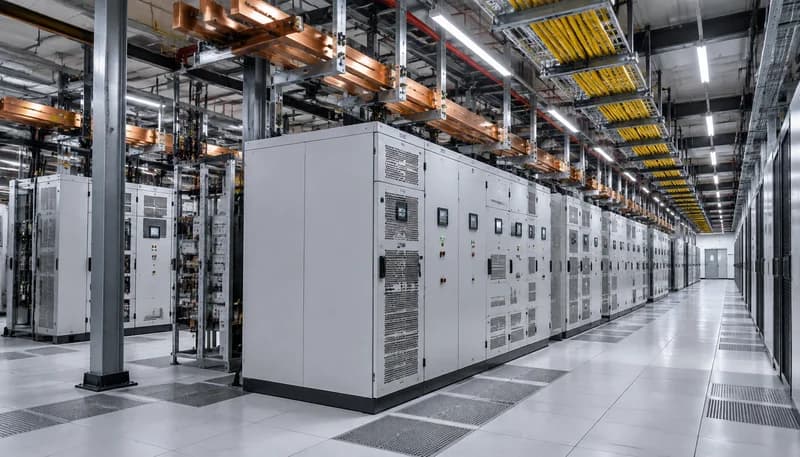
AI Computing Center High-Density Power Supply Restructuring: Topological Transition from 48V Ultra-High-Efficiency Rectifier Modules to 240V/336V High-Voltage DC Bus Systems
With the explosive evolution of global Artificial Intelligence Large Language Model Clusters (AI LLM Clusters) and accelerated computing chips, traditional data center facilities based on 5kW~8kW nominal power are facing unprecedented physical limitations. As the power consumption of a single high-density GPU server rack rapidly rises to 40kW or even above 100kW, the power supply and distribution topology of data centers is no longer merely a supporting infrastructure component, but has become the primary core bottleneck directly restricting computing density and availability of AI computing clusters.
HEFENGQI (HEFENGQI) Infrastructure Research Institute industry insights team has conducted on-site tracking and analysis of global large-scale intelligent computing centers and core facilities of multinational telecommunications operators, and hereby releases this in-depth industry insight report: providing a comprehensive breakdown of the engineering fundamentals behind the evolution from distributed power supply (Power Shelf) architectures represented by 48V/3500W-class ultra-high-efficiency rectifier modules to 240V/336V high-voltage direct current (HVDC) bus systems in high-density intelligent computing facilities.
I. The 40kW+ Single-Rack High-Density Era: The Physical “Copper Loss Wall” of Traditional AC Power Distribution
In the traditional power supply chain of “utility power ➔ centralized large-scale AC UPS ➔ row-level PDU ➔ server internal PSU”, electrical energy undergoes multiple AC-DC-AC-DC conversion stages. Not only does the overall chain conversion efficiency typically remain between 88%~92%, but it also encounters fundamental physical constraints in terms of space volume and copper busbar weight under high-power single-rack scenarios:
Busbar Loss and Cross-Section Expansion Caused by High DC Current:
Under the conventional 48V DC power distribution system, if a single rack reaches 40kW, the total operating current of the busbar reaches as high as 833A based on 48V low-voltage calculation; at 80kW, the current approaches an astonishing 1666A!
According to Ohm’s law and Joule’s law, busbar heat dissipation losses are proportional to the square of current (I²R). To maintain busbar voltage drop within the safe operating limit (≤ 0.5V), extremely large cross-sectional pure copper busbars must be installed, which not only occupy valuable IT blade installation U-space inside the cabinet, but also place severe load-bearing challenges on data center floors.
High CAPEX and Space Requirements of AC Dual-Bus (2N) Architecture:
Centralized AC transformation and distribution rooms require large footprints, while the long physical distance between cold aisles and equipment rooms cannot meet the rapid modular deployment requirements of edge computing and distributed AI computing.
II. Centralized Power Shelf Architecture: The Industrial Foundation of 3500W-Class Flagship Rectifier Modules
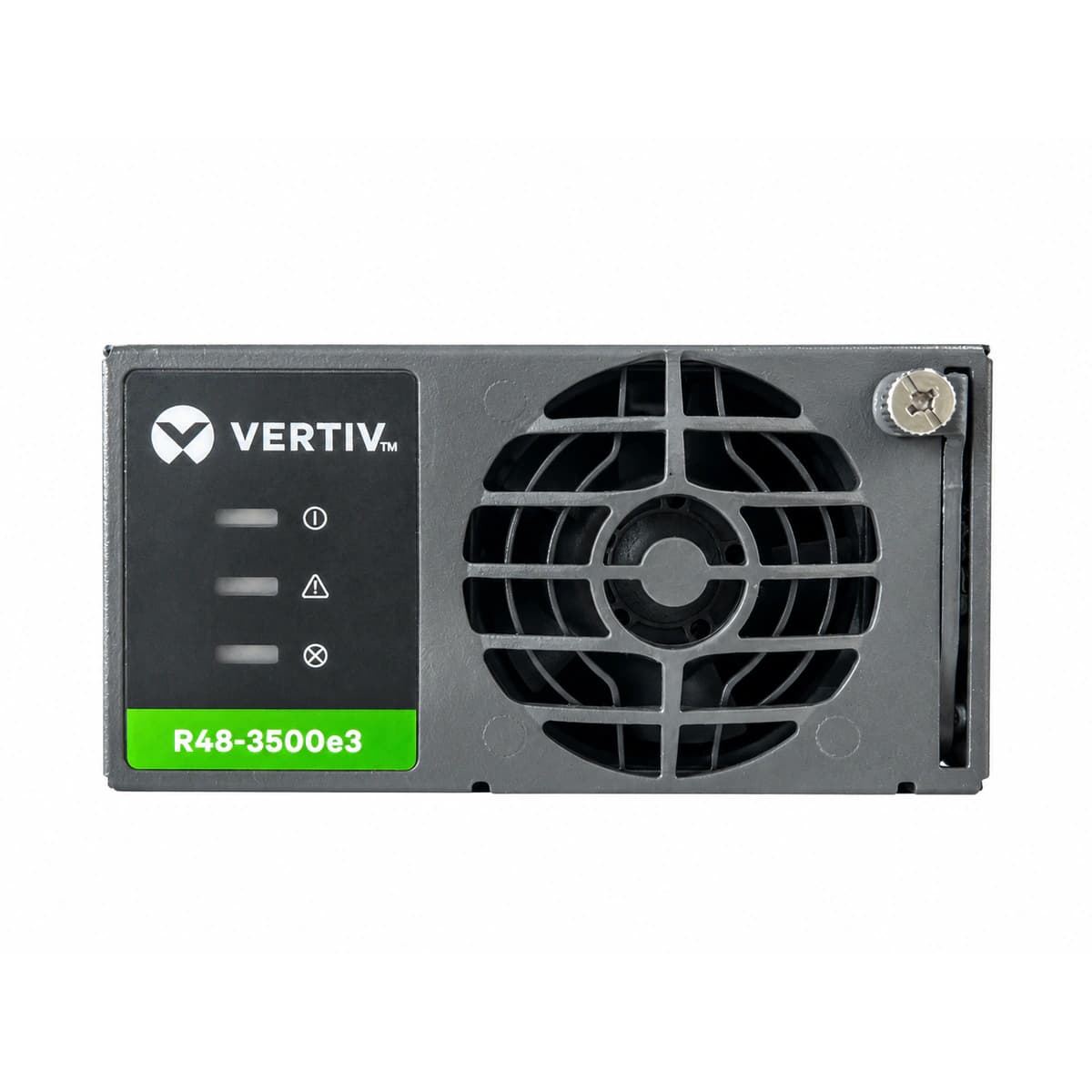
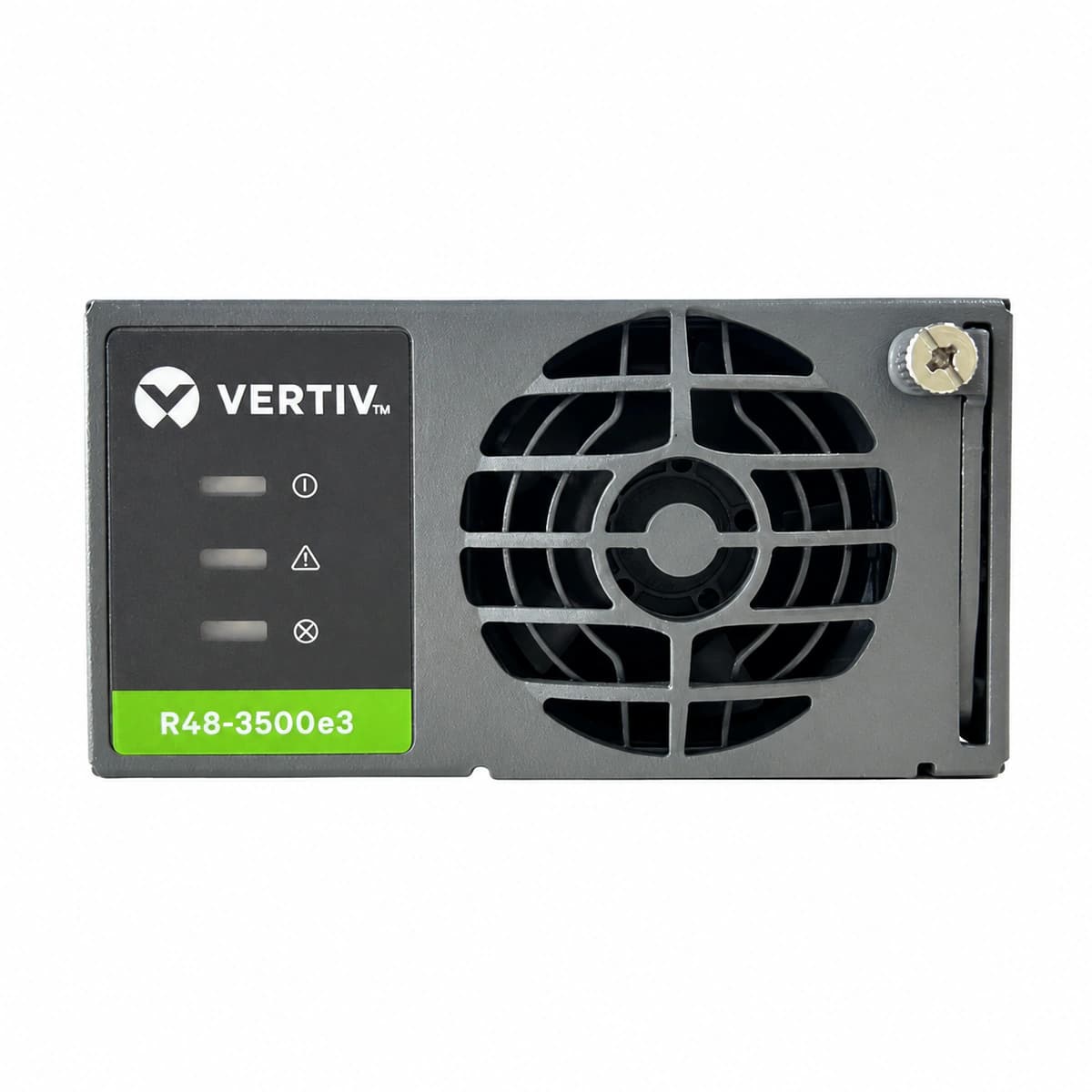
To overcome the above bottlenecks, modern high-density intelligent computing racks are increasingly adopting a rack-integrated centralized power shelf architecture. Industrial-grade products represented by Vertiv NetSure series, Emerson R48-3500e3, and Huawei high-density rectifier matrices have become the core technological foundation during this transition phase:
Extreme Power Density and Conversion Efficiency:
A single 1U blade-type rectifier module delivers 3500W output power, with peak conversion efficiency exceeding 96.5%. Within a standard 3U~4U rack-mounted power shelf, 6 to 12 modules can be connected in parallel to directly build a 20kW~40kW DC output bus inside the cabinet.
N+1 and N+2 Modular Seamless Hot-Swapping:
When a rectifier module fails due to component aging or external grid abnormalities, the built-in Active Current Sharing bus automatically performs millisecond-level lossless load redistribution within the 100μs range. Online hot-swap maintenance time for a single module is reduced to less than 1 minute, completely eliminating server downtime caused by power supply fluctuations.
Short-Distance Rack-Level Power Delivery, Significantly Reducing Busbar Losses:
The Power Shelf and computing blades are installed within the same rack, reducing DC transmission distance from tens of meters to only 1~2 meters. This allows 48V bus systems to maintain high cost-effectiveness and electrical safety within the 30kW~40kW power range.
III. The Future Direction: The Deterministic Trend Toward 240V / 336V High-Voltage Direct Current (HVDC) Topology
When intelligent computing rack power further exceeds 60kW, 100kW, or reaches liquid-cooled full-rack computing systems, increasing DC bus voltage to 240V (China standard) or 336V/380V (North American and European OCP specifications) has become an industry consensus:
Current Reduced to 1/5~1/7, Completely Eliminating Copper Busbar Bottlenecks:
Under the 240V/336V HVDC topology, the operating current of the same 60kW computing rack drops dramatically from 1250A at 48V to 250A or even 178A. Cable cross-section requirements and copper losses are reduced by more than 75%, enabling lightweight internal rack wiring, reduced airflow resistance, and simultaneous reductions in cooling fan power consumption.
Comprehensive Simplification of Power Architecture (Eliminating Two Conversion Stages):
HVDC systems eliminate the inverter stage. After high-efficiency rectification, utility power is directly connected to the battery system and DC bus. The end-to-end energy efficiency reaches 95%~97%, delivering tens of millions of RMB in electricity cost savings throughout the data center total cost of ownership (TCO) lifecycle.
Natural Compatibility with Renewable Energy and Energy Storage Direct Connection:
Photovoltaic distributed generation (PV) and large-scale electrochemical energy storage batteries naturally output DC power. HVDC architecture eliminates secondary losses caused by repeated inversion and voltage transformation during solar-storage integration, providing the most direct electrical foundation for green zero-carbon data centers.
IV. HEFENGQI Global Infrastructure Supply Chain Strategy and One-Stop Delivery
Facing the global wave of high-density power supply upgrades for AI computing facilities, HEFENGQI (HEFENGQI / RICEWIND) leverages its extensive industrial supply chain resources and original-equipment-level R&D capabilities to provide full lifecycle power infrastructure support for global data center operators, cloud service providers, and telecommunications groups:
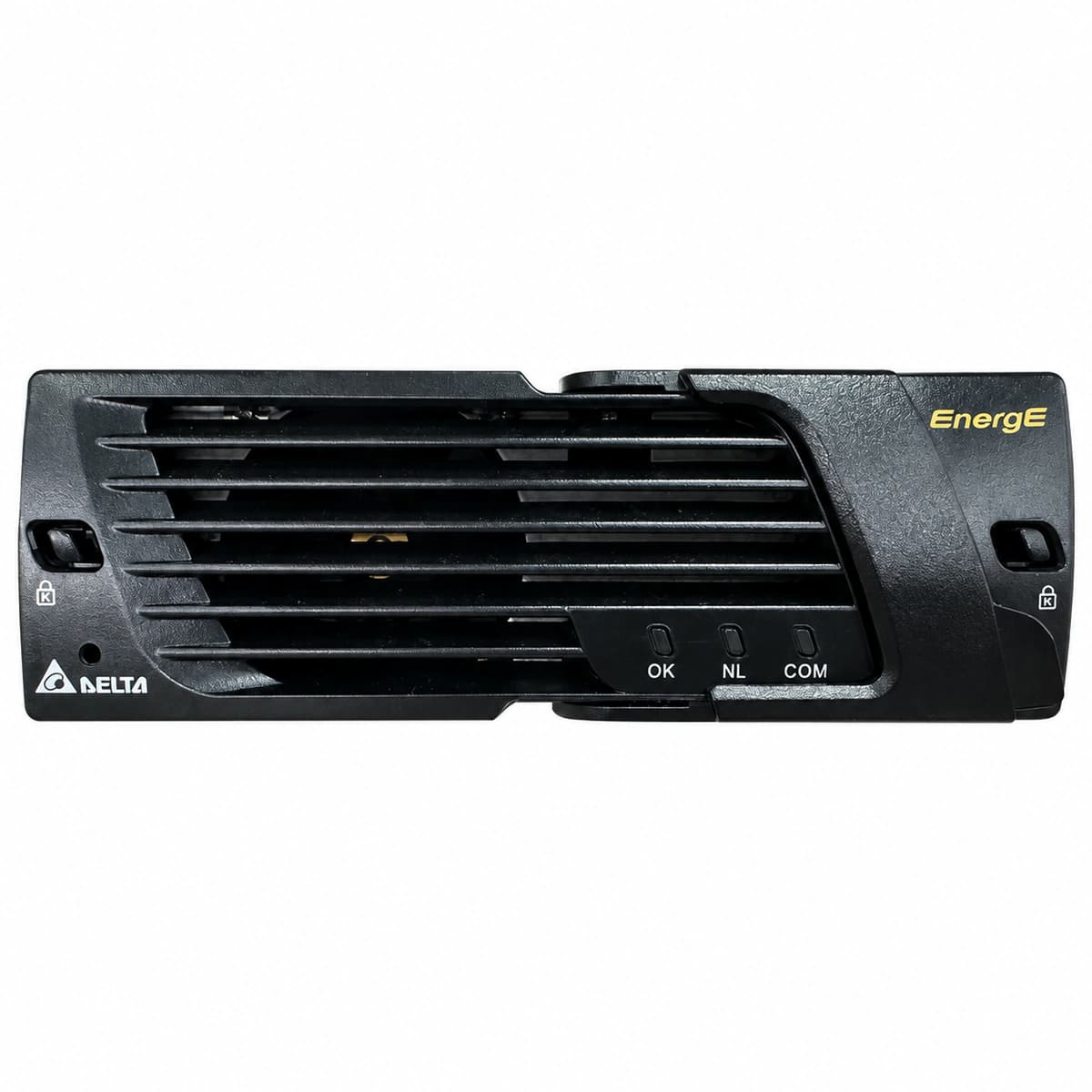
Ready Stock Inventory and Strict Quality Control: Maintains long-term inventory of mainstream 3000W~4000W ultra-high-efficiency rectifier modules from Vertiv (R48-3500e3, NetSure series), Huawei, ZTE, Delta, and other leading manufacturers. Every unit undergoes rigorous full-load withstand voltage testing and dynamic transient response testing.
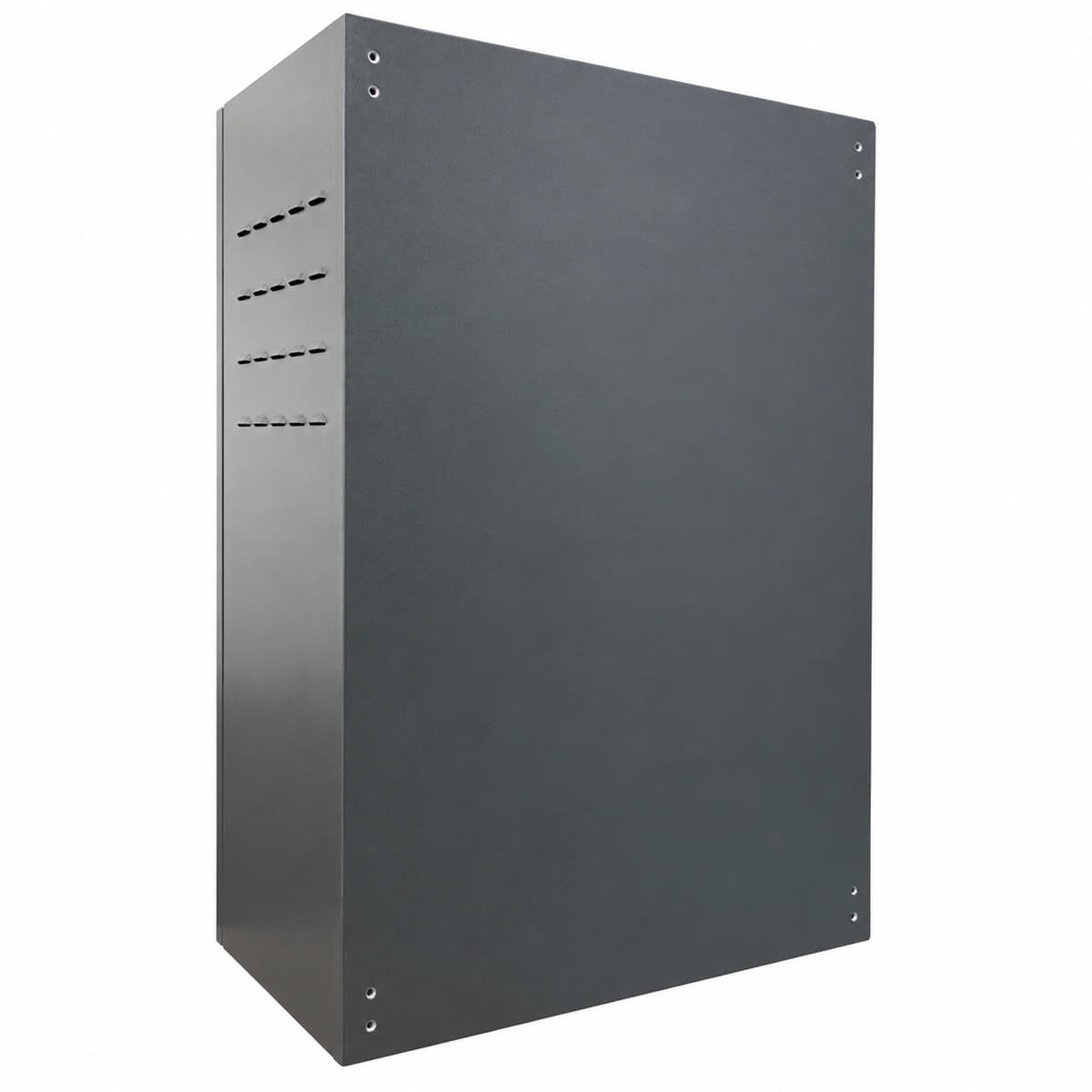
Customized High/Low Voltage DC Compatible Solutions: Provides complete engineering integration services covering 48V Power Shelf upgrade kits, copper busbar current-sharing designs, and 240V/336V HVDC power distribution cabinets and battery protection units.
Global Overseas Response Network: Serving markets across the Middle East, Southeast Asia, Europe, and the Americas, providing rapid logistics and customs clearance, multilingual technical support, and overseas operation and maintenance spare parts assurance.
Global Business Cooperation and Technical Consultation Channels:
Official Business Email:
Email: lee@ricewind.comInternational Engineering Hotline:
WhatsApp: +86 17621197907Infrastructure and Spare Parts Website:
https://ricewind.com
Engineering Procurement & Technical Desk
For technical datasheets, custom power topology design, or volume export quotations, reach out to HEFENGQI engineers.