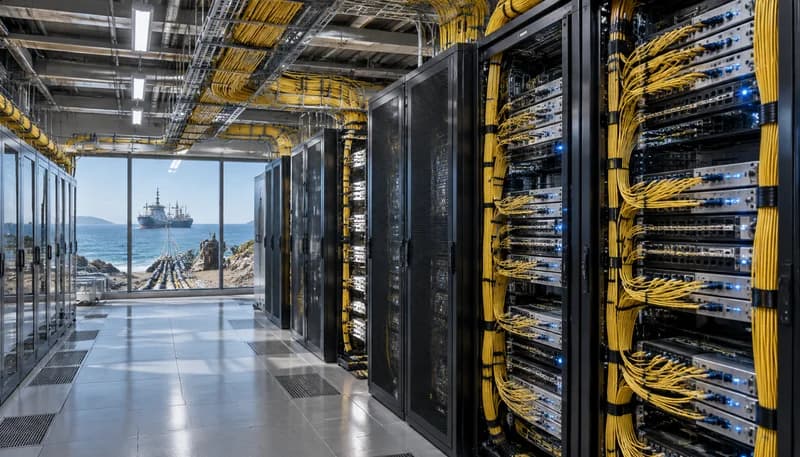
1. Transoceanic Compute Scaling: Coherent Optics at the Network Edge
Driven by the exponential expansion of foundation model training clusters across the Asia-Pacific, Middle East, and Nordic regions, data center interconnect (DCI) and subsea optical transmission are undergoing radical architectural consolidation. The traditional separation between subsea terminal equipment and data center switches is being replaced by direct cable landing station (CLS) bypass topologies. In this unified architecture, 800G ZR and 800G ZR+ coherent pluggables serve as the foundational building blocks for high-bandwidth, ultra-low-latency transoceanic backbones.
Unlike intra-data-center PAM4 direct-detect optics (such as 800G SR8 or DR8) limited to short reach, coherent transmission modulates the amplitude, phase, and dual-polarization states (DP-16QAM) of light. Supported by high-performance digital signal processors (DSP), coherent transceivers perform real-time digital chromatic dispersion (CD) and polarization mode dispersion (PMD) compensation, eliminating bulky transponders over hundreds of kilometers of single-mode fiber.
2. Key Electrical and Optical Parameters: 800G ZR vs. 800G ZR+
Engineered in OSFP and QSFP-DD800 form factors, 800G coherent modules operate with DP-16QAM modulation at baud rates approaching 128 Gbaud. Transmitters utilize tunable C-band lasers (1528.77nm to 1568.36nm) aligned with 75GHz or 100GHz ITU-T flexible grids. Output launch power typically ranges from -10 dBm to 0 dBm, with receiver sensitivities around -20 dBm and required optical signal-to-noise ratio (OSNR) tolerances near 21 dB.
Thermal dissipation and power budget dictate deployment feasibility. Advanced 3nm/4nm DSP silicon has reduced 800G ZR module power consumption from historic 30W levels down to 20W~24W, while amplified 800G ZR+ modules stabilize between 25W and 28W. Inside a standard 1U 32-port 800G switch, aggregate optical interface power reaches 700W to 900W, necessitating structured front-to-back airflow, optimized heat sinks, and cold aisle containment to maintain junction temperatures strictly below 75 degrees Celsius.
3. Space Division Multiplexing (SDM) and CLS-to-Datacenter Bypass
Modern transoceanic subsea networks widely adopt Space Division Multiplexing (SDM), increasing fiber pairs from traditional 6~8 pairs up to 16, 24, or even 32 pairs. This scale delivers aggregate subsea cable capacities exceeding 500 Tbps to 1 Pbps. Traditionally, landing stations required massive optical transport network (OTN) transponders to convert undersea optical signals into standard client-side Ethernet.
The emerging direct-connect architecture inserts 800G ZR+ optics directly into hyperscale core routers. Paired with reconfigurable optical add-drop multiplexers (ROADM) and open line systems (OLS) at the landing station, optical wavelengths pass seamlessly from subsea wet plants into inland compute halls without intermediate optical-electrical-optical (OEO) conversion. This reduces end-to-end latency by 15% to 25%, slashes facility CAPEX by over 30%, and drastically lowers power consumption per gigabit.
4. Deployment Guidelines and Power Infrastructure Requirements
High optical power densities in coherent networks leave zero tolerance for connector contamination. Field engineers must enforce strict IEC 61300-3-35 automated fiber inspection, ensuring optical return loss (ORL) exceeds 45 dB. Even sub-micron particulate contamination can cause localized optical burning and catastrophic laser reflections under multi-channel DWDM power levels.
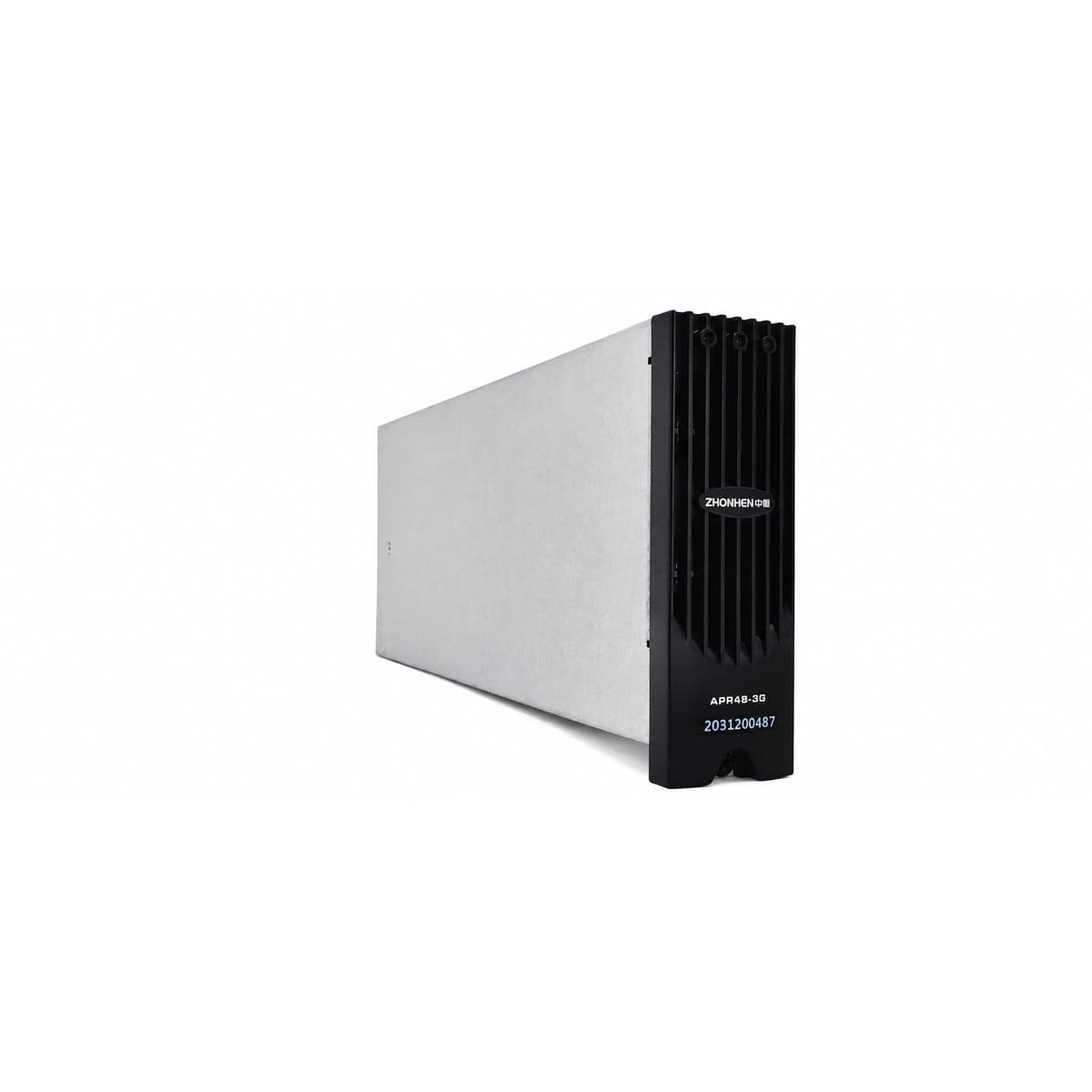
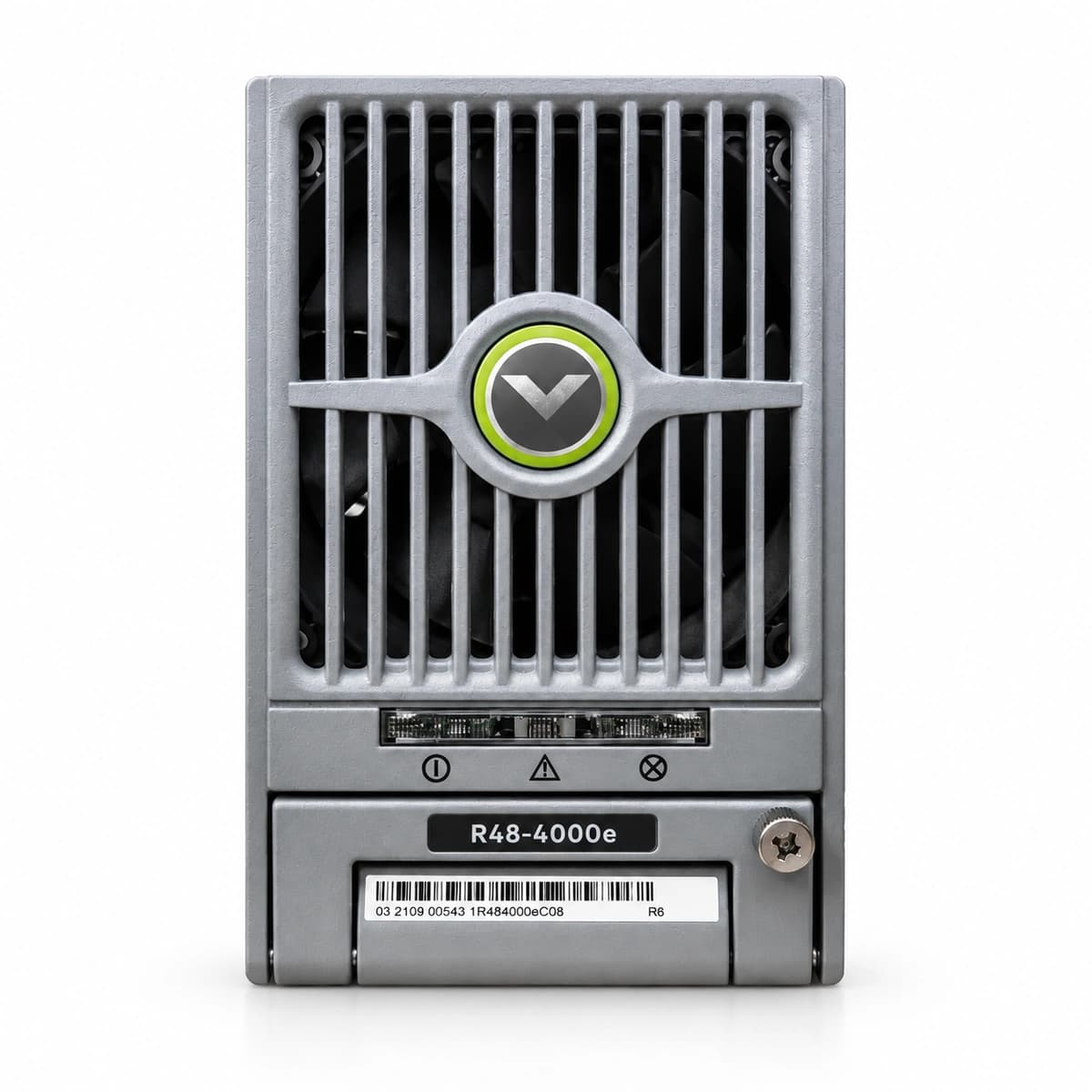
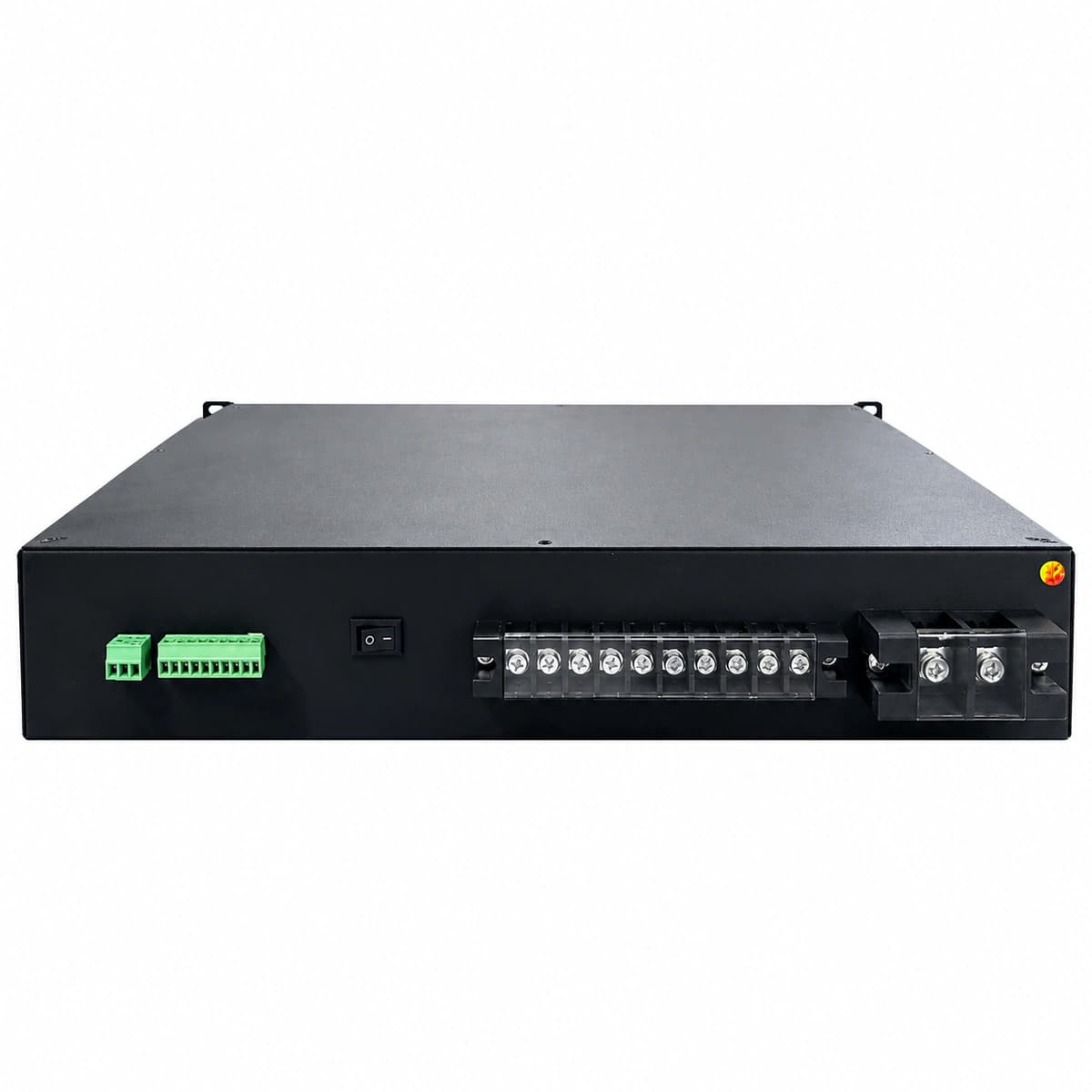
For telecommunications and optical equipment power feeds, high-density transmission rows require dual-redundant -48V DC power distribution cabinets backed by lithium iron phosphate (LiFePO4) battery systems. Copper busbar trunking is recommended over long cable runs to minimize DC voltage drops. Switch-mode rectifier systems must maintain DC ripple voltage below 100mV peak-to-peak during grid transients and generator transfers to prevent DSP PLL clock instability.
5. HEFENGQI Engineering Desk and Global Procurement
HEFENGQI (RICEWIND) provides carrier-grade optical interconnect solutions, high-efficiency -48V telecom rectifiers, and ruggedized outdoor telecom enclosure systems for hyperscale AI hubs and subsea landing networks worldwide. To request technical datasheets, optical topology blueprints, or commercial export quotations, contact our engineering desk: Email: lee@ricewind.com | WhatsApp: +86 17621197907.
Engineering Procurement & Technical Desk
For technical datasheets, custom power topology design, or volume export quotations, reach out to HEFENGQI engineers.