Standard Milestone: ITU-T Y.3335 and the Global Standardization of All-Photonics Networks (APN)
In late 2026, the International Telecommunication Union Telecommunication Standardization Sector (ITU-T) Study Group 13 officially consented to Recommendation ITU-T Y.3335, titled 'Requirements and functional architecture of all-photonics networks for photonic network federation'. Driven by a strategic consortium of Japan's leading network operators and systems vendors—including KDDI, NTT, Rakuten Mobile, NEC, 1Finity by Fujitsu, Oki Electric Industry, and Sumitomo Electric Industries—the standard represents the first globally unified architectural baseline for transparent, end-to-end optical communications. Y.3335 establishes rigorous functional requirements, demarcates operational network boundaries, and formalizes multi-domain network topologies designed to transcend the physical and thermodynamic scaling limits of legacy electrical packet-switching infrastructures.
Prior to ITU-T Y.3335, all-photonics and ultra-broadband wavelength routing developments progressed through disparate, proprietary initiatives such as the IOWN (Innovative Optical and Wireless Network) Global Forum specifications and customized open-optical line system (OOLS) projects. The formalization of Y.3335 provides the telecom sector with an open, vendor-neutral framework that defines how control planes, administrative demarcations, and telemetry loops operate across disparate photonic domains. Systems engineered under RICEWIND physical guidelines can now leverage internationally validated transport layers, paving the way for multi-vendor, interoperable optical fabrics that extend from high-capacity data center interconnects (DCI) directly through metropolitan aggregation rings and access nodes without intermediary optical-electrical conversions.
Align optical transport procurement with ITU-T Y.3335 functional boundary and topology specifications.
Audit existing carrier demarcation points against Y.3335 open federation interface definitions.
Map IOWN Global Forum APN release parameters to ITU-T Y.3335 standardized control planes.
Overcoming AI Interconnect Bottlenecks: Photonic Bypass vs. Traditional Multi-Hop OEO Routing
Modern distributed artificial intelligence workloads, characterized by multi-node large language model (LLM) training paradigms and real-time physical AI inference across robotic matrices, impose unprecedented stress on transport network layers. In traditional Layer 2 and Layer 3 multi-hop routing, packets undergo successive cycles of optical-electrical-optical (OEO) conversion at every transponder, switch fabric, and router ASIC. This hop-by-hop electronic packet inspection introduces acute serialization latencies, queuing jitter, tail latency amplification under heavy burst conditions, and buffer-induced tail drops. Consequently, distributed GPU clusters frequently experience deep compute stalls while executing collective communications primitives like AllReduce and All-to-All, drastically degrading overall floating-point operations per second (FLOPS) utilization efficiency.
All-Photonics Networks circumvent this systemic computational drag by establishing direct, protocol-agnostic optical bypass circuits (cut-through lightpaths) between distributed compute points. Photonic bypass eliminates intermediate electrical switching layers entirely, routing optical carriers directly across reconfigurable optical add-drop multiplexers (ROADMs) and automated optical cross-connects (OXCs). Engineering empirical tests indicate that APN transport yields a 200-fold reduction in end-to-end network latency jitter and reduces transmission propagation delay exclusively to the physical speed of light in the glass fiber core (~4.9 microseconds per kilometer). Concurrently, eliminating power-hungry high-speed SerDes, switch ASICs, and intermediate transceivers results in more than a 100-fold increase in transport energy efficiency per delivered petabyte.
Identify latency-sensitive collective communication paths within multi-facility AI clusters for direct photonic bypass.
Benchmark end-to-end packet jitter variances between multi-hop L3 routing and dedicated L0/L1 optical lightpaths.
Calculate GPU compute stall reduction ratios achieved by bypassing intermediate OEO transponder stages.
Photonic Network Federation: Breaking Multi-Operator Islands with Unified Optical Control Planes
A historical impediment to large-scale, low-latency transport has been the fragmentation of optical networks into vendor-proprietary and operator-specific islands. Historically, adjacent tier-1 carriers could not negotiate end-to-end optical paths without demultiplexing wavelengths to baseband gray optics at meet-me-room (MMR) demarcation facilities. This archaic border handling enforced mandatory OEO regeneration, multiplied capital equipment overhead, and prevented dynamic, automated optical circuit reservation across heterogeneous carrier boundaries. Proprietary ROADM wavelength trackers, divergent Path Computation Element (PCE) algorithms, and closed digital signal processor (DSP) framings reinforced this systemic vendor lock-in.
Under ITU-T Y.3335, Photonic Network Federation dissolves these operational silos by introducing standardized inter-carrier orchestration interfaces and federated optical control planes. The architecture utilizes open Path Computation Element Communication Protocol (PCEP) extensions alongside standardized Border Gateway Protocol Link-State (BGP-LS) optical telemetry to dynamically calculate optical signal-to-noise ratio (OSNR), polarization mode dispersion (PMD), and chromatic dispersion (CD) across disparate administrative domains. As validated by RICEWIND optical systems architects, this protocol stack enables automated, sub-millisecond provisioning of deterministic optical circuits crossing multiple carrier networks, guaranteeing SLA-backed transmission capacity without requiring single-carrier exclusivity.
Deploy standardized hierarchical Path Computation Elements (H-PCE) supporting cross-domain BGP-LS optical metrics.
Validate transponder interoperability using Open Optical & Packet Transport (OOPT) and OpenROADM compliant framing formats.
Implement automated OSNR and non-linear impairment margin computation across administrative demarcation points.
Physical Layer Architecture: C+L Band Spectrum Scaling, OXC Matrices & Coherent Pluggables (800ZR/1.6T)
To sustain the terabit-scale throughput mandates dictated by AI interconnect fabrics, the physical layer of the APN requires aggressive optical spectrum expansion and high-density optoelectronic integration. Traditional C-band transmission systems (approximately 4.8 THz of usable spectrum) are rapidly reaching the non-linear Shannon capacity limit. APN addresses this by deploying extended C+L band optical amplification frameworks (spanning 1528 nm to 1620 nm), effectively doubling usable fiber bandwidth to roughly 10 THz. When deployed over ITU-T G.654.E cut-off shifted, ultra-low-loss fiber with enlarged effective core areas (typically 110 to 125 square micrometers), the transmission medium dramatically mitigates Kerr non-linearities, facilitating multi-terabit per second carrier rates over metropolitan and regional spans.
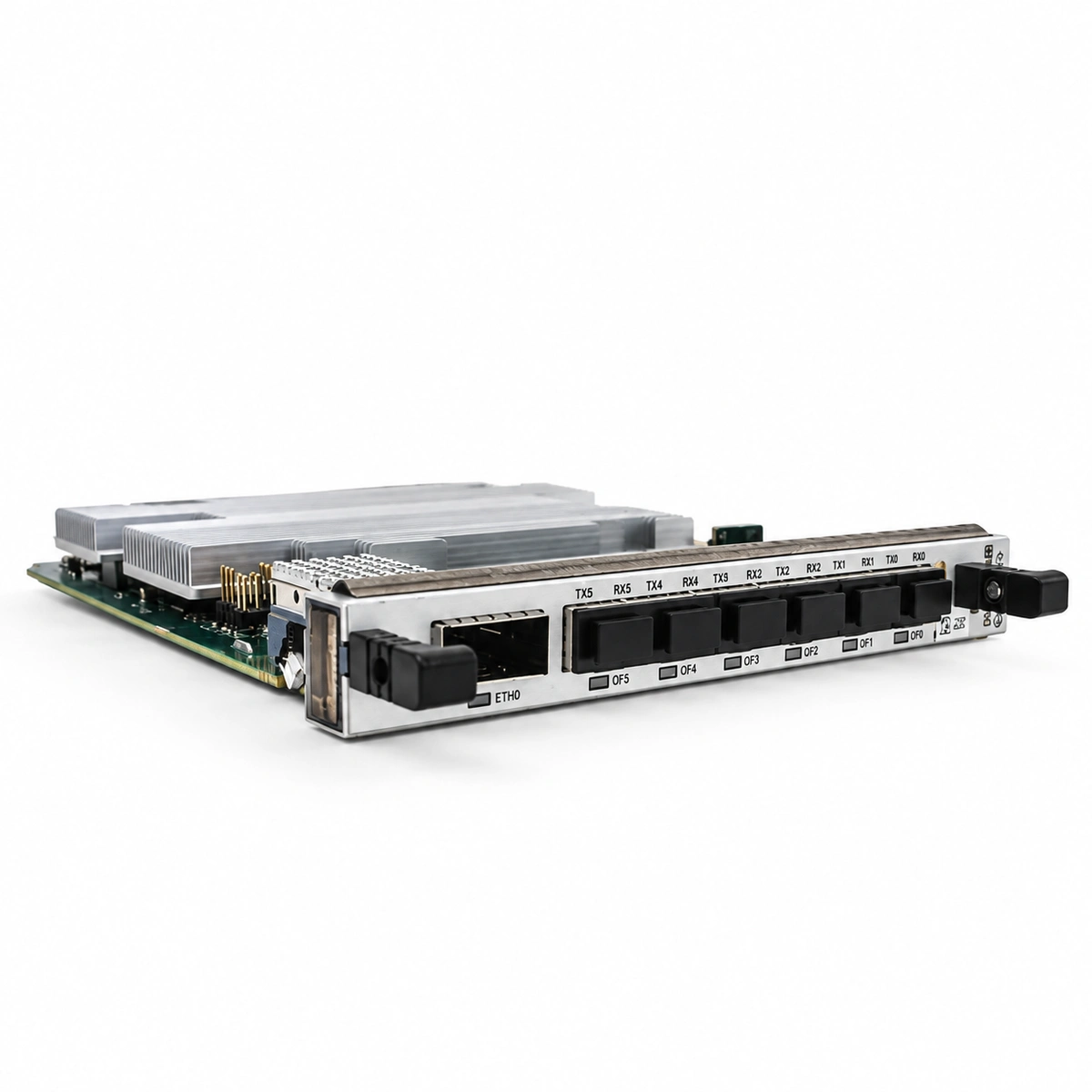
At physical switching nodes, manual optical distribution frames (ODFs) are replaced by automated Liquid Crystal on Silicon (LCoS) and 3D Micro-Electro-Mechanical Systems (MEMS) based optical cross-connects (OXCs) operating alongside high-degree Colorless, Directionless, Contentionless, and Flex-grid (CDC-F) ROADMs. Simultaneously, transceiver topologies have evolved from discrete, rack-mounted transponders to QSFP-DD and OSFP coherent pluggables, including 800ZR, 800ZR+, and nascent 1.6T designs operating at symbol rates exceeding 130 Gbaud with DP-16QAM modulation. These miniaturized coherent engines seat directly into the front panels of high-density AI spine switches and edge aggregation chassis, compressing physical footprint and drastically lowering optical coupling losses.
Transition fiber plant transport architectures to ITU-T G.654.E glass to maximize effective area for C+L amplification.
Integrate LCoS-based CDC-F ROADMs supporting channel grid slicing down to 3.125 GHz granularity.
Standardize switch host interfaces for high-density 800ZR/ZR+ and 1.6T coherent pluggables with optimized thermal dissipation.
Telecommunications Power Synergies: Energy Dissipation Reductions and -48V DC Central Office Powering
The continuous expansion of artificial intelligence compute workloads is precipitating severe grid capacity constraints across hyperscale data centers and carrier facilities. Conventional multi-layer switching topologies compound this thermal dilemma; an enterprise-grade electronic packet switch fabric consumes substantial power running internal high-speed deserializers, packet parsing engines, and complex thermal mitigation assemblies. By substituting electronic switching fabrics with purely passive or low-power electrostatic/LCoS light deflection inside all-photonic cross-connects, APN drastically curtails thermal dissipation inside telecom central offices, lowering site Power Usage Effectiveness (PUE) metrics toward unity.
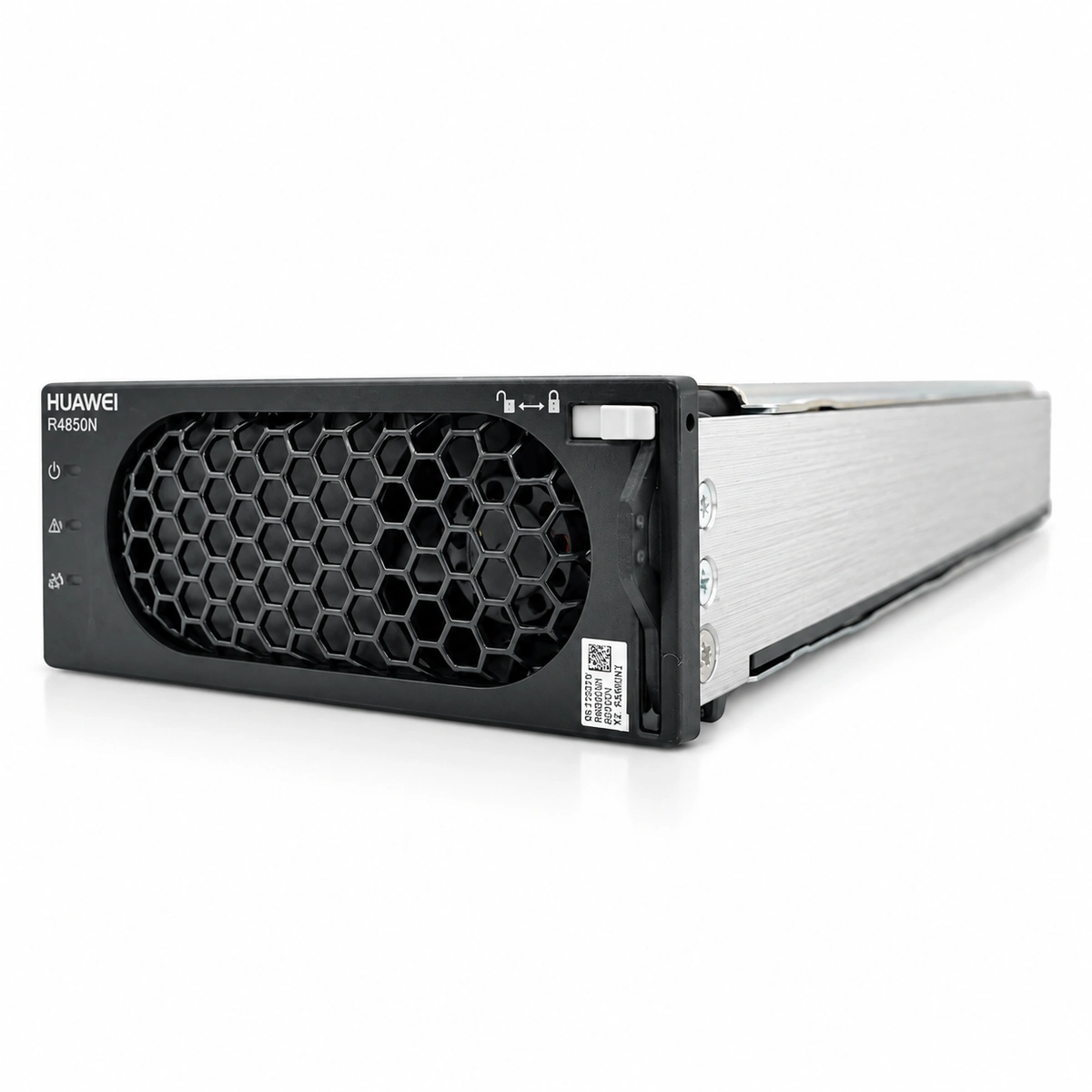
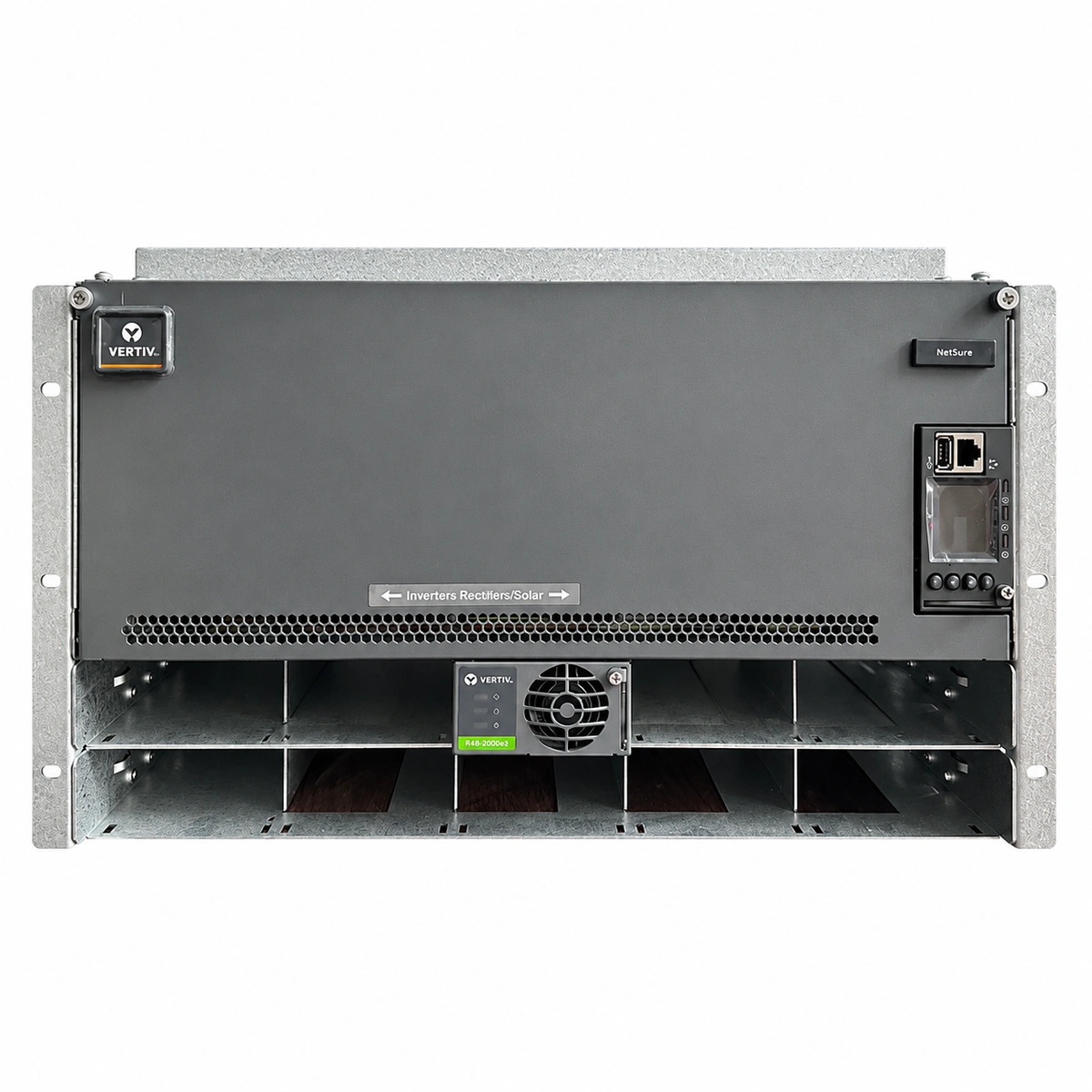
Powering this dense optical layer requires highly reliable, uninterruptible physical infrastructure optimized for continuous telecommunication-grade operation. Central office and carrier-neutral co-location environments hosting APN nodes universally employ nominal -48V DC power distribution topologies. Leading modular power architectures—such as Vertiv NetSure platforms, Huawei ETP/EPS enterprise power units, and ZTE ZXD series rectifiers—deliver AC-to-DC conversion efficiencies exceeding 96.8%. RICEWIND facilities engineering guidelines prescribe feeding APN OXC chassis, high-power coherent switch frames, and EDFAs/Raman pump lasers via dual-bus (A+B) redundant -48V DC distribution networks backed by high-discharge-rate N+1 Lithium Iron Phosphate (LiFePO4) battery systems to prevent power disturbances from interrupting sensitive optical phase locks.
Calculate central office thermal dissipation delta achieved by eliminating multi-hop L2/L3 switch ASICs.
Deploy dual-feed (A+B) -48V DC power distribution with rectifiers rated at or above 96.8% operational efficiency.
Equip battery reserve systems with high-rate discharge LiFePO4 cells configured for minimum 4-hour runtime continuity.
Commercial Deployment & Roadmap: Beyond 5G Strategy 2.0 and the 2028 Functional Architecture
The publication of ITU-T Y.3335 serves as the anchor point within a comprehensive multi-year standardization roadmap orchestrated by Japan's Ministry of Internal Affairs and Communications (MIC) under the 'Beyond 5G Promotion Strategy 2.0', executed in tandem with the IOWN Global Forum. The consortium members—NTT, KDDI, Rakuten, NEC, 1Finity by Fujitsu, Oki, and Sumitomo—have transitioned from isolated architectural proofs of concept to multi-carrier field trials across commercial fiber loops. These live testbeds systematically validate dynamic wavelength switching, autonomic fault isolation, and sub-microsecond state recovery under fluctuating AI burst traffic loads across heterogeneous metropolitan regions.
The global roadmap advances toward the next major standardization milestone scheduled for formal ITU-T ratification in October 2028: the comprehensive 'APN Functional Architecture' recommendation. This forthcoming standard will encompass full-stack autonomic operation, embedding real-time streaming telemetry via gNMI/OpenConfig models, dynamic optical time-domain reflectometry (OTDR) link tracing, and hardware-integrated post-quantum cryptography (PQC) coupled with Quantum Key Distribution (QKD) over shared photonic channels. Enterprise architects and telecom strategists adhering to RICEWIND deployment models must begin establishing optical migration strategies today to integrate federated all-photonic capabilities into future 6G edge and large-scale AI physical compute infrastructures.
Implement OpenConfig and gNMI telemetry streaming protocols across all line systems and optical transponders.
Evaluate quantum-safe encryption layers, integrating PQC key exchange with continuous photonic link telemetry.
Establish an upgrade roadmap for central office line cards and ROADM nodes targeting the October 2028 ITU-T APN milestones.
Engineering Procurement & Technical Desk
For technical datasheets, custom power topology design, or volume export quotations, reach out to HEFENGQI engineers.