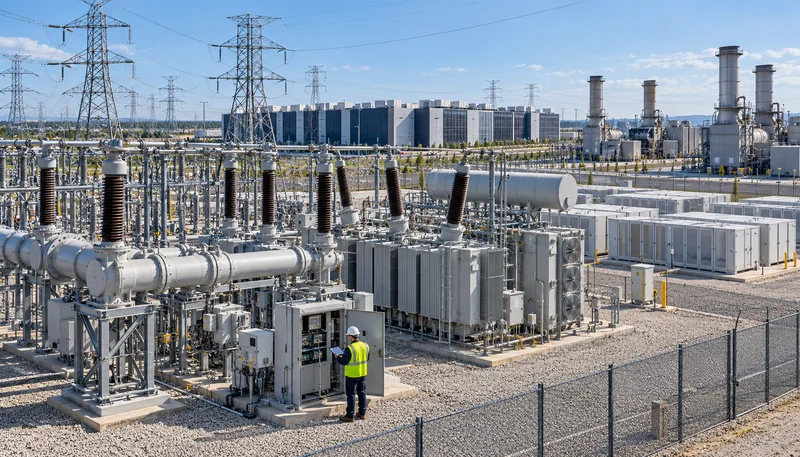
The FTM vs. BTM Paradigm Shift: Transitioning from Passive Consumer to Grid-Feeding Asset
The exponential scaling of frontier artificial intelligence training clusters has rendered traditional Behind-the-Meter (BTM) electrical designs obsolete for multi-hundred-megawatt and gigawatt-scale deployments. Historically, data center power engineering relied on BTM topologies where the facility sits strictly downstream of the utility revenue demarcation point. In a BTM regime, on-site energy resources—predominantly diesel or reciprocating gas generators, localized rooftop photovoltaics, and microgrid installations—are isolated behind the utility meter. These assets operate exclusively as emergency reserves or supplementary peak-shaving mechanisms. They do not export active power to the wider grid, leaving the regional transmission system to absorb massive, step-load transients, severe harmonic distortions, and steep ramp rates inherent to high-density GPU and ASIC workload variations without upstream physical compensation.
Conversely, the Front-of-the-Meter (FTM) architecture transforms the hyperscale data center from a passive, disruptive energy consumer into an integrated, grid-feeding generation and transmission asset. Under an FTM framework engineered by RICEWIND, utility-scale power generation—such as dispatchable aeroderivative gas turbines, combined-cycle gas turbine (CCGT) blocks, or multi-hundred-megawatt Battery Energy Storage Systems (BESS)—is connected directly to the high-voltage (HV) or extra-high-voltage (EHV) transmission network at 230kV, 345kV, or 500kV. Electrons are injected directly into the regional bulk power system ahead of facility-level consumption. This fundamental architectural pivot eliminates local distribution feeder bottlenecks, prevents thermal overloading of regional substations, and enables data center operators to contract firm bilateral power while actively providing capacity, black-start capabilities, and frequency support to the host Regional Transmission Organization (RTO) or Independent System Operator (ISO).
Evaluate interconnect boundaries to transition from standard distribution-level service drops to 230kV/500kV bulk electric system (BES) nodes.
Perform sub-cycle transient load-step modeling to verify grid compliance under 0% to 100% dynamic computing utilization swings.
Establish bi-directional telemetry and dispatch protocols compatible with RTO/ISO automated generation control (AGC) standards.
Overcoming Interconnection Queue Paralysis: Accelerating Multi-Gigawatt Substation Energization
The primary bottleneck facing AI hyperscale infrastructure is no longer silicon procurement or thermal management, but the structural grid interconnect queue paralysis. In critical regional transmission systems across North America and Europe—such as PJM Interconnection, ERCOT, MISO, and CAISO—standard large-load interconnection studies currently face lead times ranging from 5 to 8 years. Hyperscale developers requesting massive load additions (200MW to 1GW) trigger extensive regional cluster studies, thermal re-dispatch evaluations, and system impact assessments, which consistently identify upstream transmission upgrades that delay commercial operation dates (COD) well beyond compute hardware development cycles.
By structuring on-site and adjacent generation as FTM assets, hyperscalers bypass the conventional load-only queue by submitting unified generator interconnection requests under modernized frameworks like FERC Order 2023. Under this co-located FTM paradigm, the project development package directly funds, constructs, and energizes the required high-voltage transmission substation, autotransformer banks, and gas-insulated switchgear (GIS) infrastructure. By delivering net-neutral or net-positive active power capacity into congested nodes, the facility neutralizes system-level contingency violations. RICEWIND power system modeling confirms that co-locating FTM generation at transmission nodes eliminates the need for extensive deep-network reconductoring, compressing the energization lifecycle from seven years down to 24–36 months through developer-led, turnkey engineering, procurement, and construction (EPC) utility handoffs.
Deploy FERC Order 2023-compliant cluster study methodologies combining load off-take with simultaneous synchronous generation additions.
Execute developer-led Engineering, Procurement, and Construction (EPC) agreements for utility substation construction to bypass utility design queues.
Implement N-1-1 contingency simulation matrices to ensure zero transmission thermal violations across adjacent bulk power lines.
Regulatory Approval & Locational Marginal Pricing (LMP) Advantages: Mitigating Regional Tariff Backlash
The rapid expansion of multi-hundred-megawatt hyperscale data centers has generated unprecedented scrutiny from public utility commissions (PUCs), consumer advocacy groups, and municipal entities. Large-scale data center loads can congest regional transmission corridors, dramatically inflating Locational Marginal Pricing (LMP) and shifting costly transmission network upgrade expenses onto residential and commercial ratepayers. When an unmitigated 500MW load attaches to a weak transmission node, the congestion component of the LMP surges, frequently triggering political resistance, protracted environmental permitting battles, and proposed moratoriums on data center construction.
FTM generation assets fundamentally alter this regulatory and socioeconomic dynamic. Because FTM assets inject multi-megawatt firm capacity directly into the wholesale market, they actively suppress LMP volatility at congested nodes during peak grid stress events. When high-priority AI model training runs are temporarily curtailed, throttled, or shifted across distributed availability zones via software-defined workload orchestration, the co-located FTM generation continues generating at full capacity. This surplus energy discharges directly into the regional wholesale market, providing critical primary frequency response, synthetic inertia, and spinning reserve margins. Demonstrating this positive externality during state PUC hearings shifts the hyperscaler from the profile of a resource drain to an indispensable anchor of regional grid resilience, dramatically accelerating certificate of public convenience and necessity (CPCN) approvals.
Quantify local node LMP dampening metrics within state public utility commission (PUC) filings to substantiate ratepayer benefits.
Structure automatic software-defined load throttling algorithms linked directly to ISO real-time pricing and emergency energy alerts.
Formalize commercial participation frameworks for wholesale ancillary services, including spinning reserve and dynamic reactive power supply.
High-Voltage Substation Engineering: 500kV/230kV GIS Switchgear, Autotransformers & BESS Integration
Interconnecting an FTM generation facility with an AI hyperscale data center demands utility-grade, extra-high-voltage substation topologies engineered for absolute reliability. To minimize land footprints and eliminate environmental contamination risks, standard air-insulated switchgear (AIS) is replaced by 230kV, 345kV, or 500kV Gas-Insulated Switchgear (GIS) employing sulfur hexafluoride (SF6) or eco-efficient fluoronitrile-based gas mixtures. The substation topology is standardized on a Breaker-and-a-Half or Double-Bus Double-Breaker configuration, guaranteeing that any single circuit breaker can be isolated for routine maintenance or fault clearing without interrupting continuous power delivery to the step-down autotransformer banks or the main computing busbars.
Voltage step-down from the transmission level to the campus medium-voltage distribution network (typically 34.5kV) is executed by parallel banks of three-phase autotransformers rated at 200MVA to 500MVA each, outfitted with redundant ONAN/ONAF/OFAF cooling arrays, on-load tap changers (OLTC), and high-speed digital protective relays compliant with the IEC 61850 standard over redundant fiber-optic GOOSE networks. Directly integrated onto the 34.5kV bus is a utility-scale Battery Energy Storage System (BESS) utilizing high-cycle Lithium Iron Phosphate (LFP) or emerging Sodium-ion cell chemistry, sized from 100MW to 400MWh. In an FTM architecture designed by RICEWIND, this BESS does not merely serve as an uninterruptible power supply (UPS); it utilizes advanced grid-forming inverters (GFM) to inject sub-cycle synthetic inertia, suppress sub-synchronous resonance (SSR), and bridge millisecond-level step-load transients generated by extreme AI burst computing cycles.
Specify Breaker-and-a-Half or Double-Bus Double-Breaker GIS layouts to guarantee uninterrupted dual-path N-1 redundancy.
Implement IEC 61850 process bus architecture utilizing station-level and bay-level optical GOOSE messaging for sub-cycle differential protection.
Incorporate grid-forming (GFM) BESS inverters capable of delivering instantaneous synthetic inertia and autonomous black-start sequencing.
Medium-to-Low Voltage Power Conversion: Solid-State Transformers, DC Busbars & High-Efficiency Rectifiers
Downstream of the utility-scale 34.5kV medium-voltage substation bus, the power distribution topology must efficiently interface with cutting-edge AI server racks demanding 100kW to 300kW per cabinet. The conventional topology—consisting of medium-voltage to 480V AC oil-filled transformers, centralized AC double-conversion UPS systems, power distribution units (PDUs), and individual server-chassis power supply units (PSUs)—suffers from cumulative conversion losses, massive copper busbar footprints, and harmonic vulnerability. Hyperscale FTM plants increasingly converge on advanced Solid-State Transformers (SST) based on high-bandgap Silicon Carbide (SiC) semiconductor architectures. These SSTs perform direct medium-voltage AC (34.5kV or 13.8kV) to direct current (DC) transformation within a compact physical envelope, providing galvanic isolation while directly feeding high-voltage DC (HVDC) distribution lines.
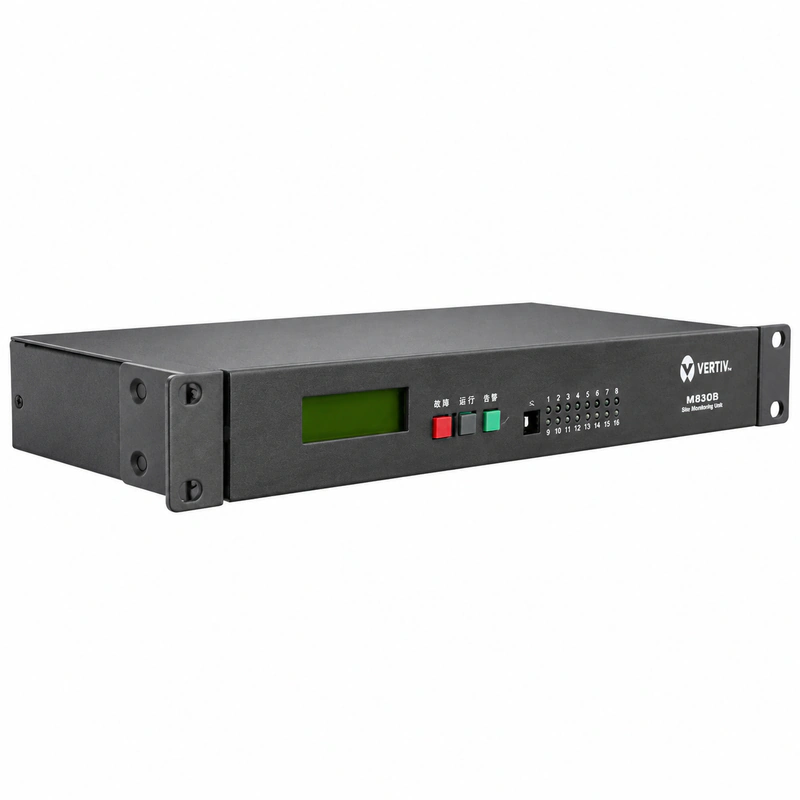
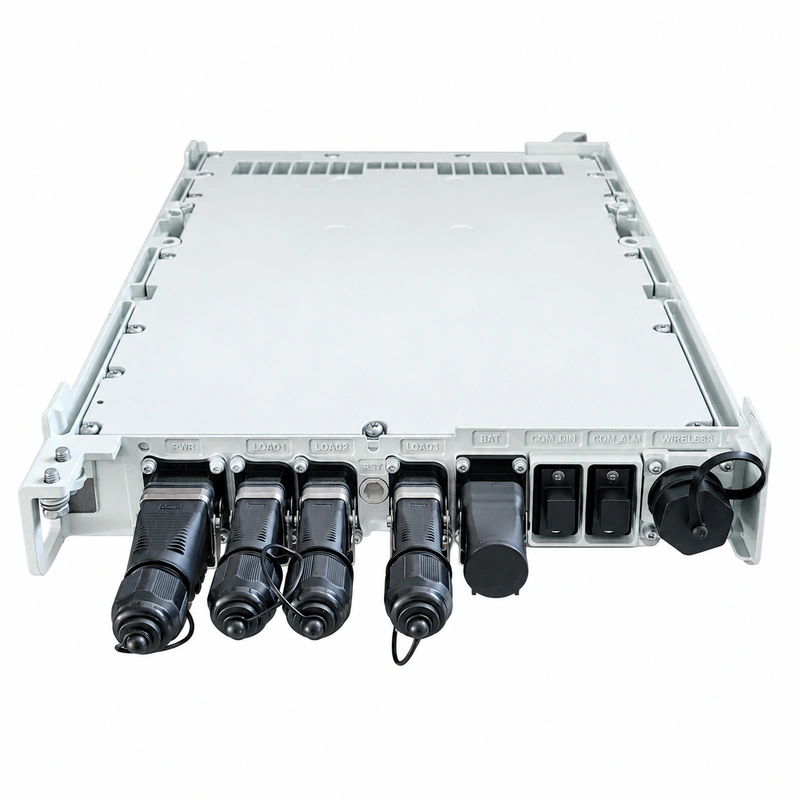
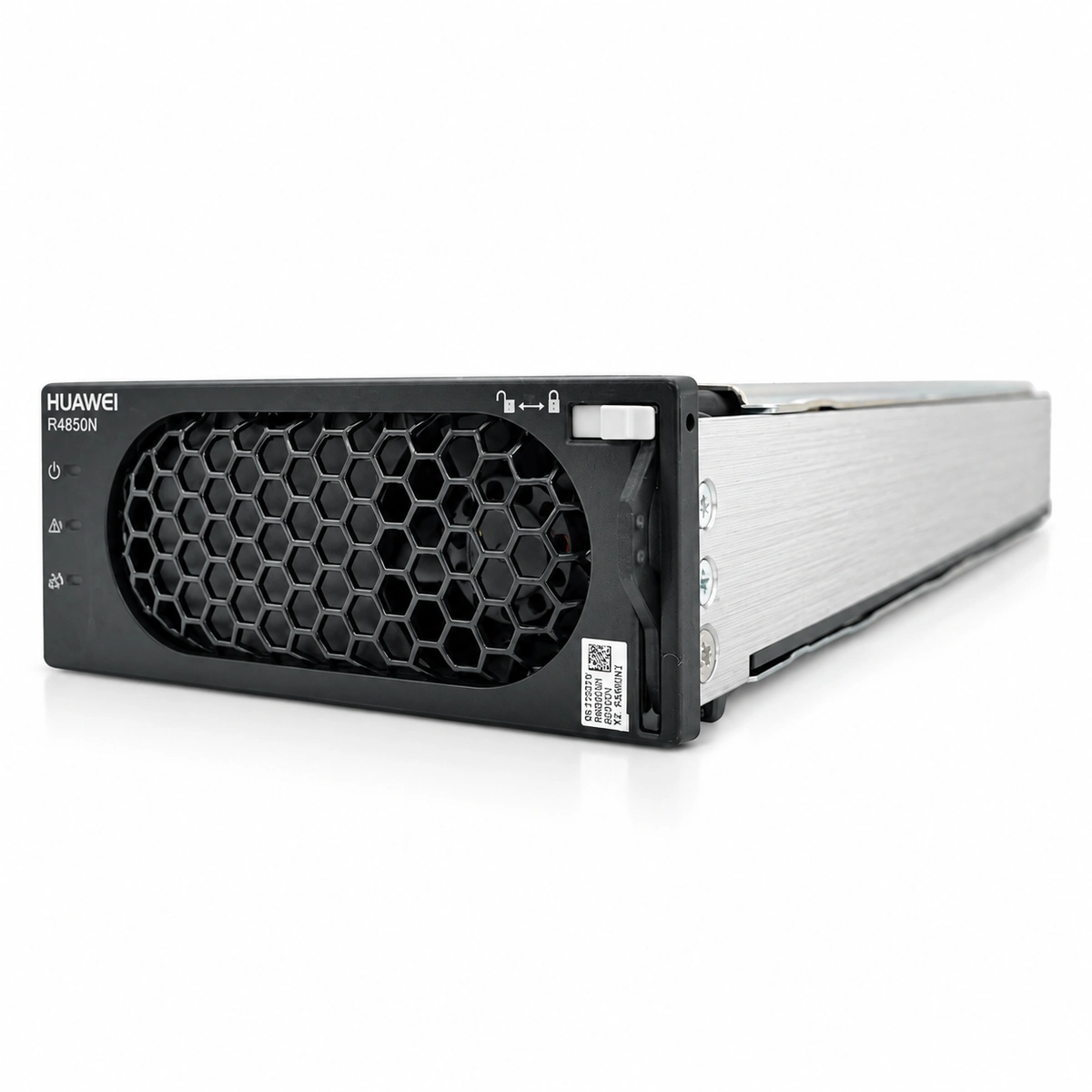
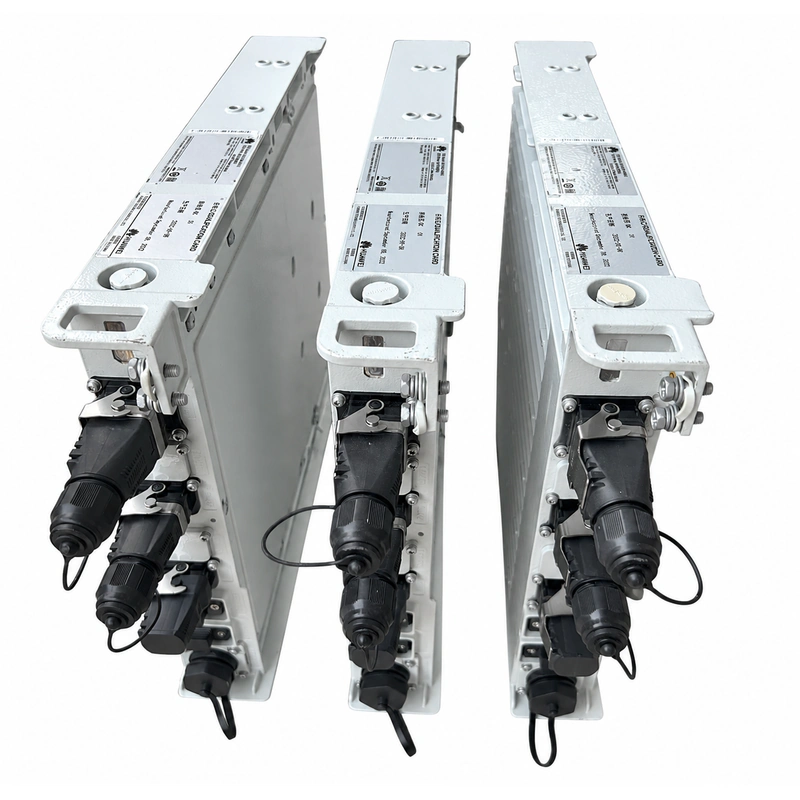
The facility distribution architecture deploys unified 380V DC or emerging 700V/800V DC busway infrastructures running directly to high-density compute rows. By eliminating intermediate DC-to-AC and AC-to-DC conversion stages, facility-level end-to-end electrical efficiency surpasses 98.2%. At the rack and compute cluster level, high-efficiency telecommunication-grade rectifier architectures (comparable to carrier-class systems such as Vertiv NetSure, Eltek Flatpack, or Huawei ETP series) maintain ultra-low Total Harmonic Distortion (THD < 3%) and a near-unity power factor (>0.998). This carrier-grade power electronics interface completely buffers the high-voltage utility switchgear from high-frequency switching harmonics generated by millions of concurrently executing AI accelerator processing cores.
Deploy Silicon Carbide (SiC) based Solid-State Transformers (SST) for direct MV-to-DC conversion to maximize power density.
Transition white space power distribution to 380V/700V DC busbars to eliminate multiple conversion steps and reduce copper consumption.
Enforce strict Total Harmonic Distortion (THD < 3%) and Power Factor (>0.99) thresholds on all compute-rack rectifier stages to prevent grid resonance.
Capital Economics & Joint Ventures: Hyperscaler PPAs, IPP Partnerships, and the SMR Nuclear Horizon
The transition to FTM power architectures requires a multi-billion-dollar reallocation of infrastructure capital, irrevocably altering the relationship between technology hyperscalers, Independent Power Producers (IPPs), and regulated utilities. The historical standard of utilizing Virtual Power Purchase Agreements (vPPAs) for financial carbon-offset certificates is no longer adequate to secure physical, real-time energy continuity. Today, hyperscalers are deploying direct balance-sheet equity into joint ventures (JVs) with specialized energy developers to build, co-own, and operate generation-interconnection complexes. These capital allocations are heavily structured around long-term firm energy offtake contracts that guarantee dispatch rights to the data center while sharing wholesale capacity and market-arbitrage revenues derived from the FTM grid interconnection.
Looking toward the 2030 operating horizon, the ultimate evolution of the FTM paradigm resides in the commercial co-location of Small Modular Reactors (SMRs) and advanced hydrogen-capable combined-cycle systems. Advanced Generation IV SMR installations—such as high-temperature gas-cooled or sodium-cooled fast reactors ranging from 100MWe to 300MWe per module—are engineered to interface directly with the 500kV switchyards adjacent to data center campuses. Under the technical guidance of RICEWIND, these future-proofed assets will operate as self-contained energy islands capable of full FTM grid integration, exporting hundreds of megawatts of baseload carbon-free energy during optimal grid conditions, and seamlessly providing deterministic, fault-tolerant multi-gigawatt power for the next century of artificial intelligence infrastructure.
Structure physical joint venture equity frameworks with Independent Power Producers (IPPs) to co-fund transmission-level generation assets.
Establish multi-decade capital allocation models incorporating energy arbitrage revenues, capacity market credits, and firm offtake hedges.
Design 500kV substation switchyards with spatial and electrical interconnection provisions for 2030-era Small Modular Reactor (SMR) integration.
Engineering Procurement & Technical Desk
For technical datasheets, custom power topology design, or volume export quotations, reach out to RICEWIND engineers.