The Dual-Track Reality: Why Demand-Side Efficiency Only Delays the Grid Interconnection Crunch
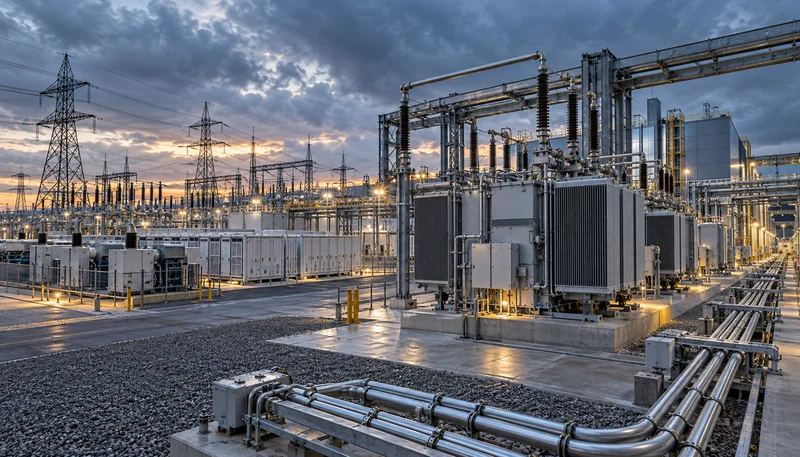
The global race to scale artificial intelligence infrastructure has exposed a fundamental timeline asymmetry between electrical power distribution engineering and silicon manufacturing. Hyperscale operators are deploying multi-gigawatt computational footprints utilizing next-generation GPU and TPU clusters operating at thermal design powers (TDP) exceeding 1,000 to 1,500 watts per package. While server rack densities surge from historical averages of 8 to 15 kW up to 100 to 250 kW per rack, the public power transmission architecture remains structurally locked in 4-to-8-year development cycles. Constructing new 230kV or 500kV bulk transmission lines, securing National Electrical Safety Code (NESC) right-of-way approvals, and procuring large power transformers (LPTs)—which currently suffer from procurement lead times spanning 180 to 240 weeks—severely throttles campus energization schedules.
To mitigate this immediate structural bottleneck, operators have aggressively implemented demand-side engineering optimizations. Transitioning to hybrid and negative-pressure direct-to-chip (DTC) liquid cooling alongside closed-loop secondary fluid networks has successfully compressed facility Power Usage Effectiveness (PUE) from legacy tiers of 1.40 down to 1.15 or lower. Concurrently, aggressive dynamic voltage and frequency scaling (DVFS) and facility-level power capping have reclaimed stranded electrical headroom. However, these demand-side measures offer an operational extension of merely 18 to 36 months. Thermodynamic efficiency improvements cannot indefinitely offset exponential compound compute demands; localized efficiency gains are rapidly consumed by the deployment of ever-larger tensor processing topologies, inevitably colliding with the absolute physical thermal and capacity limits of regional utility substations.
Conduct rigorous lead-time audits for high-voltage large power transformers (LPTs) and switchgear during the early design phase.
Establish unified facility PUE and Power Compute Effectiveness (PCE) benchmarks to identify real-time trapped capacity across all electrical paths.
Model 36-month local power consumption growth against regional transmission operator (RTO) queue position milestones.
Workload Elasticity Bifurcation: Batch Pre-Training Shifting vs. Inflexible Low-Latency Inference
Resolving internal power constraints requires establishing an architectural division based on the computational elasticity of specific AI workloads. Frontier large language model (LLM) pre-training, complex fine-tuning passes, and synthetic data generation pipelines exhibit temporal and geographic elasticity. These distributed workloads utilize persistent checkpointing mechanisms (such as non-volatile flash-backed checkpoint write-amplification mitigation) that tolerate coordinated duty-cycling, micro-throttling, or scheduled pauses. When local grid nodes experience peak stress or locational marginal pricing (LMP) spikes exceed acceptable operational cost thresholds, software-defined workload orchestrators can dynamically modulate the cluster's aggregate power profile or migrate execution threads across dedicated optical interconnect fabrics to alternative availability zones.
Conversely, customer-facing inference engines—such as conversational voice interfaces, interactive multimodal search, financial algorithmic processing, and autonomous teleoperation—operate under rigid, non-negotiable sub-second latencies with zero computational tolerance for power throttling. Inference clusters exhibit non-deferrable power profiles that function as digital baseload demand, requiring uninterrupted five-nines (99.999%) availability. To reconcile these disparate profiles within a single facility, data center electrical architects are moving toward segregated dual-bus distribution designs. In this architecture, training clusters are assigned to dynamically interruptible circuits capable of shedding 70% to 80% of aggregate draw in under 50 milliseconds, while critical inference fleets remain isolated on Tier IV equivalent, fully conditioned, uninterrupted power feeds.
Implement programmatic dynamic checkpointing within pre-training frameworks to handle sudden step-down curtailment instructions.
Architect physically or logically segregated dual-bus switchboards separating deferrable batch training loads from non-deferrable inference nodes.
Integrate automated GPU core-frequency downclocking interfaces over Redfish/IPMI telemetry systems to achieve instantaneous power shaving.
The Utility Verification Gap: Contractual Curtailment Proof and Grid Interconnection Guarantees
Regional Transmission Organizations (RTOs) and Independent System Operators (ISOs)—including PJM, ERCOT, and CAISO—are increasingly skeptical of theoretical demand-response proposals submitted during large-scale interconnection queue evaluations. A pervasive 'utility verification gap' exists: grid planners cannot dispatch spinning reserves or defer capital-intensive substation re-conductoring projects solely on the basis of a cloud provider's algorithmic promises to shed load during transmission emergencies. When a 500-megawatt data center campus requests interconnect approval, grid reliability engineers require verifiable, contractually binding, and hardware-deterministic curtailment mechanisms capable of operating independently of software orchestration layers.
Overcoming this verification hurdle requires deploying utility-grade telemetry and deterministic protection architectures. Hyperscalers are installing high-speed synchrophasor devices and Remote Terminal Units (RTUs) operating over IEC 61850 and DNP3 protocols directly into utility SCADA systems. These systems interface directly with physical breaker shunt-trips, solid-state transfer switches (SSTS), and fast-acting automated load-shed schemes. Furthermore, operators are utilizing dynamic thermal rating (DTR) methodologies to monitor the ambient and operational loading conditions of utility interconnects in real time. By delivering sub-cycle hardware-enforced disconnection proof under defined grid contingency events (N-1/N-2 line tripping), operators can unlock conditional, flexible interconnect capacity months ahead of traditional firm interconnection agreements.
Deploy deterministic IEC 61850 and DNP3 communication nodes directly linking data center control rooms to utility SCADA networks.
Engineer hardware-interlocked load-shedding schemes completely isolated from host operating systems and software hypervisors.
Implement continuous Dynamic Thermal Rating (DTR) monitoring on incoming utility feeds to unlock stranded operational margins without violating safety codes.
Behind-the-Meter (BTM) Microgrids: High-Density BESS and Fast-Start Gas Turbine Peak-Shaving
Faced with lengthy utility interconnect timelines, data center developers are evolving from passive energy consumers into self-contained, active behind-the-meter (BTM) microgrid operators. Central to this transformation is the deployment of utility-scale Battery Energy Storage Systems (BESS) utilizing high-density Lithium Iron Phosphate (LFP) or emerging Sodium-ion (Na-ion) chemistries. Rated for 1C to 4C continuous discharge capabilities, these containerized battery assets handle millisecond-level peak shaving, buffer severe dynamic step transients from AI silicon, and provide synthetic grid inertia through grid-forming inverters. During critical grid events, BESS installations ensure seamless islanding transitions without inducing bus voltage drops or frequency shifts outside the ITI (CBEMA) curve.
For prolonged islanding durations extending up to 48 hours or longer, operators are integrating rapid-start aero-derivative natural gas turbines (such as the GE LM6000 or TM2500 series) and high-speed reciprocating internal combustion engines (RICE). Capable of accelerating from a cold start to full base load in under five minutes, these assets provide continuous prime and bridging power during sustained utility outages or periods of extreme demand curtailment. Furthermore, by configuring these microgrids with bi-directional synchronization gear, data center operators can participate directly in regional wholesale power markets, monetizing generation and battery capacity through synchronous reserve programs, frequency regulation services, and black-start support.
Deploy high-cycle-life LFP or Na-ion BESS arrays equipped with advanced grid-forming, four-quadrant inverters.
Install aero-derivative gas turbine or high-speed RICE generation capable of sub-5-minute synchronization to islanded microgrid buses.
Implement seamless static transfer switches (SSTS) and microgrid controllers with deterministic transition latency under 16 milliseconds.
Power Distribution Topologies: 380V/700V DC Busbars and High-Efficiency Rectifier Infrastructure
Conventional data center electrical distribution systems based on 480V-208V AC double-conversion uninterruptible power supplies (UPS) are approaching practical physics limits at scale. Supplying hundreds of kilowatts per rack at low AC voltages requires massive copper bus ducts, introduces severe impedance imbalances, and incurs compounding parasitic conversion losses across successive transformer stages. To eliminate these constraints, modern facilities are shifting rapidly toward direct-busbar topologies operating at 380V-415V AC or intermediate 380V to +/-350V (700V) DC rails routed directly into the rack power shelf. By bypassing multiple DC-AC-DC conversion stages, operators achieve a 4% to 8% improvement in end-to-end power delivery efficiency while reducing conductor copper mass and I2R thermal losses by over 40%.
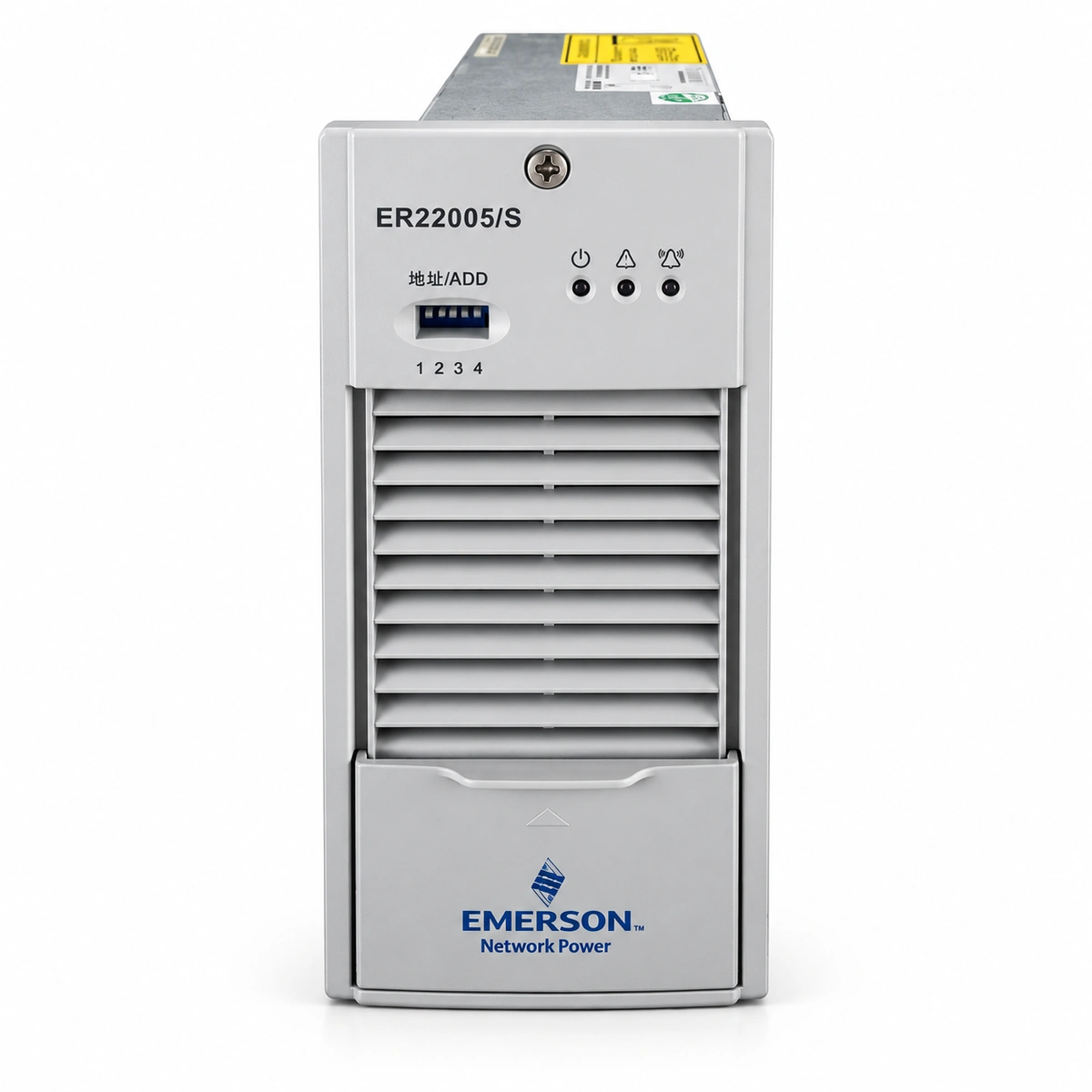
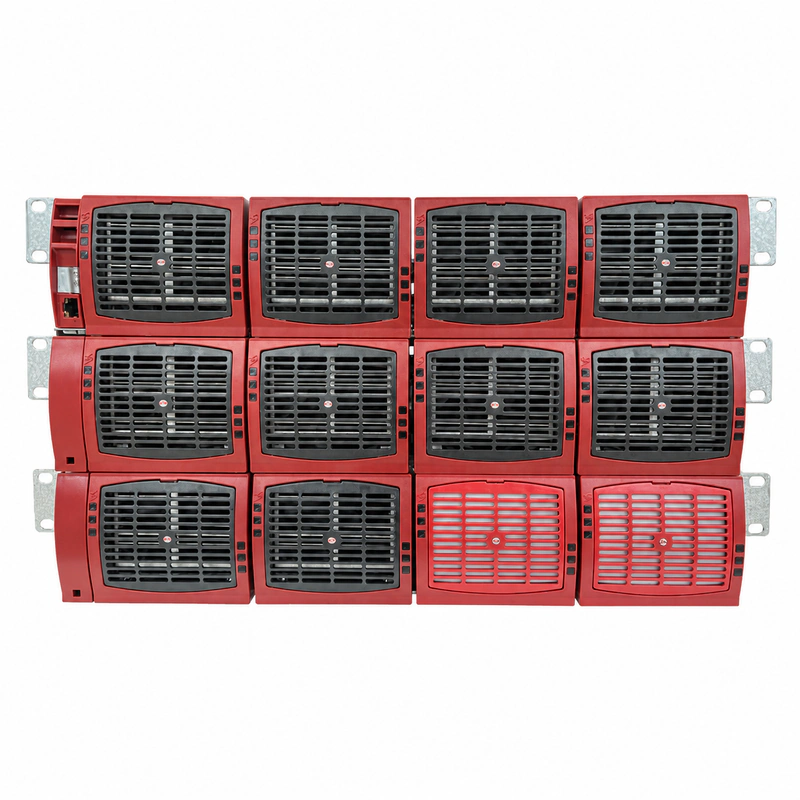
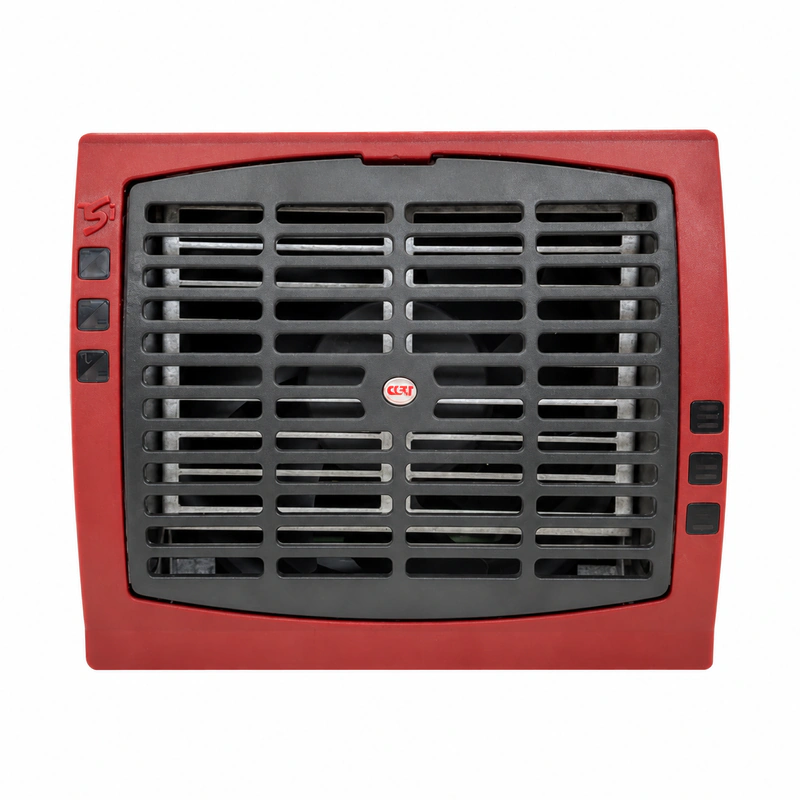
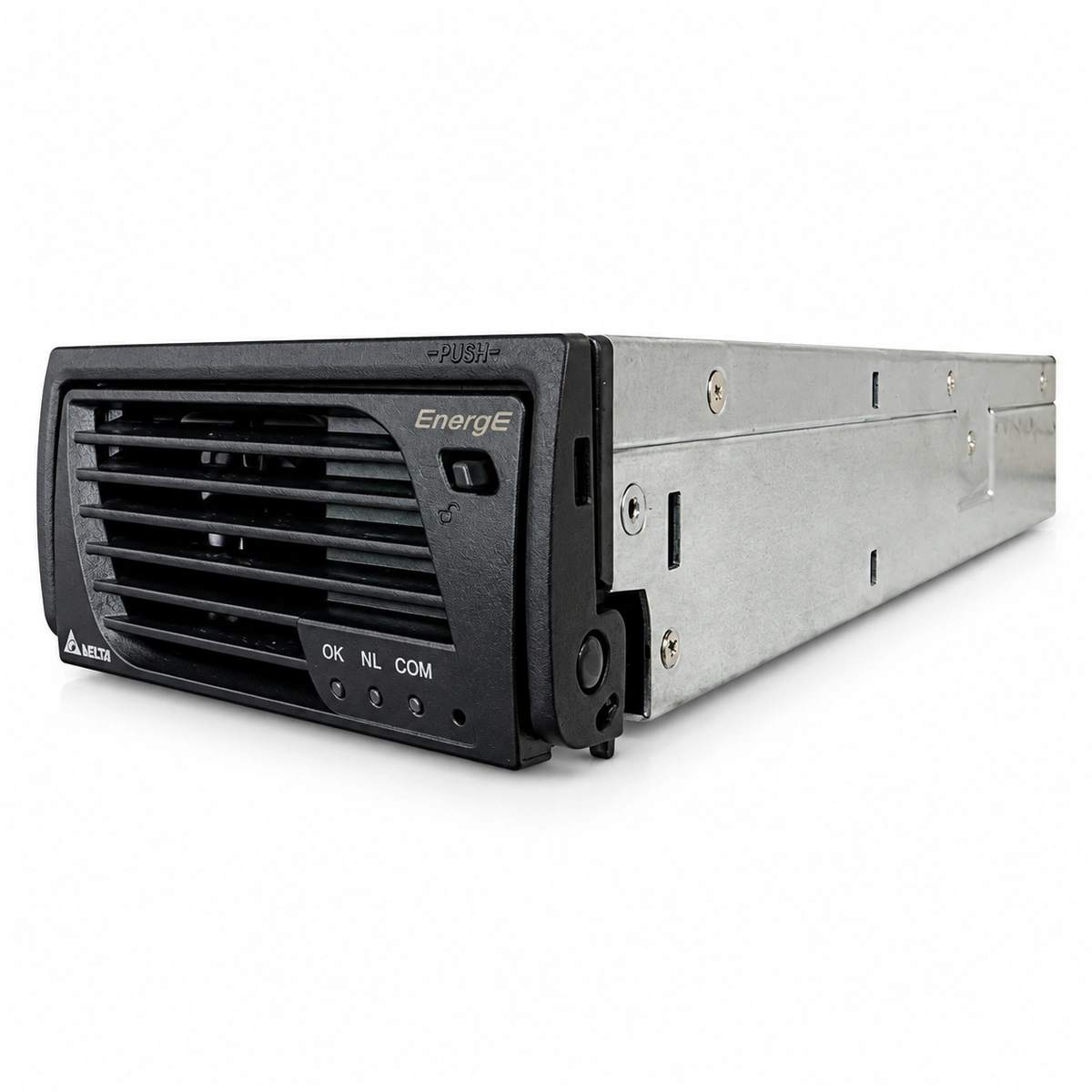
At the rack level, these DC architectures rely on telecom-grade, high-density silicon carbide (SiC) and gallium nitride (GaN) rectifiers operating at 97.5% to 98.5% conversion efficiencies. Simultaneously, front-end power distribution is being upgraded with solid-state transformers (SSTs) that step down medium-voltage feeds (13.8kV or 34.5kV) directly to a unified DC bus. These power electronics topologies are uniquely capable of dampening extreme dynamic current step changes (di/dt transients). In an AI accelerator cluster, transitions from an idle state to dense matrix multiplication operations can trigger instantaneous power swings of tens of thousands of amperes within tens of microseconds; solid-state conversion layers and localized capacitor banks absorb these transients, protecting upstream medium-voltage switchgear from tripping.
Transition facility power shelves from AC branch circuits to high-density 380V or +/-350V DC busway architectures.
Specify SiC/GaN-based modular rectifier arrays maintaining certified conversion efficiencies exceeding 97.5% across wide load curves.
Integrate solid-state transformer (SST) medium-voltage step-down infrastructure to manage extreme di/dt load steps without upstream harmonic distortion.
Capital & Policy Alignment: Hyperscale Direct Financing of HVDC and Substation Expansion
The sheer scale of AI-driven power demand is driving a structural transformation in capital deployment and regulatory engagement across the energy sector. Hyperscale operators are shifting from passive off-takers governed by standard regulated utility tariffs to active equity participants directly financing high-voltage transmission infrastructure. By underwriting merchant High-Voltage Direct Current (HVDC) transmission lines and constructing privately owned 500kV interconnect substations, technology enterprises are unblocking utility capital constraints and bypassing standard multi-decade regional cost-allocation proceedings, effectively accelerating the operational deployment of high-capacity transmission capacity.
Simultaneously, location strategies are evolving toward direct generation co-location. Rather than locating clusters exclusively near existing fiber network convergence nodes within strained metropolitan load zones, hyperscalers are acquiring land directly adjacent to baseload nuclear stations, large-scale hydroelectric plants, and dedicated gigawatt-scale renewable generation coupled with long-duration storage. Through long-term direct-connect Power Purchase Agreements (PPAs) and private wire arrangements, operators eliminate transmission line wheeling losses and regional interconnect queues entirely. This strategic integration of balance sheets, regulatory modernization, and long-term transmission planning ensures that compute scaling through 2030 will rest on a reliable, physically robust energy foundation.
Establish direct co-investment frameworks for merchant HVDC transmission links and privately financed front-of-the-meter substations.
Evaluate direct-connect behind-the-meter private wire agreements at baseload nuclear and high-capacity hydroelectric generation facilities.
Engage regulatory bodies (such as FERC and regional ISOs) using structured, fast-track large-generator and large-load interconnection filings.
Engineering Procurement & Technical Desk
For technical datasheets, custom power topology design, or volume export quotations, reach out to RICEWIND engineers.