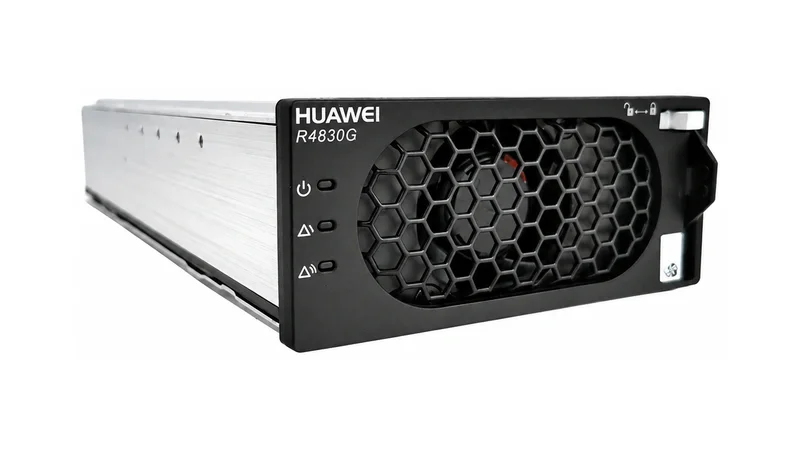
Architectural Overview & Volumetric Power Density Analysis
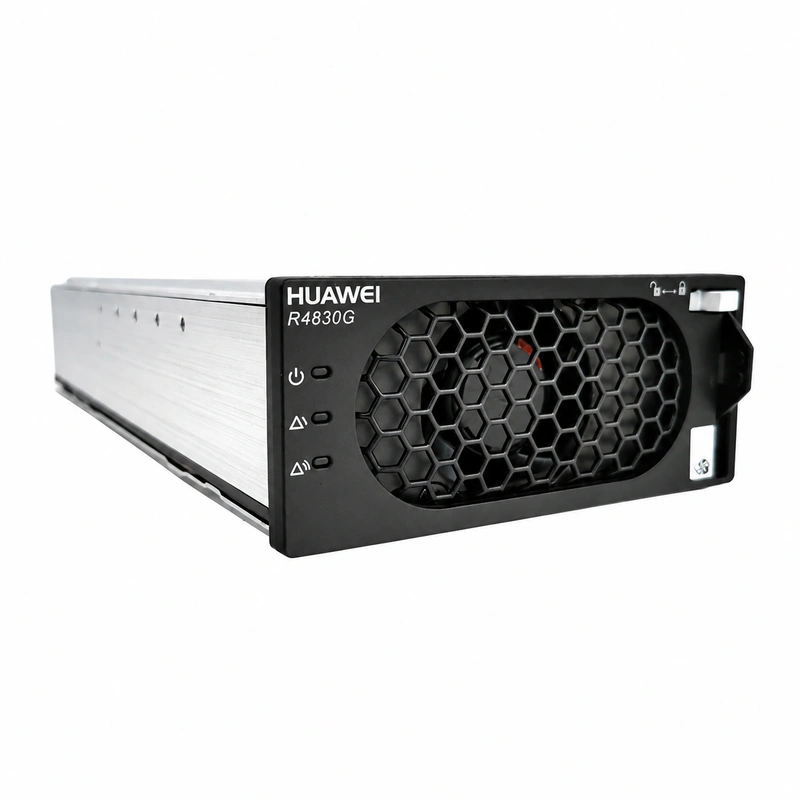
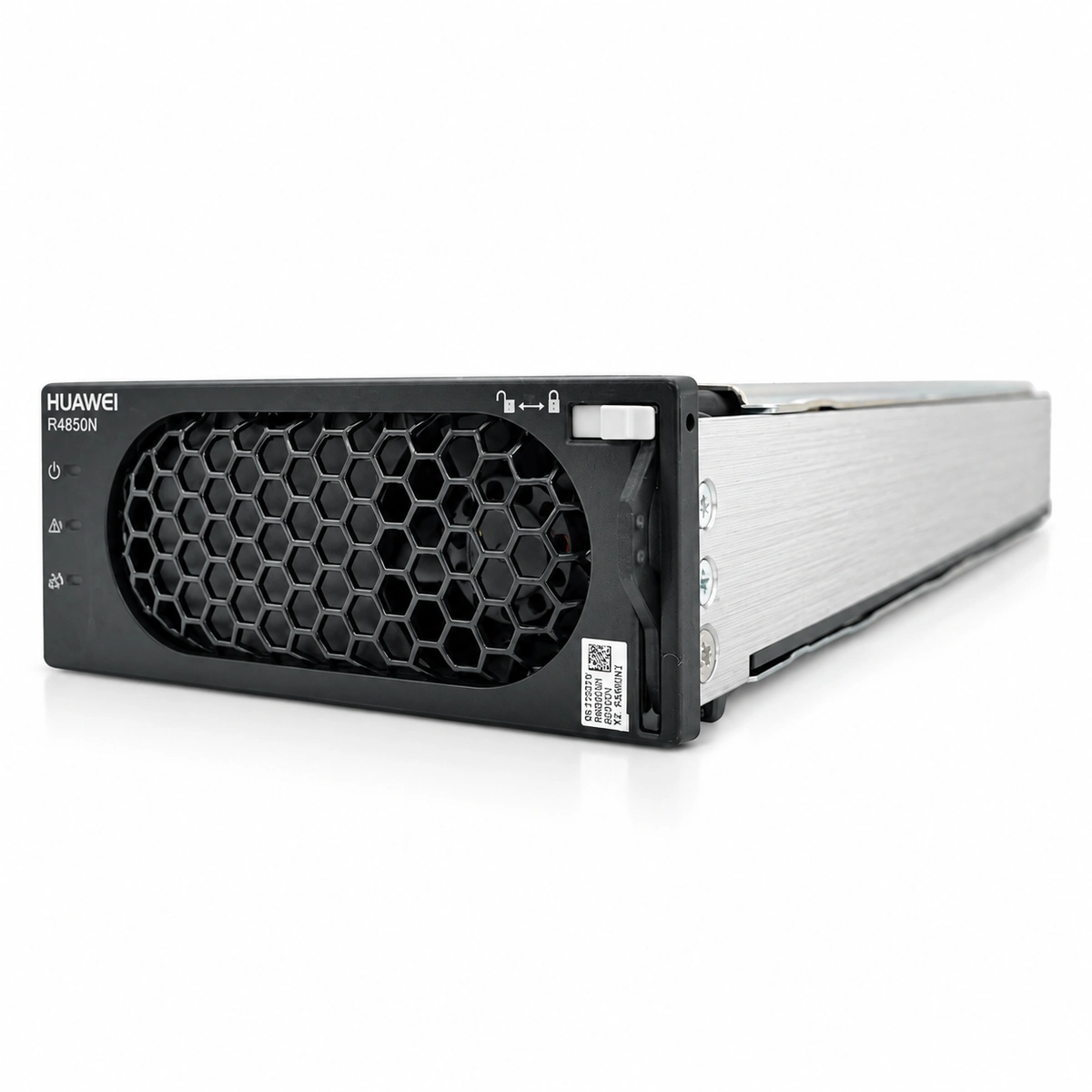
The Huawei R4830G1 represents a milestone in high-density telecommunications power conversion, packing a rated 2000W (30A) continuous DC output into an ultra-compact 1U form factor measuring 40.8mm (H) × 105mm (W) × 281mm (D). Weighing no more than 1.6 kg, the module is engineered to support -48V DC nominal bus architectures with a dynamically adjustable output spectrum ranging from -42V DC to -58V DC. This form-factor optimization allows power system integrators to achieve exceptional volumetric power density inside compact power subracks, freeing critical rack units in space-constrained cabinet deployments.
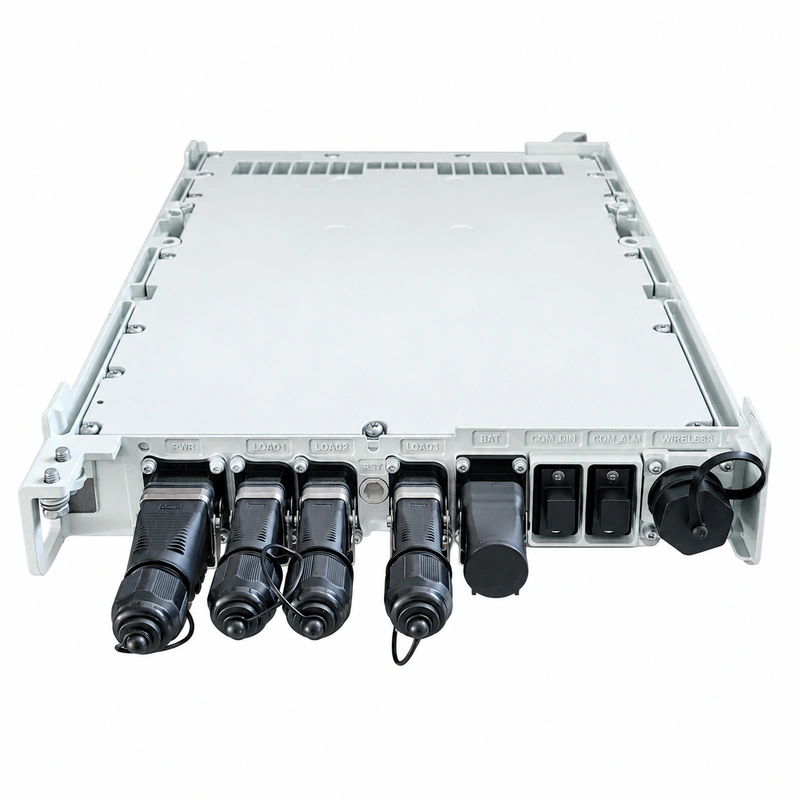
Internally, the R4830G1 deploys a multi-stage planar magnetic layout combined with high-frequency surface-mount power semiconductors. The mechanical assembly utilizes a rigid front-to-back chassis tunnel that isolates sensitive control circuitry from raw cooling airflow, protecting digital signal lines against conductive particulates. A blind-mate rear edge-connector combines multi-phase AC power input, -48V DC bus bars, and digital telemetry pins onto a single pluggable interface, facilitating live operational changes without mechanical disruption to adjacent power equipment.
Compact 1U form factor (40.8mm × 105mm × 281mm) delivering 2000W / 30A capacity at ≤ 1.6 kg
Adjustable DC output voltage range across -42V DC to -58V DC to match diverse battery chemistries
Staggered blind-mate rear connector configuration isolating signal pins from high-current contacts
Power Conversion Topology, Efficiency Metrics & Thermal Dynamics
The internal power train of the Huawei R4830G1 relies on an advanced two-stage power conversion architecture. The primary stage employs an active Power Factor Correction (PFC) boost topology that ensures a power factor (PF) of ≥ 0.99 at rated loads while suppressing Total Harmonic Distortion (THD) below 5%, in full compliance with EN 61000-3-2 standards. The isolated DC-DC secondary stage leverages an interleaved LLC resonant converter topology operating under Zero Voltage Switching (ZVS) and Zero Current Switching (ZCS) conditions. This topology achieves peak electrical conversion efficiency of ≥ 96.0% (reaching up to 96.2% within the 50% to 70% standard operational load band), substantially reducing heat waste and parasitic operational expenditure.
Thermal dissipation is actively regulated by an internal, micro-controlled brushless DC axial fan. The onboard digital supervisory system continuously samples temperature readings from positive thermal coefficient (PTC) and negative thermal coefficient (NTC) thermistors mounted directly on the primary power switches, secondary synchronous rectifiers, and magnetic transformer cores. Using these thermal metrics, the system modulates fan speed via pulse-width modulation (PWM) along a stepped acoustic curve, maintaining noise levels below 55 dBA at 25°C under nominal loads. The architecture incorporates predictive thermal foldback, safely ramping down maximum output power during severe over-temperature events rather than initiating an uncoordinated hard shutdown.
Peak conversion efficiency exceeding 96.0% with an optimized plateau between 50% and 70% load
LLC resonant soft-switching topology yielding active PFC ≥ 0.99 and current THD ≤ 5%
PWM-regulated brushless fan yielding ≤ 55 dBA acoustic signature under standard operational conditions
Grid Resilience, Ultra-Wide Input Range & Surge Protection Topology
Designed to withstand unstable power grids in remote and emerging regions, the R4830G1 features an ultra-wide AC input voltage operating window from 85V AC to 300V AC (nominal 220V/230V AC single-phase, 45Hz–66Hz). The module maintains full 2000W output capability across the 176V AC to 300V AC bracket. When grid voltages drop below 176V AC due to brownouts, long distribution feeders, or fluctuating generator sources, an intelligent linear derating algorithm keeps the unit safely operational down to 85V AC, preventing premature battery discharge while protecting internal conversion stages.
The module includes comprehensive high-voltage protection mechanisms. It withstands continuous overvoltage conditions up to 300V AC and survives catastrophic neutral-loss scenarios on three-phase mains connections. High-energy metal-oxide varistors (MOVs) and gas discharge tubes (GDTs) clamp lightning-induced surges and utility transients at the AC input. Galvanic isolation is tested to 3000V AC between input and chassis with leakage current under 5mA, ensuring complete dielectric safety for downstream telecom equipment and personnel.
Continuous input voltage capability from 85V AC to 300V AC with full 2000W output between 176V and 300V AC
Deterministic linear derating curve operating down to 85V AC to mitigate utility undervoltage failures
Dielectric isolation withstand rated at 3000V AC (input to chassis) with integrated MOV transient clamping
Hot-Swappable Blind-Mate Mechanics & Subrack Integration
The mechanical architecture of the R4830G1 is built for zero-downtime maintenance through fully hot-swappable blind-mate mechanics. The interface uses a multi-tiered pin arrangement where the chassis protective earth (PE) contacts make first contact and break last, followed by AC mains and DC power rails, with low-voltage telemetry pins engaging last. This sequence dampens inrush current spikes and eliminates destructive electrical arcing on live busbars, allowing field technicians to replace or expand modules without shutting down the system.
Communications and system coordination are managed over an isolated high-speed Controller Area Network (CAN) bus. The module integrates natively into Huawei ETP4830, ETP4890, ETP48100, and ETP48200 series embedded DC power subracks. A centralized system management controller—such as the SMU01C, SMU02C, or PMU—automatically detects newly inserted R4830G1 rectifiers, queries module telemetry, synchronizes firmware, and initiates active autonomous load-sharing algorithms that keep inter-module current variance within ±5% across parallel arrays.
True hot-swap blind-mate connector with sequential mechanical pin engagement to suppress inrush arcing
Autonomous high-speed CAN bus digital telemetry reporting real-time voltages, currents, and alarms
Native compatibility with Huawei ETP4830, ETP4890, ETP48100, and ETP48200 embedded subracks
Extreme Operating Envelopes & Mission-Critical Telecom Deployments
The Huawei R4830G1 is qualified for harsh environmental envelopes spanning -40°C to +75°C. The module sustains un-derated 2000W continuous output up to +55°C, above which it executes smooth linear thermal derating up to its +75°C operational ceiling. The internal printed circuit board assemblies (PCBAs) feature selective conformal coating, safeguarding high-impedance traces and fine-pitch IC pins against salt spray, high humidity (5% to 95% non-condensing), and industrial airborne pollutants commonly found in roadside cabinets.
These environmental protections make the R4830G1 ideal for mission-critical installations: 5G macro base transceiver station (BTS) outdoor micro-shelters, remote radio head (RRH) pole mounts, centralized telecom aggregation nodes, and industrial edge computing stations. Furthermore, the unit is rated for continuous operation at altitudes up to 4000 meters (with standard thermal derating applied above 2000 meters per industry norms), providing reliable DC power across demanding mountainous and high-altitude deployments.
Operational temperature range from -40°C to +75°C with continuous un-derated output up to +55°C
Conformal coating on internal power assemblies compliant with 5% to 95% RH non-condensing conditions
Deployment resilience qualified for 5G BTS outdoor cabinets, aggregation shelters, and altitudes up to 4000m
Carrier-Grade Procurement, Quality Assurance & TCO Strategy
Evaluating telecom switch-mode rectifiers requires balancing upfront capital expense with long-term Total Cost of Ownership (TCO) and calculated Mean Time Between Failures (MTBF). The Huawei R4830G1 boasts an MTBF exceeding 500,000 hours at 25°C, supported by top-tier Japanese long-life electrolytic capacitors and automated surface-mount assembly. When procuring modules at scale, network operators must enforce strict verification protocols to prevent uncertified clones, reconditioned units, or factory-rejected boards from infiltrating tier-one infrastructure.
Sourcing verification requires strict multi-point technical auditing: validating serial cryptographic barcodes, confirming authentic firmware handshakes with SMU controllers, and conducting 100% full-load dynamic burn-in tests on automated electronic load banks. RICEWIND maintains an audited supply chain of genuine, factory-tested Huawei R4830G1 inventory ready for immediate global logistics dispatch. For carrier tender specifications, direct factory allocation, and custom volume pricing, enterprise buyers can contact the RICEWIND engineering desk directly via email at lee@ricewind.com or by Phone/WhatsApp at +86 17621197907.
Carrier-grade MTBF rating > 500,000 hours backed by high-durability power electronics components
Mandatory 100% full-load burn-in testing on automated load banks prior to deployment dispatch
Direct RICEWIND procurement channel access: contact lee@ricewind.com / +86 17621197907
Engineering Procurement & Technical Desk
For technical datasheets, custom power topology design, or volume export quotations, reach out to RICEWIND engineers.