1. The decisive question is now when power becomes usable
A recent Data Center Knowledge industry analysis highlights a structural change in AI infrastructure planning: total capacity still matters, but capacity delivered on a dependable date matters more. Utility queues, substation work, transmission permits, and long-lead electrical equipment collectively determine when compute can carry production workloads.
Site selection therefore needs more than a distant megawatt figure. Teams should compare the first energization date, capacity available in each tranche, interconnection uncertainty, and the risk that reserved infrastructure becomes stranded if a project slips. This is an industry trend, not a substitute for written utility terms and project-specific engineering studies.
2. Phased energization reduces all-or-nothing exposure
A practical campus can be divided into independently testable power stages. The first stage aligns compute, network, and cooling with capacity that is already credible; later stages expand as substations, feeders, and equipment arrive. This prevents the entire civil, mechanical, electrical, and IT investment from waiting for the final utility milestone.
Phasing must be designed rather than improvised. Bus segmentation, protection selectivity, fault-current limits, grounding, metering, fire boundaries, and expansion interfaces should be resolved at the start. Otherwise, adding a later block can require disruptive outages and protection redesign that erase the original schedule benefit.
3. Modular power blocks require disciplined interfaces
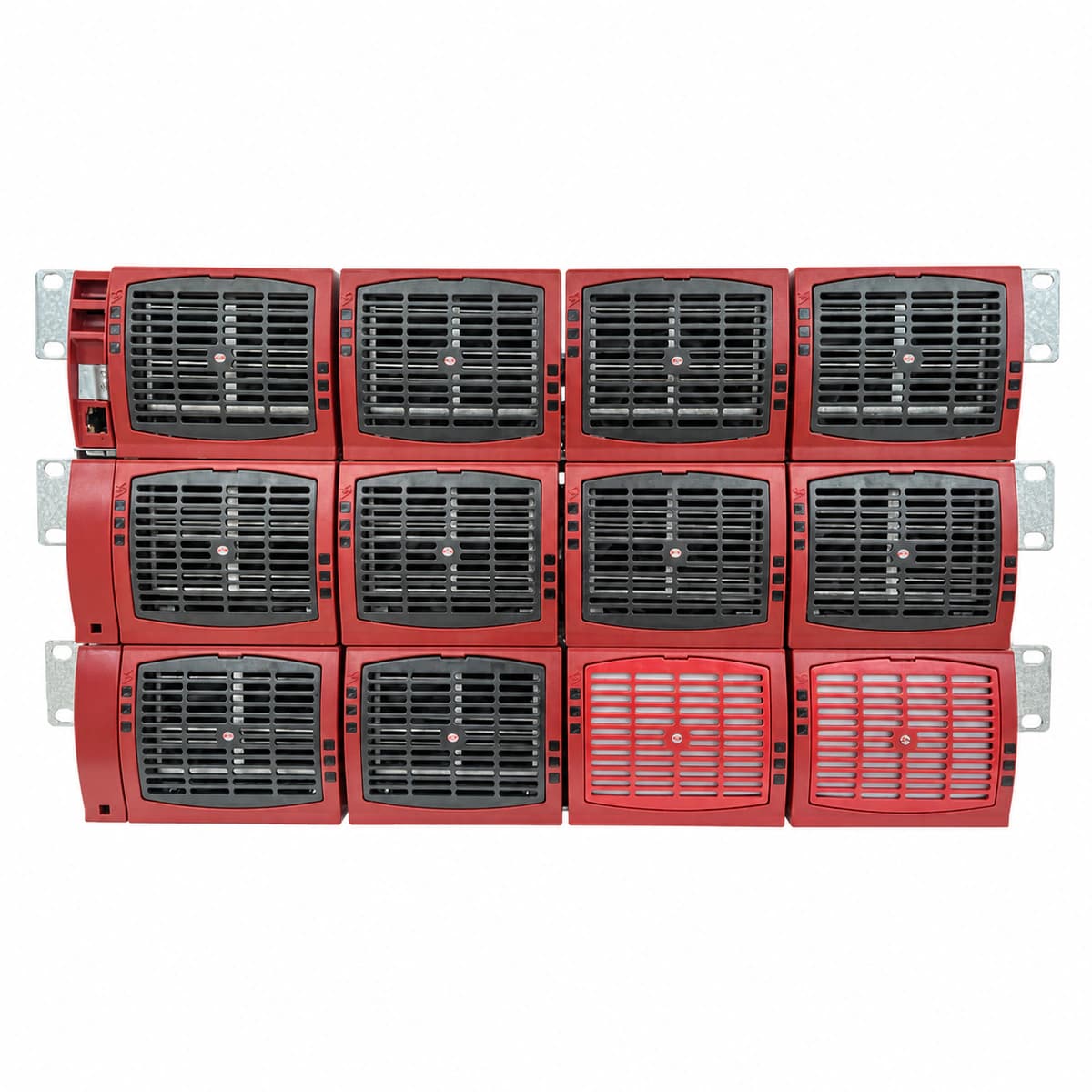
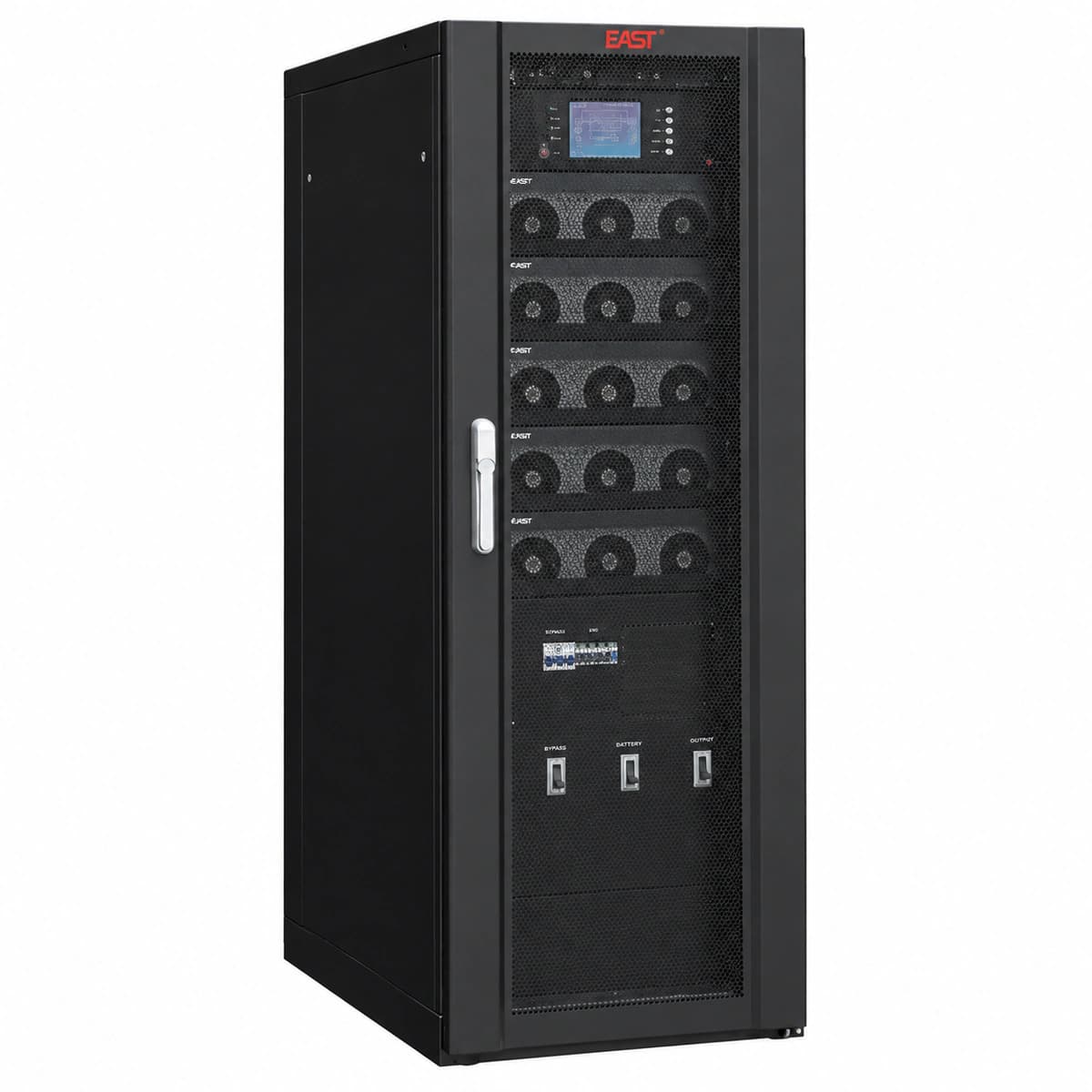
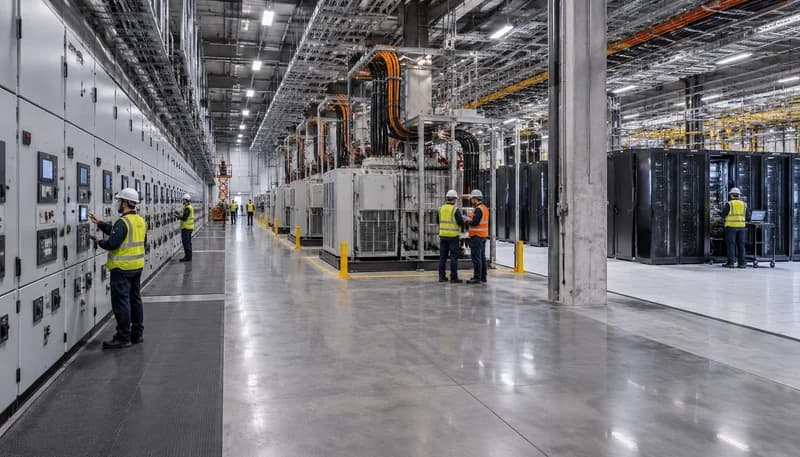
Prefabricated medium-voltage switchgear, power skids, transformers, and UPS modules can move work from the site into controlled factory conditions. Their advantage includes parallel production, repeatable testing, and standardized connections. Procurement specifications should define protection communications, harmonic boundaries, bypass arrangements, environmental conditions, and factory acceptance tests rather than only rated power.
The medium-voltage topology must balance expansion with fault isolation. Ring, sectionalized-bus, and dual-source arrangements each have valid applications. The design objective is to prevent maintenance on one element from disabling an entire compute zone while avoiding excessive early capital. Load-flow, short-circuit, and coordination studies should establish the boundary.
4. Ride-through and liquid cooling form one availability system
AI workloads can change quickly, so UPS and storage systems do more than provide long-duration backup. They bridge grid disturbances, generator starts, and transfer events. Lithium batteries, flywheels, or other technologies should be selected from measured load behavior, required duration, cycling policy, and fire strategy; advertised peak power is not the same as dependable ride-through capability.
Liquid cooling extends electrical availability into pumps, coolant distribution units, heat exchangers, and control networks. Energized servers without stable coolant flow still lose compute. Every phase should verify redundant paths, startup sequences, and interlocks for both IT and cooling loads so that nominal electrical capacity does not become unusable capacity.
5. Telemetry and commissioning gates turn equipment into capacity
A modular campus needs a common telemetry model. Protection relays, transformers, UPS systems, DC plants, distribution panels, busways, and cooling equipment need synchronized timestamps and consistent alarm severity. Simple online status cannot demonstrate that a stage will sustain a fast load transition or recover correctly after a disturbance.
Each stage should pass explicit gates: factory acceptance, insulation and grounding tests, protection injection, no-load integration, load-bank steps, black-start or loss-of-source recovery, generator and storage transfers, cooling-failure drills, and DCIM/BMS data reconciliation. Only capacity that passes integrated testing should be committed to business workloads.
6. Procurement and operating recommendations
Procurement teams should secure long-lead components early and standardize interfaces while preserving qualified alternatives consistent with the electrical studies. Contracts should make delivery dates, test evidence, spares, firmware compatibility, and field support measurable acceptance items. Skipping design freeze in the name of speed usually moves risk into commissioning.
Operators should maintain a stage-based capacity ledger that separates utility-promised capacity, energized capacity, integrated-tested capacity, and loaded IT capacity. The HEFENGQI Infrastructure Research Institute recommends treating time-to-power as a shared site, design, procurement, and operations metric, while requiring final review by locally licensed engineers, the utility, and safety authorities. Engineering resources are available at ricewind.com.
Engineering Procurement & Technical Desk
For technical datasheets, custom power topology design, or volume export quotations, reach out to HEFENGQI engineers.