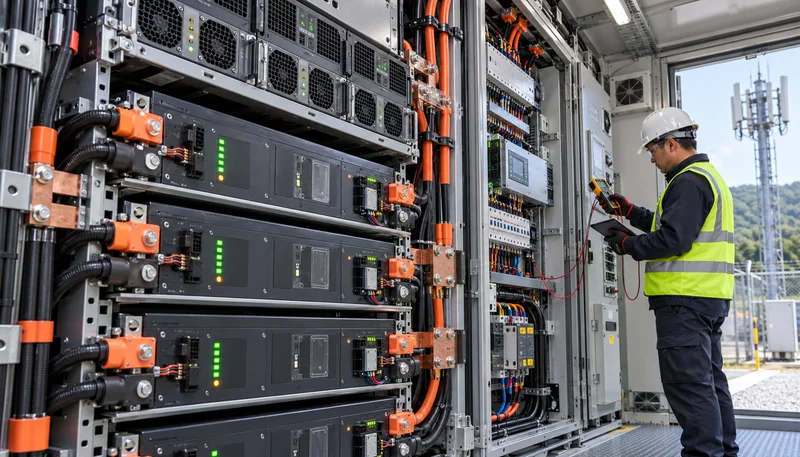
Outdoor Far-Edge Thermal Challenges and Limitations of LFP Chemistry
Macro base station deployments in high-latitude, desert, and alpine topologies increasingly operate across ambient temperature envelopes spanning -40°C to +55°C. At the far edge of telecommunications infrastructure, standard Lithium Iron Phosphate (LiFePO4 or LFP) chemistries exhibit severe electrochemical degradation under sub-zero conditions. The solid-state diffusion coefficient of lithium ions within the olivine crystal framework drops precipitously from approximately 10^-14 cm^2/s at 25°C to below 10^-17 cm^2/s at -20°C. Concurrently, the desolvation energy barrier at the electrode-electrolyte interface increases drastically, leading to massive interfacial charge-transfer resistance (Rct). When forced to charge at sub-zero temperatures, the electrochemical overpotential drives the negative graphite electrode potential below 0V versus Li/Li+, causing metallic lithium to deposit directly onto the graphite surface rather than intercalating into the lattice.
This metallic lithium plating induces irreversible capacity loss and generates highly reactive dendritic structures capable of puncturing the polyolefin micro-porous separator, resulting in internal micro-shorts and cataclysmic thermal runaway. To avert low-temperature catastrophic failures, standard outdoor telecom enclosures rely on positive temperature coefficient (PTC) active electric heating blankets or climate-controlled HVAC subsystems. In field deployments, these auxiliary thermal systems impose a constant parasitic electrical load of 150W to 400W per battery cabinet. During sustained winter grid outages, this parasitic overhead drains between 25% and 35% of the total nameplate battery backup autonomy before the telecommunications payload can fully utilize the stored electrochemical energy.
Verify cell-level internal charge transfer resistance (Rct) exceeds 120 mOhm at -20°C for candidate LFP cells, marking the operational threshold requiring pre-heating inhibition.
Enforce strict BMS low-temperature charging lockout at cell temperatures <= 0°C to prevent metallic lithium dendrite deposition on the graphite anode.
Audit site power telemetry to verify that active heating blanket power draws do not exceed 10% of total rectifier plant capacity under -30°C ambient conditions.
Sodium-Ion Electrochemical Kinetics, Sub-Zero Resilience (-40°C), and 0V Shipping Safety
Sodium-ion (Na-ion) electrochemistry fundamentally circumvents the kinetic bottlenecks of lithium-based cells at extreme low temperatures. While the bare sodium ion possesses a larger ionic radius (1.02 Å) than lithium (0.76 Å), its lower Lewis acidity results in a significantly weaker electrostatic attraction to polar solvent molecules within conventional organic carbonate electrolytes (such as propylene carbonate and ethylene carbonate/diethyl carbonate binary mixtures). Consequently, the desolvation energy barrier of Na+ at the solid electrolyte interphase (SEI) is markedly lower than that of Li+ (~102 kJ/mol for Na+ versus ~215 kJ/mol for Li+ in comparable alkyl carbonate systems). This low desolvation penalty preserves rapid interfacial charge-transfer kinetics down to -40°C, enabling layered transition metal oxide (e.g., NaNi1/3Mn1/3Fe1/3O2) and polyanionic framework (e.g., Na3V2(PO4)3 or Na4Fe3(PO4)2(P2O7) - NFPP) cathode cells to retain over 88% of nominal capacity at -20°C and greater than 75% at -40°C at a 0.5C discharge rate, entirely eliminating the requirement for active thermal pre-heating.
Beyond low-temperature kinetics, Na-ion technology introduces a transformative logistics and safety paradigm: absolute zero-volt (0.0V) transport and indefinite unpowered storage. In LFP cells, copper current collectors must be used on the negative electrode because lithium alloys with aluminum at low potentials; if an LFP cell is discharged below 1.5V, the copper foil oxidizes and dissolves into the electrolyte as Cu2+ ions, which then redeposit as dendrites upon recharging, triggering catastrophic internal shorts. Conversely, sodium does not form an electrochemical alloy with aluminum across the entire operational potential range down to 0.0V versus Na/Na+. This allows the utilization of lightweight, inexpensive aluminum foil for both the positive and negative current collectors. Na-ion cells can consequently be discharged to 0.0V and shipped with hard-shorted terminals via standard air, ocean, and ground freight under non-hazardous freight classifications, entirely bypassing UN 3480 Class 9 dangerous goods compliance mandates and eliminating state-of-charge (SOC) shelf-life degradation during protracted site staging.
Validate sub-zero cell capacity retention >= 85% at -20°C and >= 70% at -40°C against baseline 25°C rating under 1.0C discharge rates.
Perform deep discharge testing to 0.00V followed by a 14-day direct terminal short circuit, verifying 100% capacity recovery and zero dissolution of aluminum current collectors upon subsequent CC-CV recharge.
Verify compliant non-hazardous UN packaging exemption documentation for 0.0V pre-shorted Na-ion pack transport, reducing warehouse storage compliance overhead.
Electrical Integration with -48V Telecom Rectifier Plants (CAN/RS485 BMS & Voltage Windows)
Integrating Na-ion battery energy storage into brownfield -48V DC telecom power plants requires careful adaptation to the electrochemistry's distinct voltage profile. A standard 16-cell series (16S) LFP pack exhibits an exceptionally flat discharge plateau between 51.2V and 48.0V, followed by a precipitous drop below 47.0V. In contrast, Na-ion chemistry presents a steadily sloping voltage profile across its operational state of charge, transitioning from approximately 4.0V per cell at 100% SOC down to 1.8V–1.5V at full depletion, depending on the active material. When engineered in a 16S configuration (utilizing layered transition metal oxides), the pack operating window spans 32.0V to 64.0V, which exceeds standard telecom rectifier regulation limits. Therefore, optimal integration specifies either a 15S layered-oxide architecture (nominal 46.5V, operating range 42.0V to 58.5V) or a 16S polyanionic NFPP architecture (nominal 49.6V, operating range 40.0V to 56.8V).
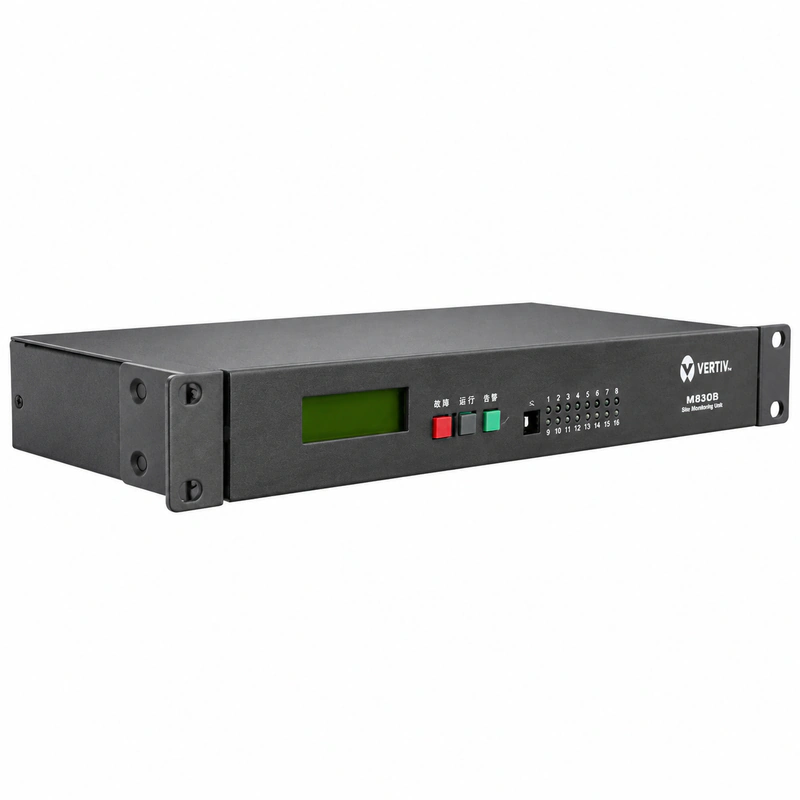
Modern switch-mode telecom rectifiers (such as Vertiv eSure, Huawei R48-series, or ZTE ZXD-series) feature software-adjustable DC output ranges of 42.0V to 58.0V DC, permitting direct drop-in alignment with 15S/16S Na-ion systems. The RICEWIND battery management system (BMS) executes real-time dynamic parameter exchange with site supervisory controllers (e.g., Vertiv NCU, Huawei SMU02C) over CAN 2.0B or RS-485 Modbus RTU protocols. The BMS continuously modulates the rectifier plant's float and equalization settings using multi-stage constant-current/constant-voltage (CC-CV) charge profiles. Crucially, the site controller's Battery Low Voltage Disconnect (BLVD) and Load Low Voltage Disconnect (LLVD) contactor setpoints must be recalibrated from traditional VRLA/LFP levels (typically 43.2V to 44.0V) down to 42.0V or 41.5V. This adjustments captures the bottom 15% to 20% of Na-ion reserve energy without prematurely disconnecting critical active radio transceivers.
Calibrate supervisory plant float voltage to precisely 54.8V DC and equalization voltage to 57.0V DC for 15S Na-ion configurations.
Reprogram Battery Low Voltage Disconnect (BLVD) contactor trip threshold to 42.0V DC (+/- 0.2V) to unlock >= 95% of total electrochemical capacity.
Confirm CAN 2.0B Baud rate (default 125 kbps / 250 kbps) and RS-485 register mapping interoperability between the Na-ion BMS and centralized site energy controllers.
High C-Rate Micro-Burst Handling, Peak Shaving, and Virtual Power Plant (VPP) Grid Services
The deployment of 5G-Advanced and emerging 6G Massive MIMO active antenna units (AAUs), operating across wideband 64T64R and 128T128R antenna arrays, introduces severe transient micro-burst power demands. Site electrical loads routinely fluctuate between a nominal 4 kW resting load and 10 kW to 12 kW micro-burst peaks driven by heavy millisecond-scale user-plane beamforming schedules. Conventional LFP packs exposed to repetitive 2C to 3C dynamic discharge pulses undergo rapid internal polarization, resulting in transient DC bus voltage sags below the critical 44V radio head shutdown threshold. Na-ion batteries provide an internal electrochemical impedance (Rint) up to 40% lower than comparable LFP cells, enabling sustained continuous discharges of 3C to 5C and short-duration micro-burst discharge pulses up to 10C (10 seconds) with cell polarization remaining under 50 mV, thereby stabilizing the -48V DC bus during dynamic load spikes.
This superior rate capability positions Na-ion-equipped macro base stations as ideal distributed energy assets for Virtual Power Plant (VPP) aggregation and ancillary grid services. Utilizing RICEWIND intelligent energy orchestration firmware, macro sites can perform automated local peak shaving during high-tariff utility periods, cycling the Na-ion reserve banks twice daily to arbitrate commercial energy costs without shortening operational life. High-stability polyanionic Na-ion formulations deliver exceptional cycle life exceeding 4,000 to 6,000 cycles at 80% Depth of Discharge (DoD) under 1C/1C cycling regimes at 25°C, while sustaining over 3,000 cycles at elevated temperatures of 45°C. With millisecond-range DC injection response capabilities, base stations can seamlessly participate in grid Fast Frequency Response (FFR) and Demand Response (DR) schemes, generating auxiliary revenue streams that accelerate the payback cycle of telecom power infrastructure.
Execute dynamic step-load pulse tests (from 0.2C to 3.0C within 10 milliseconds) to verify -48V bus transient voltage stability stays above 46.5V DC.
Configure automated daily peak-shaving dispatch schedules via supervisory BMS scripts to discharge up to 30% pack capacity during local grid peak-tariff windows.
Establish cyclic degradation monitoring to confirm capacity loss remains <= 0.025% per 1C equivalent full cycle under continuous micro-burst operational conditions.
Precursor Abundance, Supply Chain Sovereignty, and Levelized Cost of Storage (LCOS) Economics
The telecommunications industry's global reliance on lithium-based chemistries presents sustained supply chain exposure driven by raw material scarcity and geopolitical concentration. Lithium comprises merely 0.002% (20 ppm) of the Earth's continental crust, with refining capacity concentrated in narrow geographic corridors. In sharp contrast, elemental sodium is the sixth most abundant element, constituting approximately 2.3% (23,000 ppm) of the Earth's crust, accessible through ubiquitous, globally distributed rock salt (NaCl) and soda ash reserves. Furthermore, advanced Na-ion formulations completely decouple cathode chemistry from nickel and cobalt precursors by employing earth-abundant transition metals—predominantly iron and manganese. The substitution of heavy copper current collectors with low-cost aluminum foil on both positive and negative terminals reduces non-active cell mass and eliminates exposure to volatile global copper markets, driving raw material cost reductions of 30% to 50% relative to LFP cell bills of materials.
From a Levelized Cost of Storage (LCOS) perspective, Na-ion delivers compelling unit economics for distributed telecom infrastructure. As industrial gigafactory production scales past 100 GWh globally, Na-ion pack-level manufacturing costs are projected to decline toward $40 to $50 per kWh, compared to $70 to $90 per kWh for high-specification cold-hardened telecom LFP assemblies. When factoring in the total elimination of parasitic heating elements, reduced HVAC maintenance, and extended asset longevity in extreme climatic zones, Na-ion deployments achieve an estimated 35% reduction in total cost of ownership (TCO) across a 10-year operational lifecycle. Additionally, the non-toxic chemical profile of iron-manganese polyanionic Na-ion systems facilitates safe, low-energy hydrometallurgical recycling, circumventing the complex, energy-intensive acid leaching required to process spent lithium-ion battery banks.
Audit module bills of materials (BOM) to verify 100% elimination of nickel, cobalt, and copper foil, validating zero-supply-chain-risk precursor sourcing.
Perform site-specific TCO calculations benchmarking Na-ion against LFP across a 10-year operational lifecycle, targeting minimum Capex savings of 25% and Opex savings of 30%.
Confirm manufacturer end-of-life hydrometallurgical recycling agreements meet regional environmental compliance standards without hazardous waste disposal surcharges.
Site Deployment Guidelines, Hybrid String Paralleling, and NEBS/UL Compliance
Transitioning brownfield telecommunications sites to Na-ion technology demands rigorous adherence to mechanical, electrical, and life-safety integration standards. From a form-factor perspective, Na-ion energy modules are packaged into standard 19-inch 2U and 3U subracks (e.g., -48V 50Ah and 100Ah modules) engineered for direct slide-in mounting within standard ETSI and Telcordia open racks or integrated outdoor pole/pad-mount enclosures. A common engineering challenge in brownfield retrofits is hybrid string paralleling: connecting new Na-ion battery packs in parallel with legacy Valve-Regulated Lead-Acid (VRLA) or aging LFP strings across a shared DC busbar. Because Na-ion displays a continuous voltage slope while LFP exhibits a flat plateau, direct hard-paralleling generates uncontrolled cross-current loops during floating and load transitions. To overcome this, RICEWIND mandates the deployment of bidirectional buck-boost DC-DC string converters on legacy strings, electrically isolating the battery chemistries, eliminating cross-charging currents, and prioritizing Na-ion dynamic cycling over legacy backup strings.
Rigorous life safety, fire protection, and environmental compliance are critical for edge installations. Na-ion energy storage systems must comply fully with UL 1973 (Standard for Batteries for Use in Stationary Applications) and pass large-scale fire testing according to UL 9540A. During thermal runaway induced by mechanical nail penetration or external thermal abuse, Na-ion cells exhibit significantly lower peak heat release rates (HRR) and lower maximum surface temperatures (typically <350°C, compared to >650°C for LFP and >850°C for NMC), releasing non-explosive, less toxic off-gases. Structural and physical integrity requires compliance with Telcordia GR-63-CORE (NEBS Zone 4 seismic withstand performance) and Telcordia GR-1089-CORE for electromagnetic compatibility (EMC) and electrical surge withstand. Outdoor deployments must be housed in cabinets rated to IP65 or NEMA 4X ingress protection, incorporating hydrophobic ePTFE pressure relief vents to prevent cabinet over-pressurization while barring moisture and particulate entry.
Install bidirectional DC-DC string equalizers with current-limiting features whenever paralleling Na-ion strings with legacy VRLA or LFP strings on shared -48V DC busbars.
Verify full certification compliance across UL 1973, UL 9540A (no thermal runaway propagation between adjacent cells), and Telcordia NEBS Zone 4 seismic ratings.
Inspect outdoor cabinet enclosures to verify IP65 / NEMA 4X physical integrity, ensuring dual-stage ePTFE membrane vent integration for environmental pressure equalization.
Engineering Procurement & Technical Desk
For technical datasheets, custom power topology design, or volume export quotations, reach out to HEFENGQI engineers.