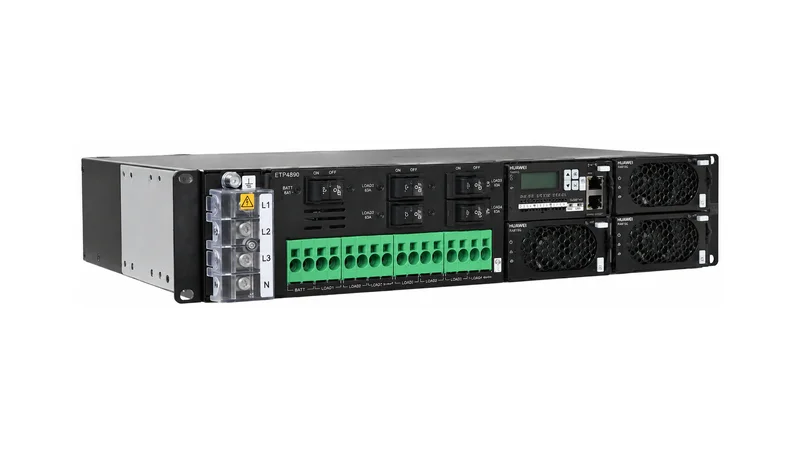
Architectural Overview and 1U Form-Factor Power Density Analysis
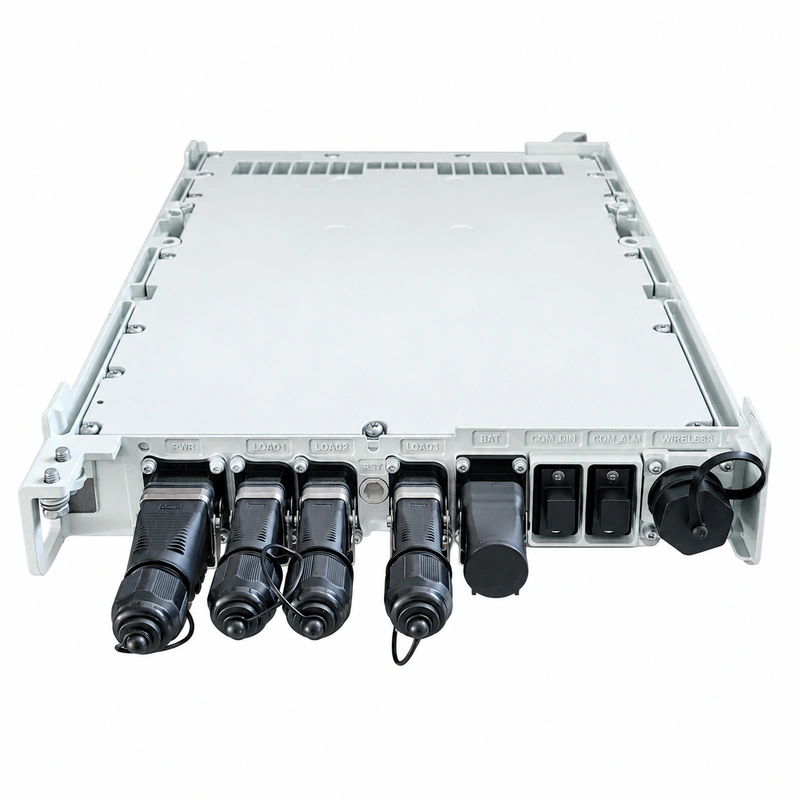
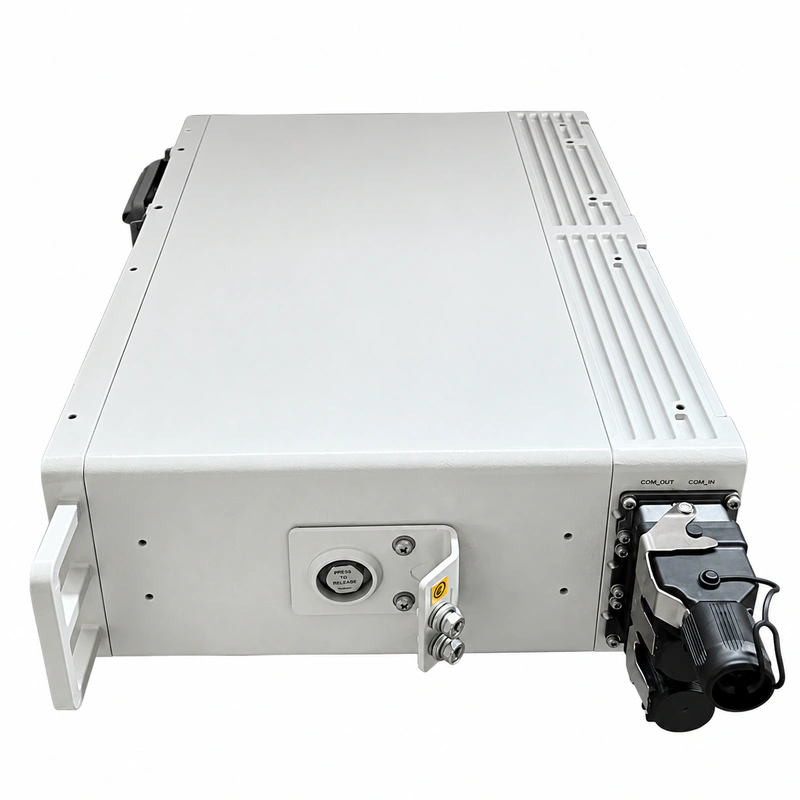
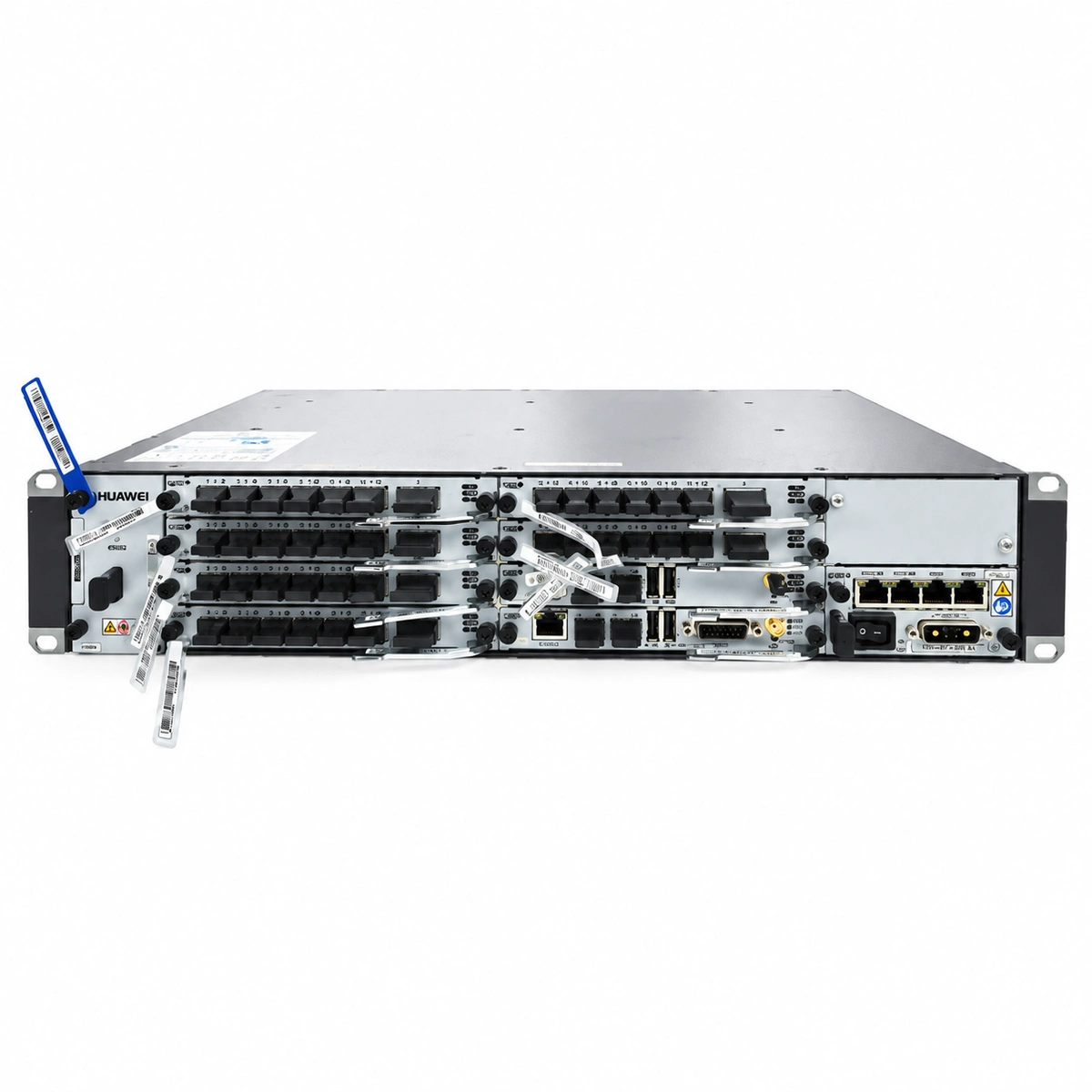
Modern carrier and edge network deployments are constrained by vertical rack space, mandating power conversion platforms that maximize volumetric energy density without sacrificing thermal headroom or serviceability. The Huawei ETP4890-A2 subrack satisfies this demand through an ultra-low-profile 1U standard 19-inch rack-mount footprint measuring precisely 442 mm wide, 255 mm deep, and 43.6 mm high. With an unpopulated chassis weight of 8 kg or less, this subrack integrates AC mains distribution, rectifier conversion bays, DC load branches, battery termination, and central monitoring into a monolithic enclosure engineered for depth-constrained 300 mm outdoor telecommunication cabinets.
Electrically, the ETP4890-A2 operates across a wide AC input voltage range of 85V AC to 300V AC nominal (supporting both single-phase 220V AC and split/three-phase 380V AC topologies), yielding high resilience against severe grid instability. The power bus converts unregulated AC into a tightly regulated -48V DC nominal bus (adjustable between -42V DC and -58V DC) delivering a continuous current capacity of up to 90A and an aggregate power throughput of 4800W. This spatial-to-power density ratio makes the system an optimal candidate for optical transport terminals, remote radio head (RRH) baseband units, and distributed antenna systems (DAS).
Verify 1U chassis clearance (442 mm × 255 mm × 43.6 mm) against shallow rack and outdoor cabinet depth constraints.
Confirm AC electrical service compatibility across the wide-tolerance 85V–300V AC operating threshold.
Validate subrack nominal continuous DC output rating (-48V DC at up to 90A / 4800W total capacity).
Rectifier Subsystem: R4830G1 vs R4815G1 Modularity, 96% Efficiency, and N+1 Redundancy Topology
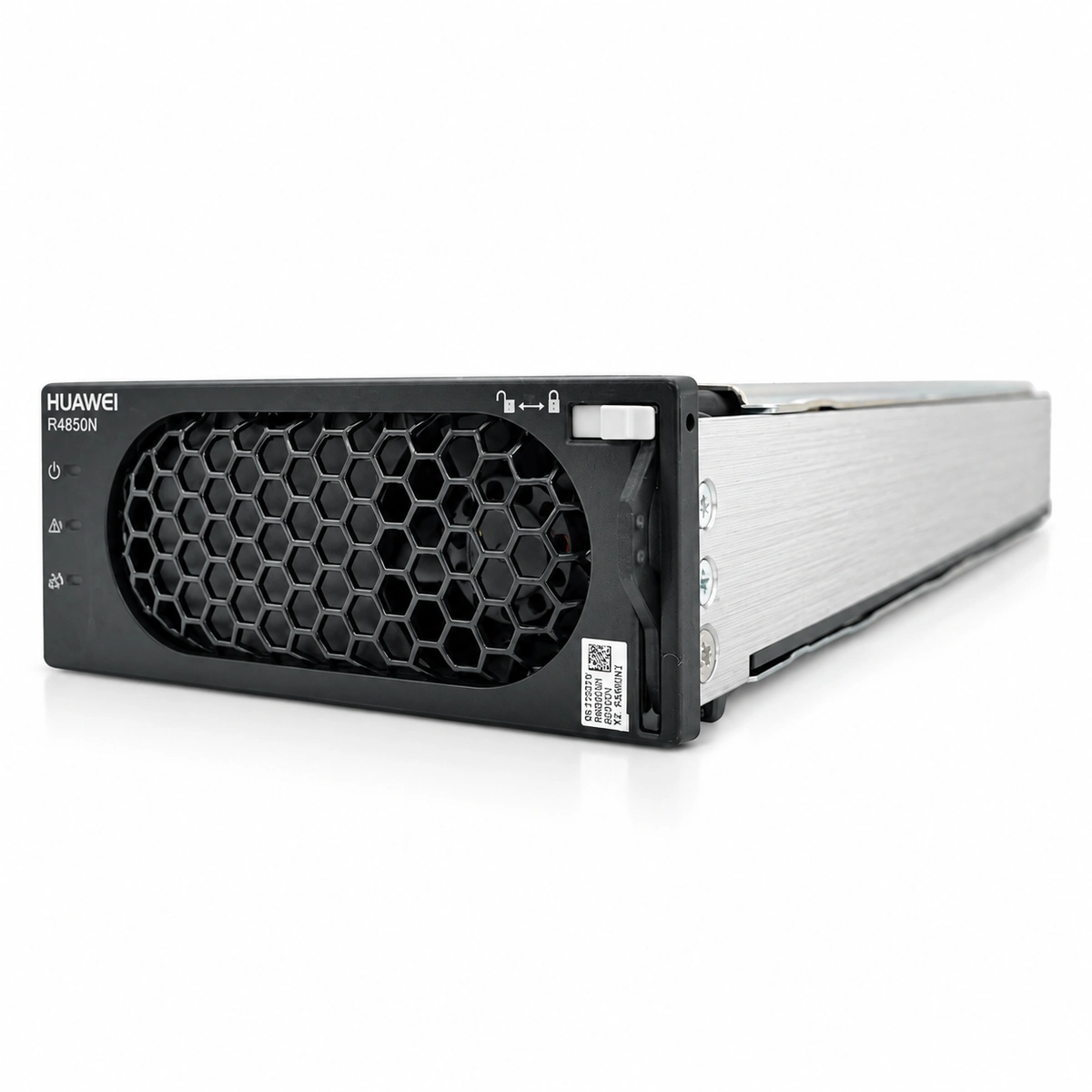
The ETP4890-A2 chassis incorporates three hot-pluggable rectifier slots capable of hosting either Huawei R4830G1 (30A / 1740W output) or R4815G1 (15A / 870W output) high-density switched-mode power conversion modules. Operating on digital signal processing (DSP) control loops and advanced resonant soft-switching topologies, the flagship R4830G1 delivers a peak conversion efficiency exceeding 96%, significantly lowering waste heat dissipation and active cooling burdens. The module features an active Power Factor Correction (PFC) circuit maintaining a power factor greater than 0.99 above 50% load, alongside total harmonic distortion (THD) kept below 5%, shielding upstream electrical infrastructure from phase distortion.
From an engineering reliability perspective, a fully populated three-slot subrack using R4830G1 modules establishes an active N+1 redundant power plant for sustained loads up to 60A, preserving 30A of emergency reserve capacity. Autonomous digital current sharing between installed rectifiers ensures balanced thermal loading across all three modules with a current sharing error margin below ±5%. In the event of a module failure or AC phase anomaly, the surviving units instantly absorb the differential current without transient sag or bus interruption. When paired with smaller operational footprints, the R4815G1 offers an economical alternative for low-power optical line terminals or transmission repeaters requiring less than 45A aggregate throughput.
Select rectifier model (R4830G1 for 30A/slot or R4815G1 for 15A/slot) based on target load profile and N+1 redundancy requirements.
Ensure active current-sharing calibration maintains inter-module variance below ±5% across dynamic load steps.
Factor in low-voltage AC derating curves when operating rectifiers below 176V AC input.
Intelligent Telemetry & Monitoring: Huawei SMU01C Controller, LCD Interface, and Remote SNMP/CAN Integration
System orchestration within the ETP4890-A2 is driven by the Huawei SMU01C intelligent monitoring unit, an integrated telemetry and diagnostic controller engineered for centralized telecommunications management. The SMU01C features a high-contrast front-panel LCD and tactile keypad, granting field technicians immediate, secure visibility into live operating parameters including bus voltage, per-phase AC voltage, individual rectifier load currents, and battery temperature without requiring an external service laptop. The controller maintains non-volatile historical alarm and event logs to accelerate fault isolation and root-cause analysis during maintenance visits.
For carrier-grade Network Operations Center (NOC) integration, the SMU01C hosts an extensive array of northbound and southbound communication interfaces. Internal telemetry relies on an isolated Controller Area Network (CAN) bus connecting all rectifiers for real-time voltage trimming and autonomous shutdown controls. Upstream communications are facilitated via RS485 and dedicated 10/100M Ethernet ports supporting industry-standard protocols, including SNMPv1/v2c/v3, Modbus, and Telnet. The controller runs sophisticated battery health algorithms, executing dynamic temperature-compensated float charging, programmable equalize cycles, and automated conductance-based battery discharge testing while outputting critical status flags through integrated configurable dry contact relays.
Verify SNMPv3 MIB compatibility and cryptographic credentials for remote NOC integration via the SMU01C Ethernet interface.
Calibrate battery temperature compensation coefficient slopes (mV/°C/cell) within the SMU01C firmware profile.
Map programmable dry contact alarm inputs and outputs for critical mains failure, rectifier fault, and LVD trip indications.
DC Power Distribution and Battery Protection: LLVD/BLVD Disconnect Curves, Shunts, and Surge Protection
The integrated DC distribution section of the ETP4890-A2 is engineered to protect delicate telecom transmission loads and prevent catastrophic battery degradation during extended grid outages. The subrack incorporates a dual-stage Low Voltage Disconnect (LVD) mechanism managed by high-reliability internal contactors. The Load Low Voltage Disconnect (LLVD) stage is software-configured to isolate non-critical branch loads at a programmable threshold (typically -44.0V DC), preserving remaining battery amp-hour capacity exclusively for core transmission links. If the utility outage persists and cells reach critical depletion, the Battery Low Voltage Disconnect (BLVD) contactor triggers at approximately -43.2V DC, completely disengaging the battery bank to prevent irreversible plate sulfation and cell reversal.
Overcurrent protection and bus segmentation are managed via front-accessible miniature circuit breakers (MCBs). The standard chassis layout accommodates a dedicated battery circuit backed by an 80A or 100A MCB, coupled with four load distribution branches utilizing a mix of 20A, 30A, and 63A MCBs to match diverse downstream equipment draws. To safeguard against lightning strikes and severe grid transients, the subrack incorporates a Class C AC Surge Protective Device (SPD) rated for a nominal discharge current of 20kA (8/20 μs waveform). Comprehensive onboard protection mechanisms encompass DC output overvoltage clamping, reverse polarity protection, and fast-acting electronic short-circuit isolation.
Confirm mechanical rating and trip curves of the 80A/100A battery MCB relative to selected battery bank C-rate limits.
Set precise LLVD and BLVD voltage disconnect thresholds based on connected battery chemistry (VRLA vs LiFePO4).
Inspect the integral 20kA Class C AC surge protection device status flag prior to system site acceptance.
Thermal Management and Harsh-Environment Field Deployment (-40°C to +65°C, 5G Micro-Station Enclosures)
Deploying DC power plants at the network edge exposes power electronics to extreme climatic stressors, from sub-zero winter temperatures to unconditioned outdoor enclosure heat soak. The ETP4890-A2 is ruggedized for industrial temperature environments, operating across an extended envelope of -40°C to +65°C. System components maintain full un-derated output capacity up to +55°C, above which a controlled, linear thermal derating slope is executed to maintain component junction temperatures within safe operating areas while preserving core DC bus stability.
Chassis thermal dissipation utilizes a forced-air, horizontal front-to-back ventilation pathway. Each R4830G1 rectifier contains an autonomous, pulse-width modulation (PWM) speed-controlled cooling fan that adjusts rotational velocity in real time according to internal temperature sensors and output current load. This dynamic airflow strategy prevents internal hot spots, minimizes acoustic noise, reduces dust ingestion, and prevents hot air recirculation inside tight 5G pole-mounted enclosures or IP55-rated street-level cabinets. The system features a cold-start capability down to -40°C without requiring auxiliary heating strips, ensuring continuous service recovery following severe winter grid collapse.
Verify unrestricted front intake and rear exhaust clearance (minimum 50 mm) within dense cabinet configurations.
Apply output capacity derating factors for sustained operation in ambient conditions between +55°C and +65°C.
Ensure outdoor enclosure ingress protection (IP55 or higher) provides adequate particulate filtering for internal PWM cooling fans.
Comprehensive Procurement & TCO Strategy: Testing Standards, Burn-In Aging, and Supply Availability
Procuring telecom power infrastructure requires evaluating Total Cost of Ownership (TCO) beyond initial capital expenditure. The high electrical conversion efficiency of 96% engineered into the R4830G1 rectifier translates into thousands of kilowatt-hours saved annually per site compared to legacy 88%–91% systems, substantially reducing direct power costs and secondary cabinet air conditioning loads over an asset lifecycle exceeding 10 years. For mission-critical communications, procurement specialists must ensure hardware sourcing aligns with rigorous electrical validation and immediate field-swap availability.
Through RICEWIND technical supply channels, every Huawei ETP4890-A2 subrack and corresponding rectifier module undergoes comprehensive multi-point quality assurance protocols. This encompasses 100% full-load thermal burn-in aging, dynamic step-load transient response verification, dielectric withstand testing (Hipot), and firmware synchronization across the SMU01C controller and rectifier DSPs. Sourcing either factory-new or fully certified refurbished units through RICEWIND ensures operators secure validated hardware, custom-configured breaker assignments, pre-configured network profiles, and rapid-dispatch emergency spare parts to reduce Mean Time to Repair (MTTR) across widespread geographic footprints.
Demand certified test reports confirming 100% full-load burn-in and dielectric hipot testing prior to batch dispatch.
Ensure spare R4830G1 rectifiers and SMU01C controllers are provisioned according to regional MTTR target thresholds.
Partner with RICEWIND to establish standardized chassis pre-configurations for breaker sizing and telemetry templates.
Engineering Procurement & Technical Desk
For technical datasheets, custom power topology design, or volume export quotations, reach out to RICEWIND engineers.