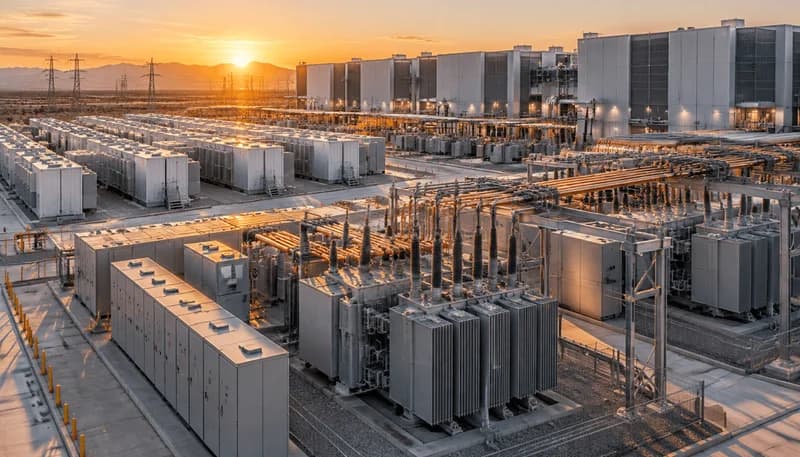
The Gigawatt AI Power Chokepoint: Utility Interconnect Delays and Mechanical Diesel Inadequacy
Hyperscale artificial intelligence infrastructure is undergoing an unprecedented power density inflection. Driven by training and inference runs processing upwards of three quadrillion tokens per month—a sevenfold annual compute expansion—cluster sizing has aggressively scaled from tens of megawatts toward monolithic 1 GW campuses. However, this compute acceleration collides directly with utility transmission constraints, where multi-year transmission interconnection queues span three to seven years. Relying on traditional utility provisioning timelines to match accelerated compute roadmaps has created an untenable infrastructure bottleneck.
Compounding this interconnection deficit is the physical failure of traditional standby power topologies under high-density AI regimes. Conventional reciprocating diesel generators suffer from mechanical inertia constraints, requiring 10 to 15 seconds to ramp and stabilize load. Modern distributed AI workloads generate sharp step-function transients, swinging hundreds of megawatts within microsecond clock cycles as tensor parallel collective communications sync and desync. Diesel gensets are structurally incapable of frequency and voltage tracking at these slew rates (di/dt), while campus-scale fuel logistics, permitting thresholds, and continuous particulate emissions render gigawatt-scale diesel farms environmentally and operationally unviable.
Benchmark cluster di/dt transient limits to calculate maximum mechanical generator step-load tolerances during GPU desynchronization events.
Audit regional transmission interconnection timelines against 12-to-24 month compute delivery schedules to isolate local substation capacity shortfalls.
Grid-Interactive Operations: Converting Captive BESS into Dynamic Sub-Cycle Utility Reserves
To reconcile multi-hundred-megawatt load dynamics with regional transmission limitations, our infrastructure engineering research institute has analyzed the pivot from captive diesel reserves to utility-interactive, containerized Battery Energy Storage Systems (BESS). Transitioning to multi-megawatt-hour lithium iron phosphate (LFP) installations converts dormant capital assets into active dynamic stabilization infrastructure. BESS deployments featuring four-quadrant grid-forming inverters can supply synthetic inertia, executing primary frequency response within sub-cycle latencies (under 16 milliseconds) to suppress local transmission voltage sag.
Simultaneously, these campus-scale BESS installations perform automated bidirectional demand response and localized peak shaving. By executing fast automated load shedding or discharging local battery capacity during peak tariff spikes and transmission emergencies, the data center operates as a virtual power plant (VPP). Crucially, hyperscalers including Google, Meta, Microsoft, and Nvidia are establishing standardized grid-to-facility interface protocols within the Open Compute Project (OCP) framework, homogenizing autonomous dispatch signals, telemetry exchange rates, and inverter reactive-power injection standards across multi-jurisdictional utility boundaries.
Deploy grid-forming BESS inverters capable of synthetic inertia injection and autonomous islanding within a 16 ms fault-clearing window.
Implement unified OCP utility-interface telemetry protocols for sub-second demand-response and real-time frequency containment reserves (FCR).
Elimination of Centralized UPS: Distributed 54 VDC Topologies and Net Efficiency Optimization
At the facility level, hyperscalers are systematically abandoning monolithic, double-conversion uninterruptible power supply (UPS) architectures. In a classical centralized topology, utility power traverses an AC-to-DC rectification stage, feeds a central DC battery bank, and undergoes a DC-to-AC inversion stage before distribution, introducing parasitic transformation steps. Eliminating this double-conversion path by delivering facility AC directly to the row and performing local rectification yields an immediate net facility efficiency gain of approximately 1.5%—a vital improvement when aggregated across a gigawatt portfolio.
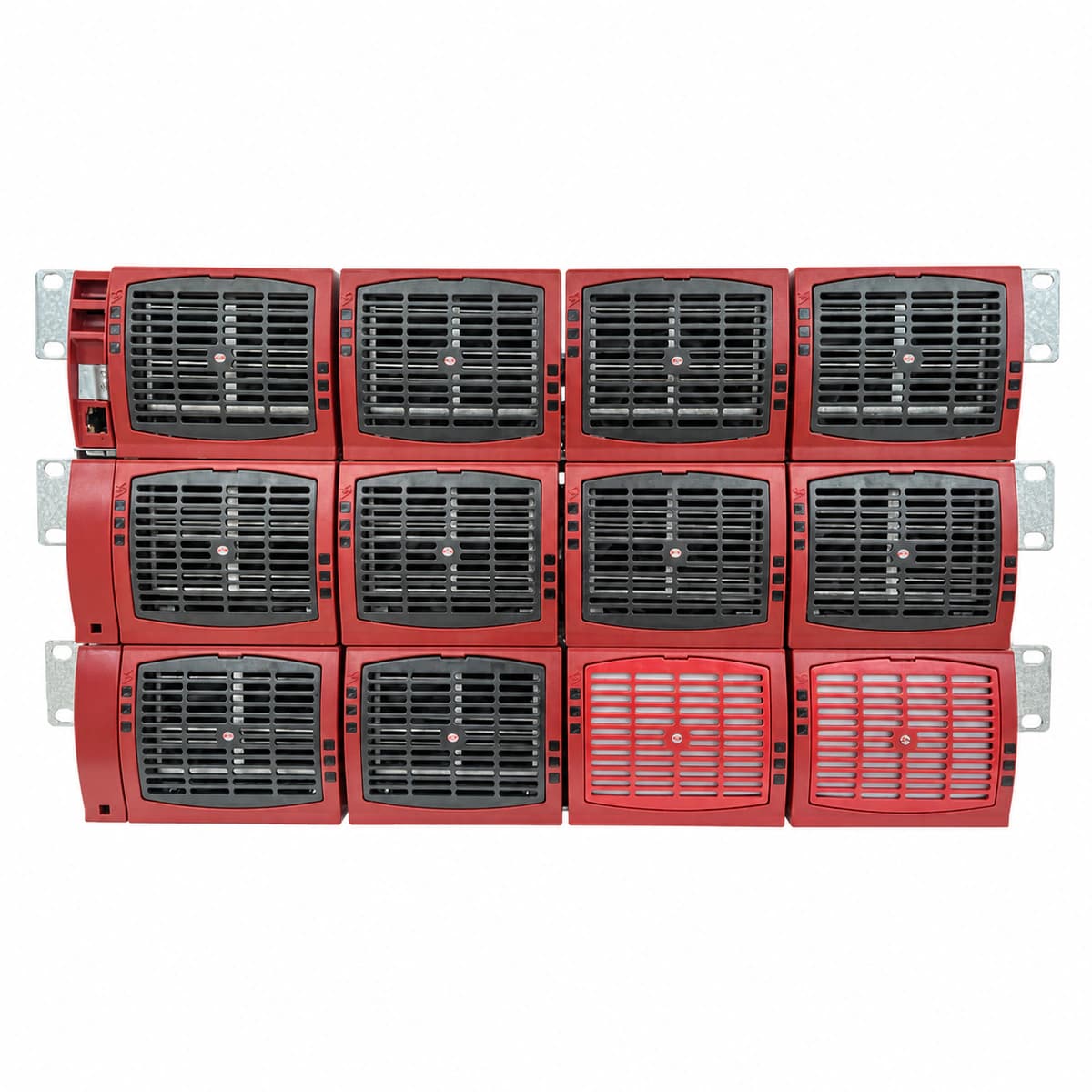
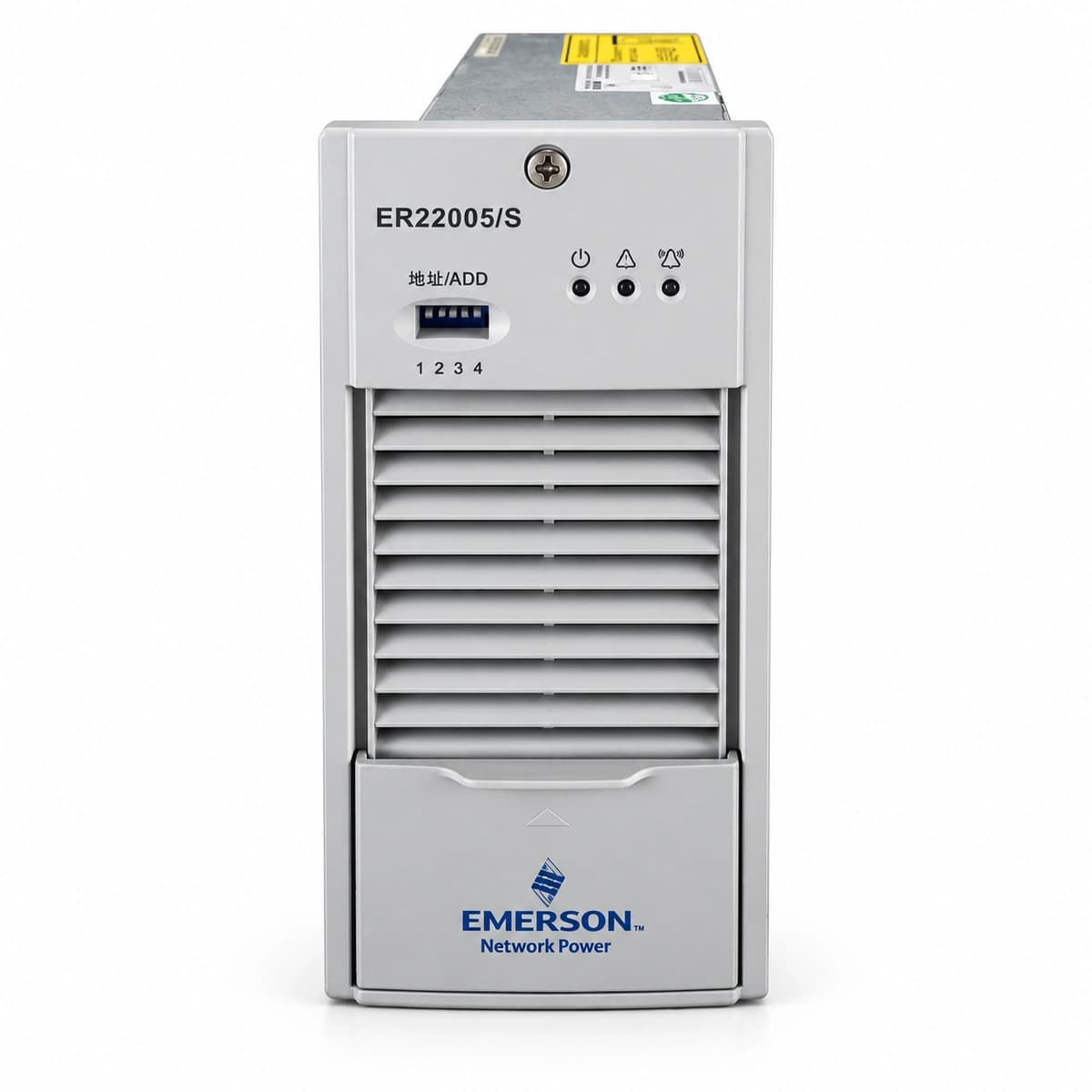
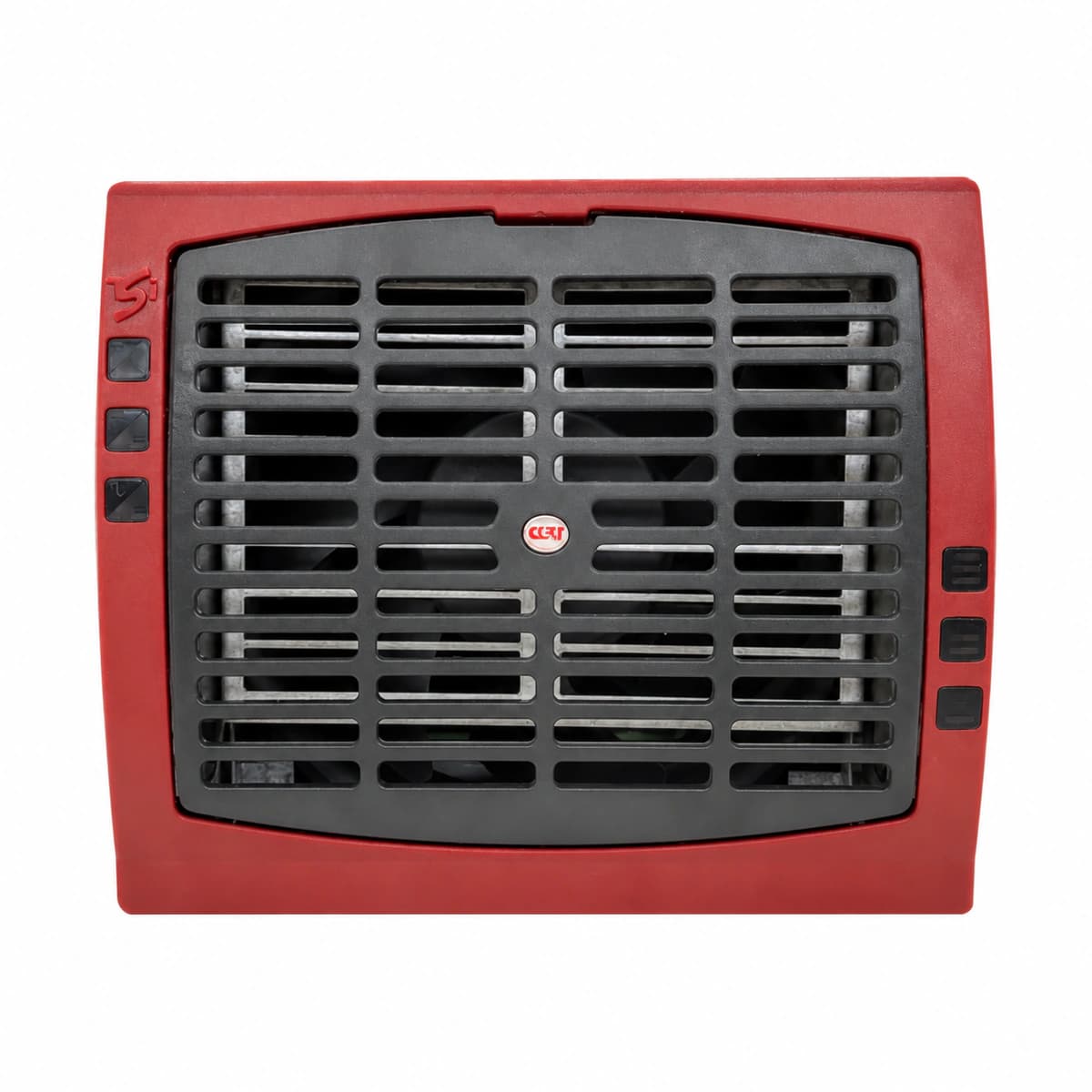
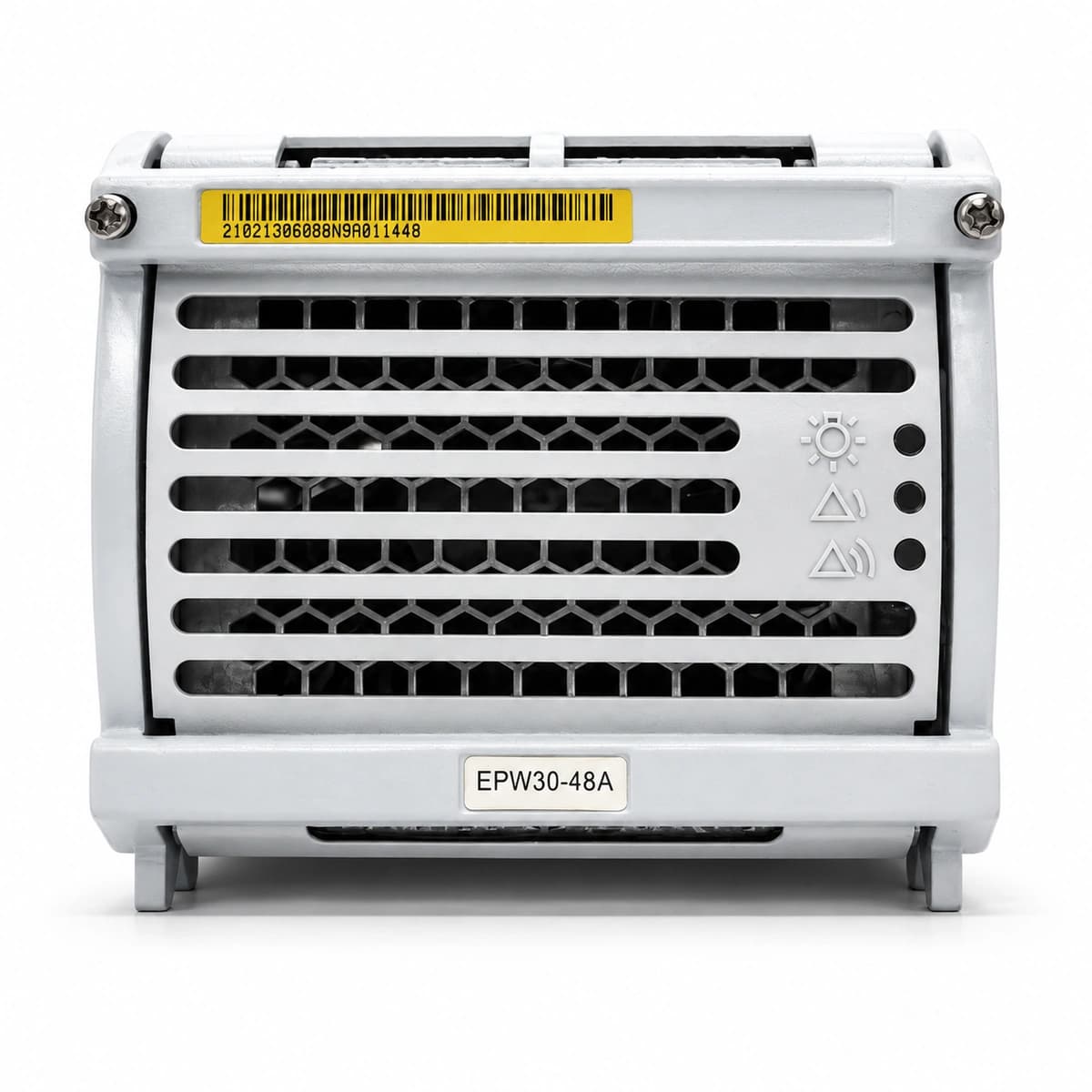
The current production topology standardizes on Top-of-Rack (ToR) and integrated rack power shelves supplying a native 54 VDC busbar architecture. Rectifier banks convert incoming three-phase 415/480 VAC directly to 54 VDC, operating in parallel with modular, rack-integrated Battery Back-up Units (BBUs). These distributed lithium-ion BBUs are tied directly onto the DC bus via bidirectional buck-boost controllers, entirely absorbing the high-frequency GPU load step transients that would otherwise reflect upstream to the building transformer or trip intermediate sub-distribution breakers.
Bypass central double-conversion UPS halls to capture an immediate ~1.5% PUE electrical conversion efficiency reclamation.
Integrate 54 VDC distributed rack battery backup units (BBUs) with local step-transient absorption controllers directly on the rack busbar.
The Current Density Crisis: Migrating Megawatt Racks from 54 VDC to 800 VDC Architectures
While 54 VDC architectures represent a substantial advance over historical 12 VDC designs, they have reached a strict physical boundary dictated by I²R conduction losses. Next-generation AI compute clusters are driving single rack envelopes toward 1 MW of continuous thermal design power. At 54 VDC, a 1 MW rack demands approximately 18,518 A of current. Conducting nearly 18.5 kA requires massive, solid copper busbar cross-sections exceeding 3,000 mm², resulting in severe volumetric penalties, dynamic mechanical strain from electromagnetic repulsion during short circuits, and hundreds of kilograms of copper per vertical rack meter.
Hyperscale engineering teams have deployed transitional power 'sidecars'—adjacent structural bays housing high-power rectifiers, DC switchgear, and massive cabling trunks—to reserve the primary rack frame for high-density compute blades and direct-to-chip cold plates. However, sidecars consume valuable whitespace floor area. The strategic engineering vector is a direct migration to an 800 VDC power distribution plane. Stepping up to 800 VDC slashes continuous current for a 1 MW rack down to 1,250 A—a nearly fifteenfold current reduction. This drastically reduces busbar cross-sectional dimensions, eliminates resistive line drop, and allows the reclamation of sidecar footprints for active compute.
Calculate copper mass thresholds and thermal I²R dissipation limits to define the absolute 54 VDC rack power cut-off point (~250-300 kW).
Design modular whitespace footprints capable of converting interim rectifier sidecars into active server positions upon 800 VDC busbar cutover.
Solid-State Transformers (SST) and Closed-Loop Hydronic Thermal Synergy
The realization of an end-to-end 800 VDC architecture depends fundamentally on the commercial maturity and qualification of Solid-State Transformers (SSTs). Contemporary data center power chains rely on massive, oil-filled or dry-type low-frequency (50/60 Hz) transformers to step medium-voltage (MV) grid supplies (typically 13.8 kV or 34.5 kV) down to low-voltage AC, requiring secondary rectification. SSTs replace low-frequency magnetics with high-frequency isolated DC-DC stages driven by wide-bandgap silicon carbide (SiC) and gallium nitride (GaN) power switches. This topology converts incoming MV AC feeds directly into regulated 800 VDC buses within a fraction of the physical footprint and weight.
Simultaneously, power electronics efficiency is tightly coupled with campus hydronic designs. Gigawatt AI data centers cannot sustain evaporative cooling towers that consume millions of gallons of municipal potable water daily. Next-generation facilities are transitioning to fully closed-loop hydronic networks, circulating conditioned water-glycol mixtures in sealed loops. Operating with elevated supply water temperatures (between 32°C and 45°C) enables complete dry-cooler heat rejection with zero evaporative loss, driving facility Power Usage Effectiveness (PUE) below 1.10 while safeguarding regional watersheds.
Prototype medium-voltage SiC-based solid-state transformers to eliminate low-frequency magnetics and direct-feed 800 VDC rack planes.
Implement closed-loop dry-cooling hydronics designed for 32°C-45°C liquid loops to eliminate consumptive municipal water requirements.
Hyperscale Implementation Blueprint: Spatiotemporal Workload Shifting and Zero Stranded Power
A robust hardware architecture must be managed by intelligent workload orchestration to maximize real-time utilization. Hyperscale operators are deploying continuous spatiotemporal workload shifting frameworks. Training jobs with checkpoint-restart capabilities, asynchronous batch inference pipelines, and non-real-time data preparation tasks are dynamically scheduled across an internationally distributed portfolio of data center nodes. If an extreme heat dome strains the regional power grid or localized wholesale electricity prices surge, distributed control planes throttle non-urgent computational threads or migrate jobs to campuses with excess renewable capacity or cooler ambient thermal profiles.
This software control loop operates in lockstep with facility infrastructure under a strict mandate: never strand an available megawatt. Automated telemetry continuously monitors BESS state-of-charge (SoC), electrochemical cell state-of-health (SoH), substation transformer thermal headrooms, and chiller lift requirements. By dynamically shaping compute draw against localized generation curves, modern hyperscale facilities transform from static, vulnerable utility loads into flexible, highly resilient grid assets capable of scaling safely into the multi-gigawatt era.
Integrate workload orchestration systems with utility price and carbon signals to automate multi-site job migration during grid distress.
Establish unified telemetry loops combining BESS electrochemical health with dynamic server power caps to prevent stranding utility capacity.
Engineering Procurement & Technical Desk
For technical datasheets, custom power topology design, or volume export quotations, reach out to HEFENGQI engineers.