Construction Cost Escalation and Electrical Labor Bottlenecks: The 2026 Hyperscale Squeeze
The convergence of artificial intelligence compute buildouts with persistent macroeconomic pressures has placed data center developers under severe margin contraction. According to the JLL Global Construction Costs Index, baseline construction cost escalation continues at 3% to 6% annually, with global tender prices projected to rise an additional 3.1% to 4.2% through 2027. Traditional stick-built construction models are failing to absorb these increases, primarily because the critical path is no longer governed solely by equipment procurement lead times, but by an acute structural deficit of certified high-voltage electricians, substation mechanics, and specialized liquid-cooling pipefitters.
Downstream commissioning agents, startup technicians, and instrumentation engineers represent the single largest bottleneck holding back commercial energization and immediate revenue recognition. When stick-built field installations require hundreds of discrete craftspeople to land medium-voltage terminations and route complex low-voltage control conduits within cramped electrical galleries, trade stacking inevitably leads to productivity degradation, schedule slippages, and elevated punch-list volumes. For facilities operating on multi-megawatt scales, a four-week energization delay translates into millions of dollars in unamortized capital drag and missed cloud tenant service-level milestones.
Benchmark baseline CapEx models against 3.0%-6.0% annual material escalation and 3.1%-4.2% forward labor rate premiums.
Audit regional skilled labor pools for certified medium-voltage (15kV to 34.5kV) cable splicers and licensed substation technicians prior to site selection.
Quantify daily lost-revenue carrying costs during design phases to financially justify off-site modular prefabrication.
Off-Site Prefabricated Power Skids and Modular E-Houses: Compressing Craft Labor by 50%
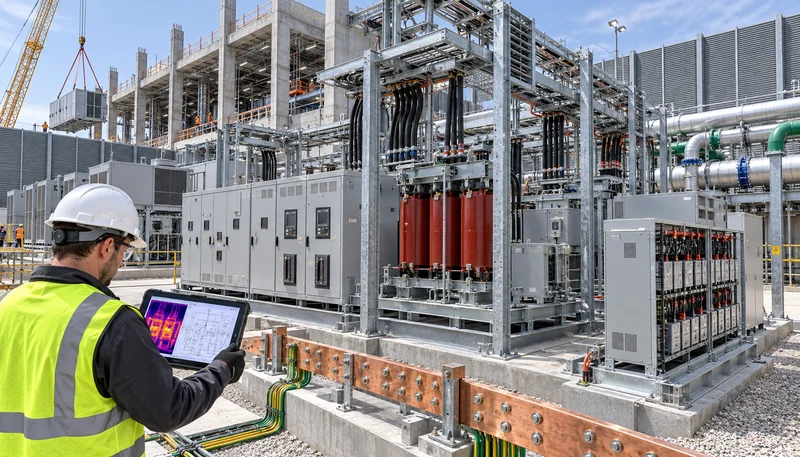
To mitigate on-site labor constraints, the industry is accelerating the shift from traditional electrical rooms toward factory-assembled, skid-mounted power distribution modules and containerized Electrical Houses (E-Houses). By packaging medium-voltage (MV) to low-voltage (LV) step-down cast-resin dry transformers (e.g., 13.8kV/34.5kV to 480V/415V), high-AIC switchgear lineups, automatic transfer switches (ATS), and power distribution units (PDUs) onto structural steel transport skids, developers shift 45% to 60% of high-risk electrical assembly away from the field into controlled factory environments.
Factory fabrication unlocks automated quality assurance, precision torque verification, robotic busbar welding, and continuous quality audits that are unattainable under volatile job site conditions. Structurally engineered to satisfy dynamic road transport stresses and seismic zone requirements, these modular units eliminate miles of on-site conduit installation. Civil and concrete works on-site proceed in parallel with electrical skid fabrication in the factory. Upon delivery, field labor is condensed down to setting baseplates, splicing primary MV feeders, and terminating outgoing low-voltage distribution runs, compressing site electrical installation schedules by up to 16 weeks per 20 MW module.
Specify structural skid baseplates engineered to meet dynamic deflection limits (L/600) and ASTM structural steel transport tolerances.
Require cast-resin dry-type transformers (Class H or C insulation, 150°C rise) to eliminate liquid containment basins within modular enclosures.
Standardize pre-wired control and protection wiring using multi-pin industrial quick-connect receptacles for rapid inter-skid coupling.
High-Density Power Distribution: Modular Rectifier Systems and Overhead Busway Topologies
The meteoric rise of AI cluster densities—escalating from 40 kW to upwards of 100 kW per cabinet—has rendered legacy underfloor power cable routing physically impractical and thermally disadvantageous. High-density data halls are replacing static cable trays with overhead track busway topologies, utilizing high-conductivity copper busbars rated from 800A to 2500A. These open-architecture overhead runs permit hot-pluggable tap-off boxes to be positioned directly above compute racks, isolating high-voltage distribution from whitespace cooling airflow paths and accommodating dynamic IT load alterations without requiring circuit recabling.
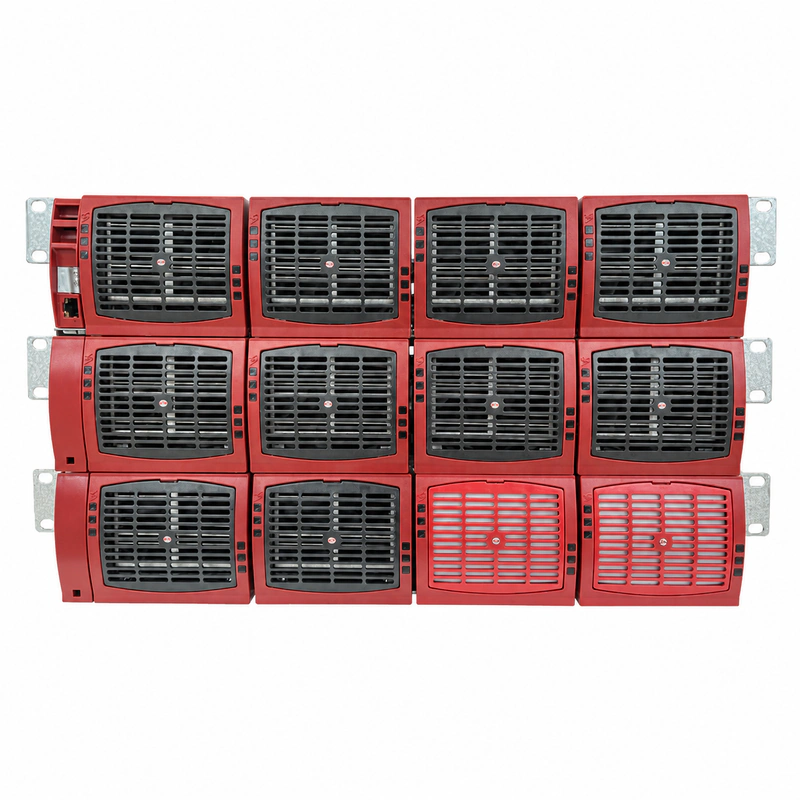
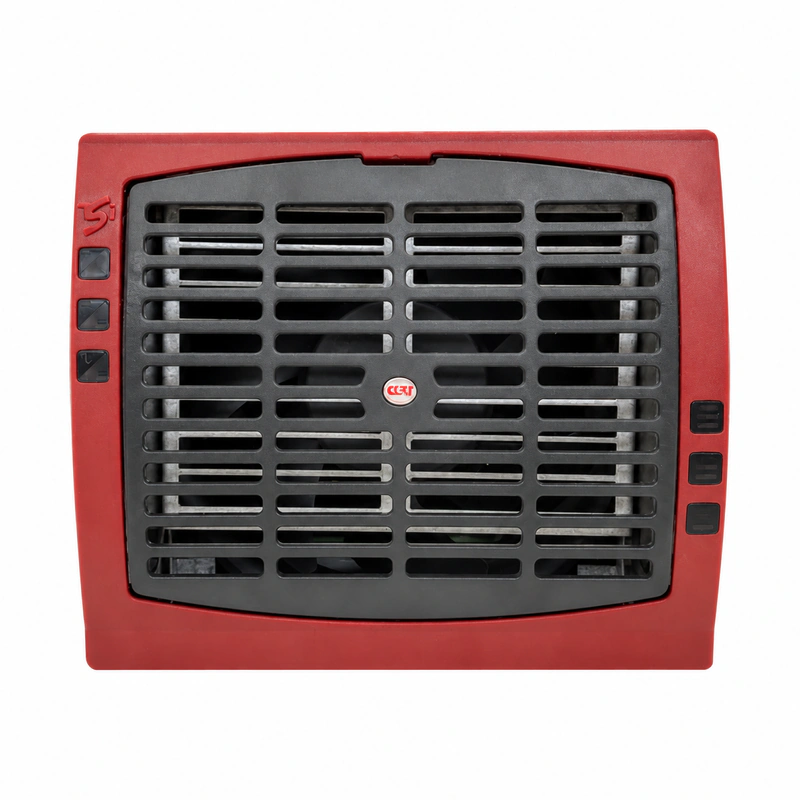
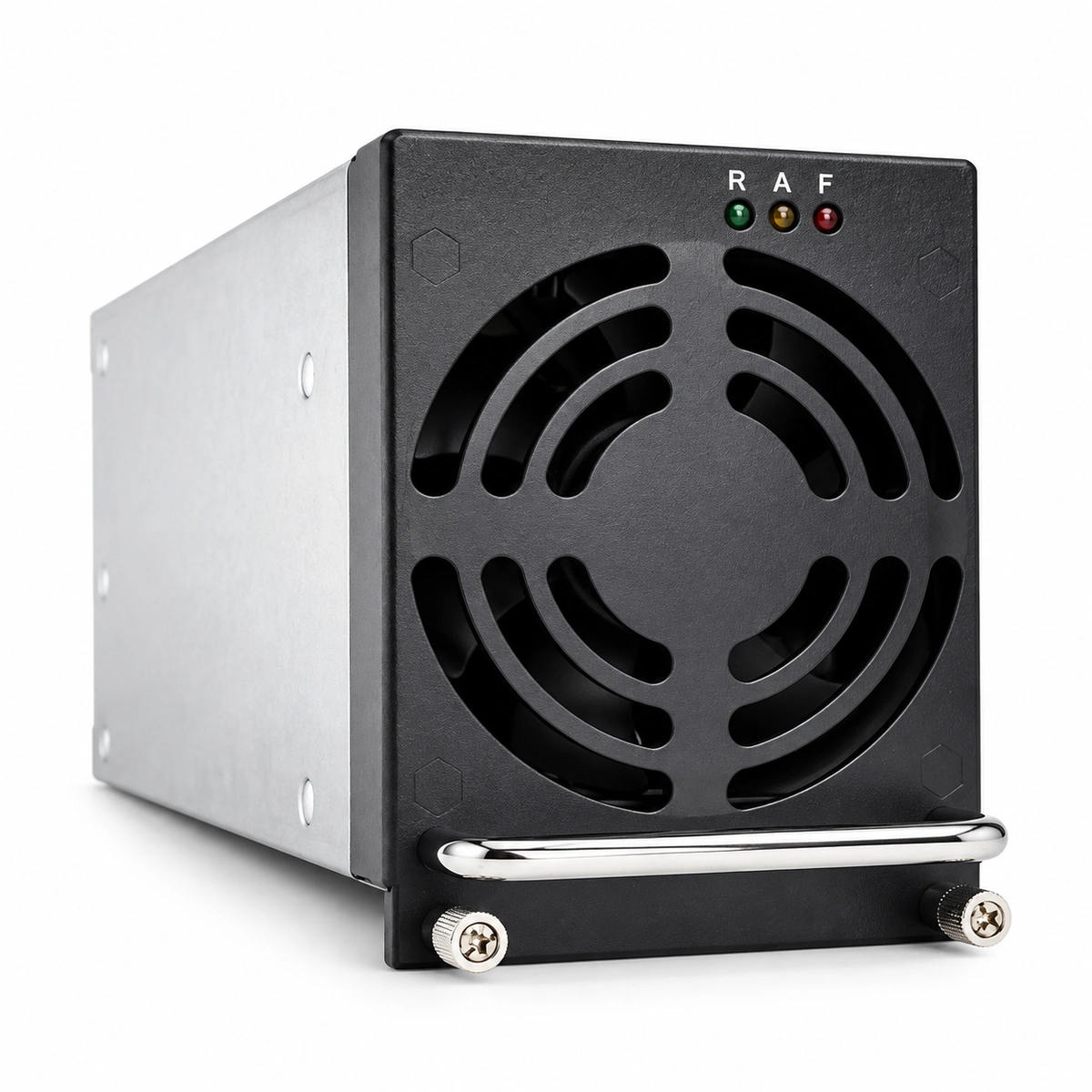
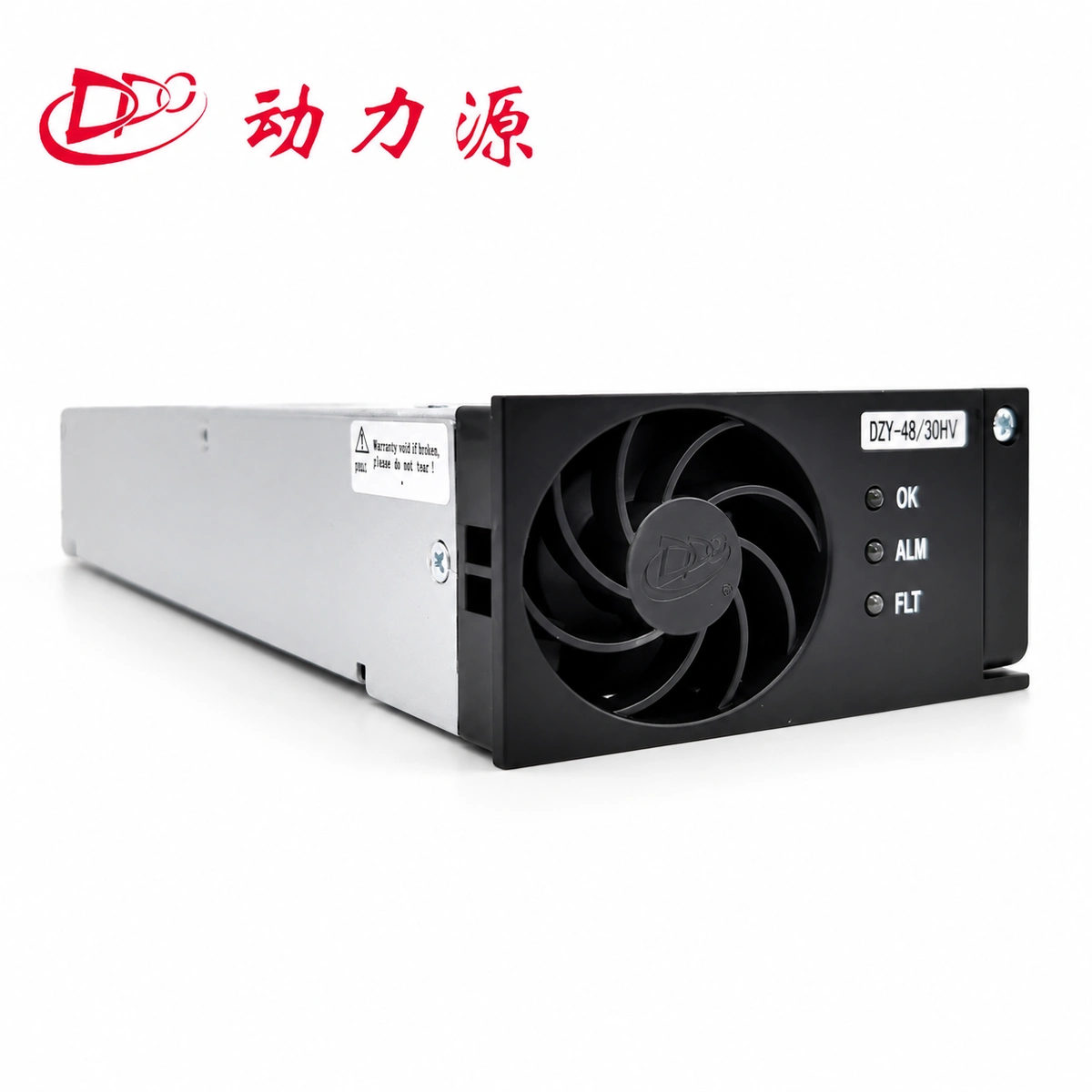
Concurrently, mission-critical power architectures are integrating centralized modular -48V DC and high-voltage DC (HVDC) rectifier skids directly adjacent to high-density compute rows. Featuring titanium-grade rectifiers that achieve 96.5% to 98.0% electrical conversion efficiencies, these platforms operate in robust N+1 or 2N redundant topologies. By eliminating multiple intermediate AC-DC-AC conversion steps, these modular rectifier skids drastically reduce thermal dissipation, improve power factor performance across partial-load operating points, and feed direct-to-chip power topologies with negligible resistive distribution losses.
Deploy 800A to 2500A sandwich-type copper busway with full 100% neutral and internal ground conductors rated for 65kA to 100kA short-circuit withstand.
Incorporate intelligent tap-off boxes featuring Class 0.5 revenue-grade power metering and Modbus/BACnet telemetry interfaces.
Standardize on modular N+1 rectifier configurations operating at ≥97% electrical efficiency across 30% to 90% load profiles.
Phased CapEx Alignment with Substation Energization and Utility Delivery Milestones
With utility interconnection lead times extending from 36 to 60 months in major hyperscale corridors, committing capital to monolithic power plants upfront exposes developers to severe negative carry and tied-up balance sheets. Implementing a phased infrastructure delivery strategy aligns CapEx outlays directly with confirmed utility substation delivery dates. Instead of constructing complete 100 MW+ central switchgear complexes ahead of confirmed utility handoffs, operators deploy scalable 10 MW to 20 MW plug-and-play modular power blocks on a verified, step-by-step basis.
This decoupled methodology isolates capital risk into autonomous functional blocks. As transmission utilities deliver sequential voltage levels and complete transformer energization steps, corresponding power skids are deployed and integrated. Multi-tenant operators can activate the initial phase of IT compute to generate operational revenue, which subsequently funds succeeding deployment phases. This agile approach directly protects developers against macro financing volatility, shifting debt burdens, and prolonged utility substation grid connection delays.
Establish contractual milestone gates tying skid manufacturing release to utility Substation Readiness Verification (SRV) dates.
Design modular E-House interfaces for hot-swappable paralleling without requiring upstream medium-voltage system outages.
Structure CapEx tranche disbursements to maintain internal rate of return (IRR) thresholds across multi-year utility queue delays.
Skid-Mounted LiFePO4 Energy Storage: Peak Shaving and Resilient Backup Integration
Mission-critical facilities are rapidly phasing out Valve-Regulated Lead-Acid (VRLA) battery configurations in favor of modular Lithium Iron Phosphate (LiFePO4) Battery Energy Storage Systems (BESS) housed in dedicated, outdoor fire-rated skids. LiFePO4 chemistry delivers superior thermal stability, virtually zero thermal runaway propagation risk under standard mechanical damage, and an operating life exceeding 4,000 to 6,000 cycles at 80% Depth of Discharge (DoD). By locating batteries in external modular enclosures, developers liberate high-value indoor white space and eliminate internal acid-spill containment and continuous hydrogen evacuation systems.
These containerized LiFePO4 platforms operate beyond traditional static UPS hold-up applications; they are engineered with microsecond-level control algorithms to perform active peak shaving during artificial intelligence training burst loads. Advanced Battery Management Systems (BMS) provide cell-level voltage, temperature, and impedance tracking to mitigate localized degradation. Coupled with NFPA 855-compliant deflagration venting and clean-agent aerosol or Novec 1230 fire suppression, these skid-mounted systems mitigate utility peak demand penalties while reinforcing baseline facility resilience.
Enforce UL 9540A unit-level and system-level thermal runaway testing data on all LiFePO4 skid architectures to satisfy NFPA 855 separation mandates.
Program BMS-to-UPS controls for microsecond-level load shaving to suppress AI computational burst transient loads exceeding utility peak thresholds.
Implement multi-tier gas detection (off-gas VOCs, CO, and H2) coupled to automatic emergency power off (EPO) and inert gas / aerosol suppression protocols.
Accelerated Quality Assurance: From Factory Acceptance Testing (FAT) to Level 5 Commissioning
Traditional commissioning frameworks—spanning Level 1 (factory witness), Level 2 (receipt/installation), Level 3 (pre-functional), Level 4 (functional performance), and Level 5 (Integrated Systems Testing, or IST)—often consume up to 24 weeks on stick-built campuses. Prefabricated modular skids collapse this critical path by executing comprehensive Factory Acceptance Testing (FAT) prior to transport. By subjecting interconnected switchgear, transformers, and UPS systems to full-scale reactive load bank tests, secondary injection protective relay calibration, and automated SCADA integration in the factory, latent defects are resolved before reaching the site.
Upon skid delivery and utility tie-in, on-site commissioning transforms from diagnostic troubleshooting into a rapid verification process. Level 4 functional sequences and Level 5 full-load heat-run simulations are carried out utilizing portable medium-voltage load banks and automated digital commissioning software suites. This streamlined methodology compresses site commissioning duration down to three to four weeks, ensuring immediate compliance with client service level agreements and expediting commercial energization.
Execute 100% full-load FAT with combined dynamic step-load (0%-100%) and blackout transfer simulations prior to factory shipping release.
Standardize digital twin commissioning scripts to execute automated Level 4 functional sequence of operations (SOO) testing across all power blocks.
Maintain a maximum 21-day timeline from final skid site-anchoring to final Level 5 Integrated Systems Testing sign-off.
Engineering Procurement & Technical Desk
For technical datasheets, custom power topology design, or volume export quotations, reach out to HEFENGQI engineers.