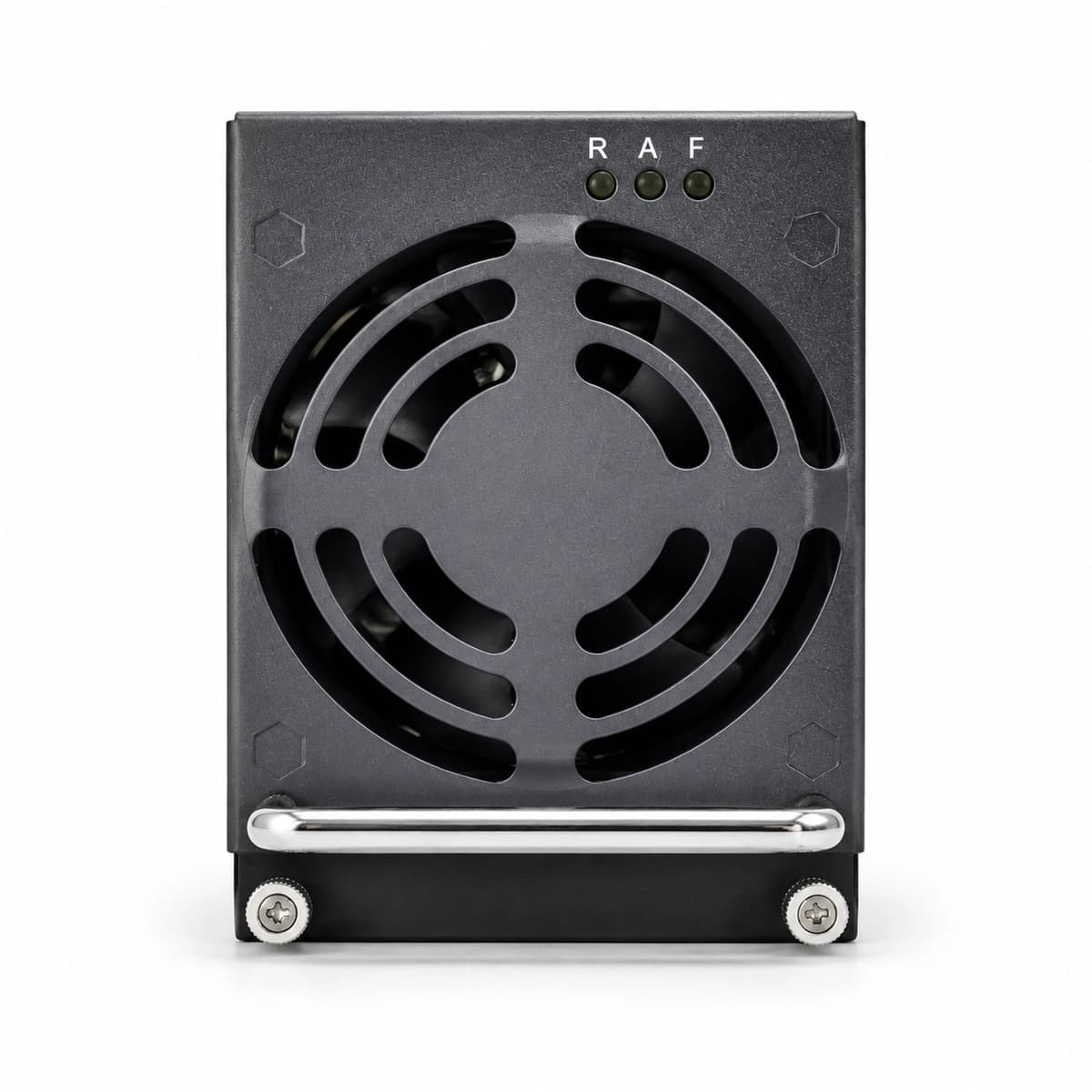
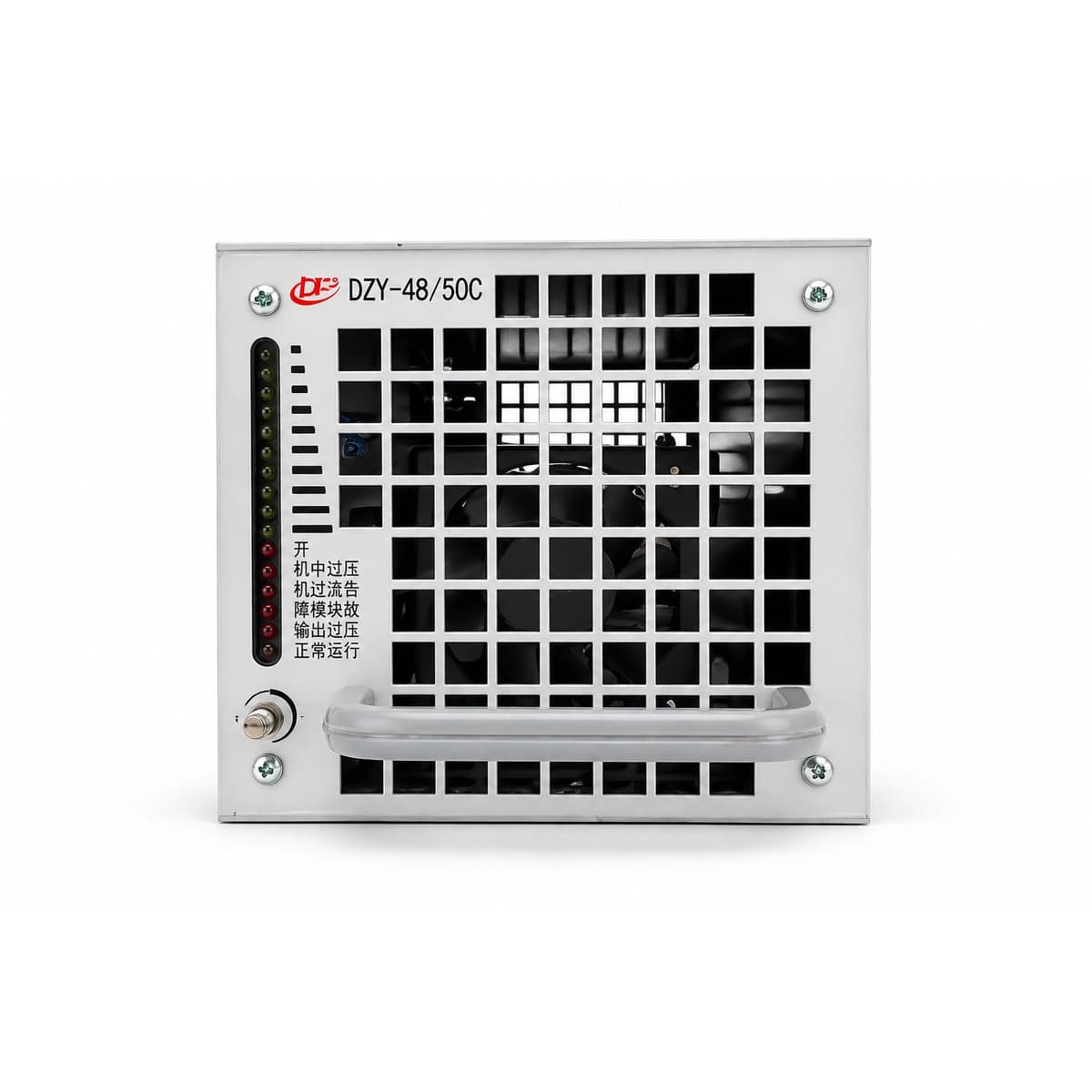
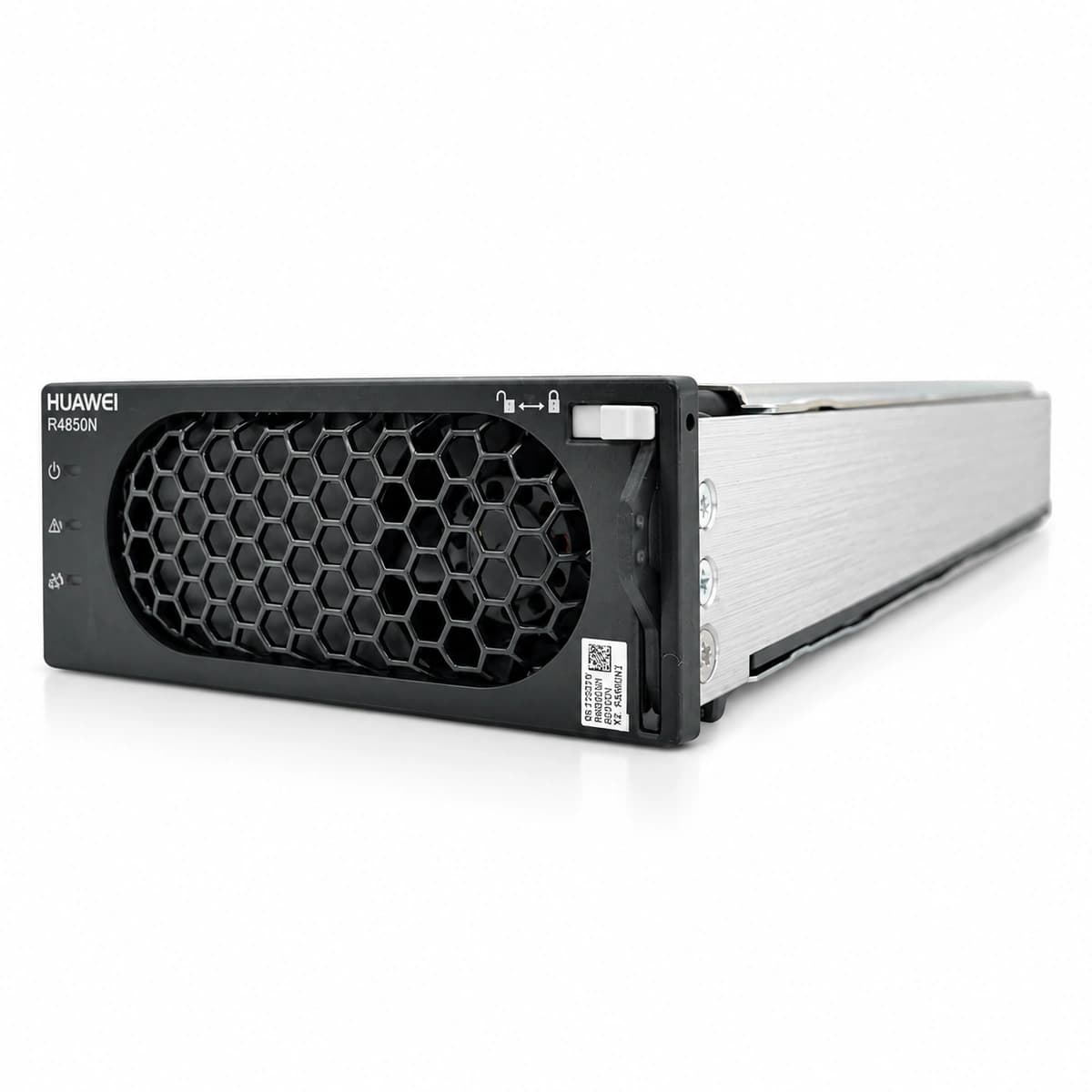
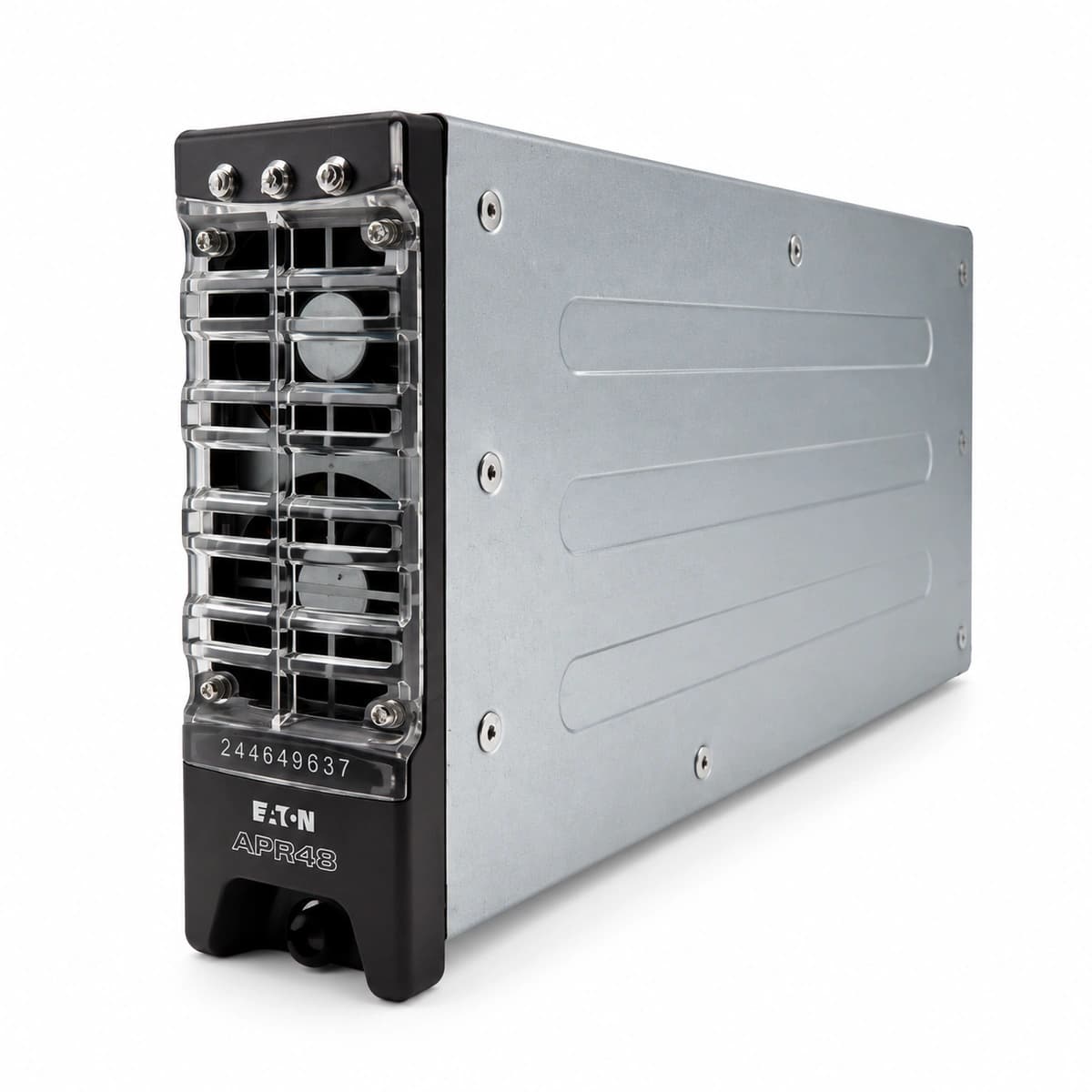
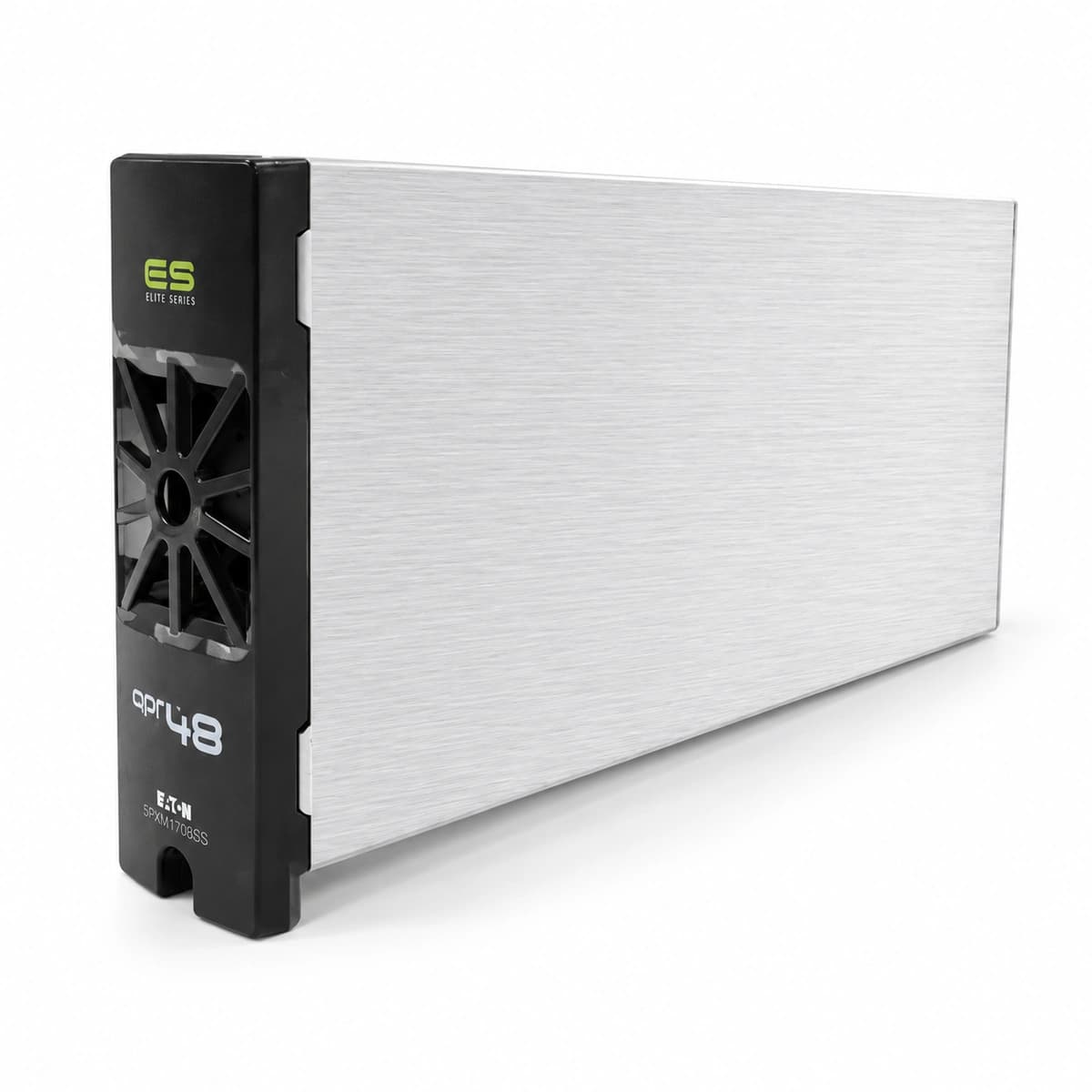
What this product is
Architecturally, the DMA14-4850A is structured around a two-stage conversion platform. The front-end active PFC stage boosts single-phase AC input into a stabilized high-voltage DC intermediate rail while maintaining a power factor greater than 0.99 and minimizing total harmonic distortion (THD). The isolated rear stage utilizes a high-frequency full-bridge/half-bridge resonant DC-DC converter with planar transformer technology and synchronous rectification to achieve tight output regulation and dynamic load response. Internal management is handled by a dedicated Digital Signal Controller (DSC) that handles pulse-width modulation, thermal feedback, autonomous active bus sharing, and comprehensive reporting over an integrated serial interface in compliance with global telecom standards like YD/T 731 and IEC 60950.
What problem it solves
This unit eliminates operational downtime caused by severe grid brownouts, utility sags, and transient line surges typical in peripheral rural sites. It mitigates module-to-module circulating currents and thermal stress imbalances common in large parallel rectifier banks through precision active load sharing. Furthermore, its ultra-low ripple voltage and rigorous EMI filtering prevent high-frequency carrier-band noise from corrupting RF transceivers and optical line terminals while protecting lead-acid or lithium battery systems against uncontrolled overvoltage spikes.
Who and where it is for
Tailored for mobile base transceiver stations (macro 3G/4G/5G and distributed RRU sites), optical transport network (OTN/DWDM) nodes, microwave transmission hubs, utility substation SCADA/teleprotection setups, and industrial -48V DC plant racks requiring hot-swappable N+1 redundant architectures.