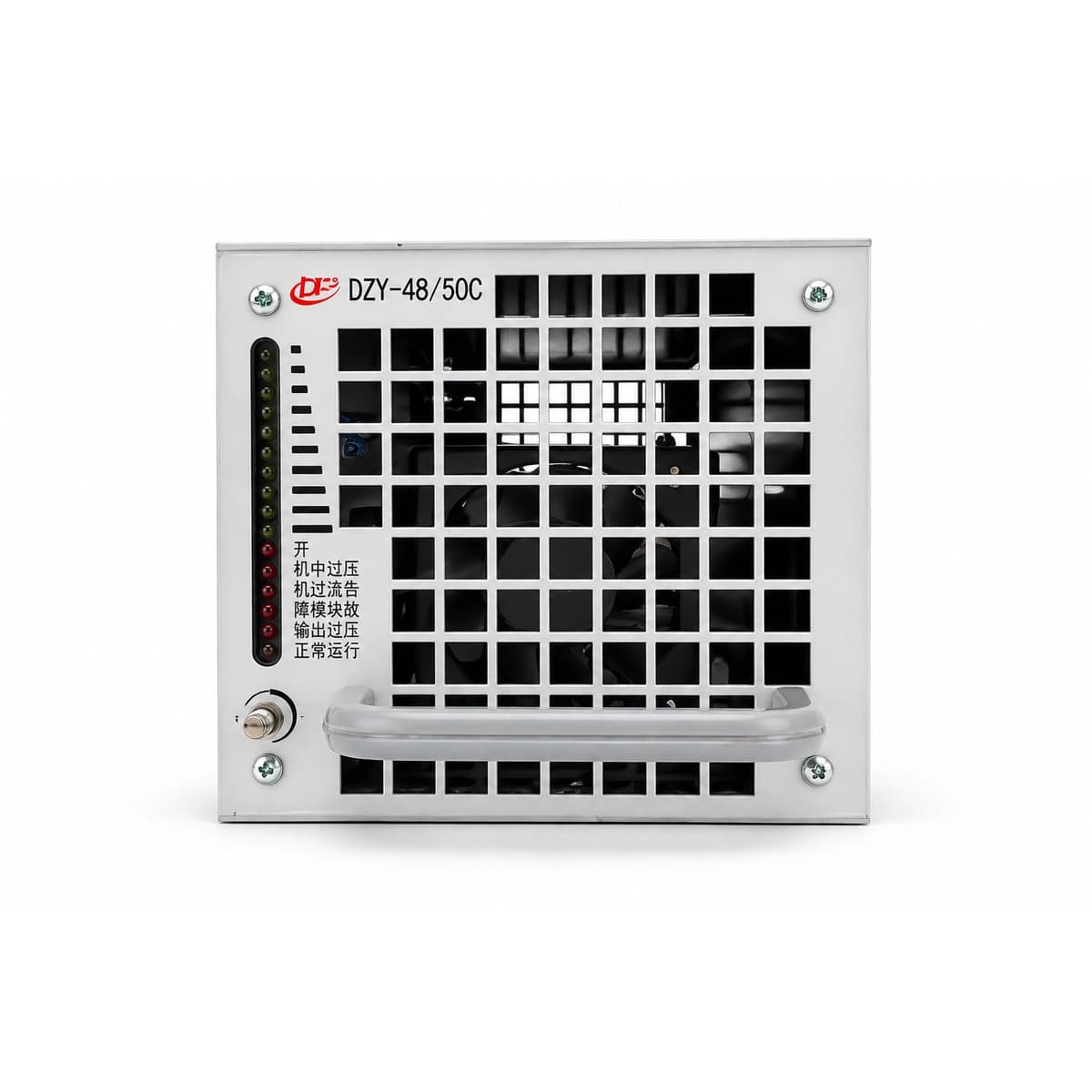
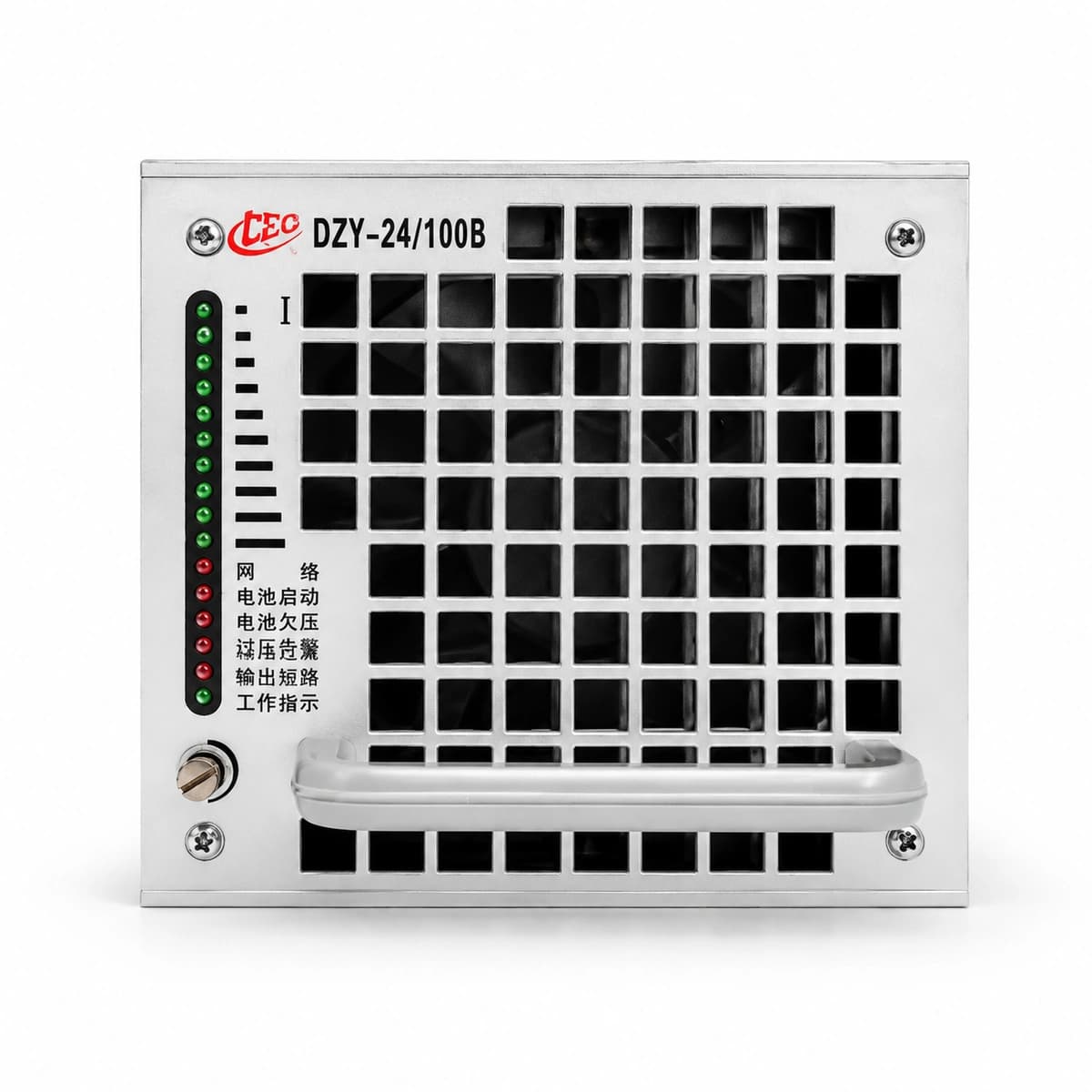
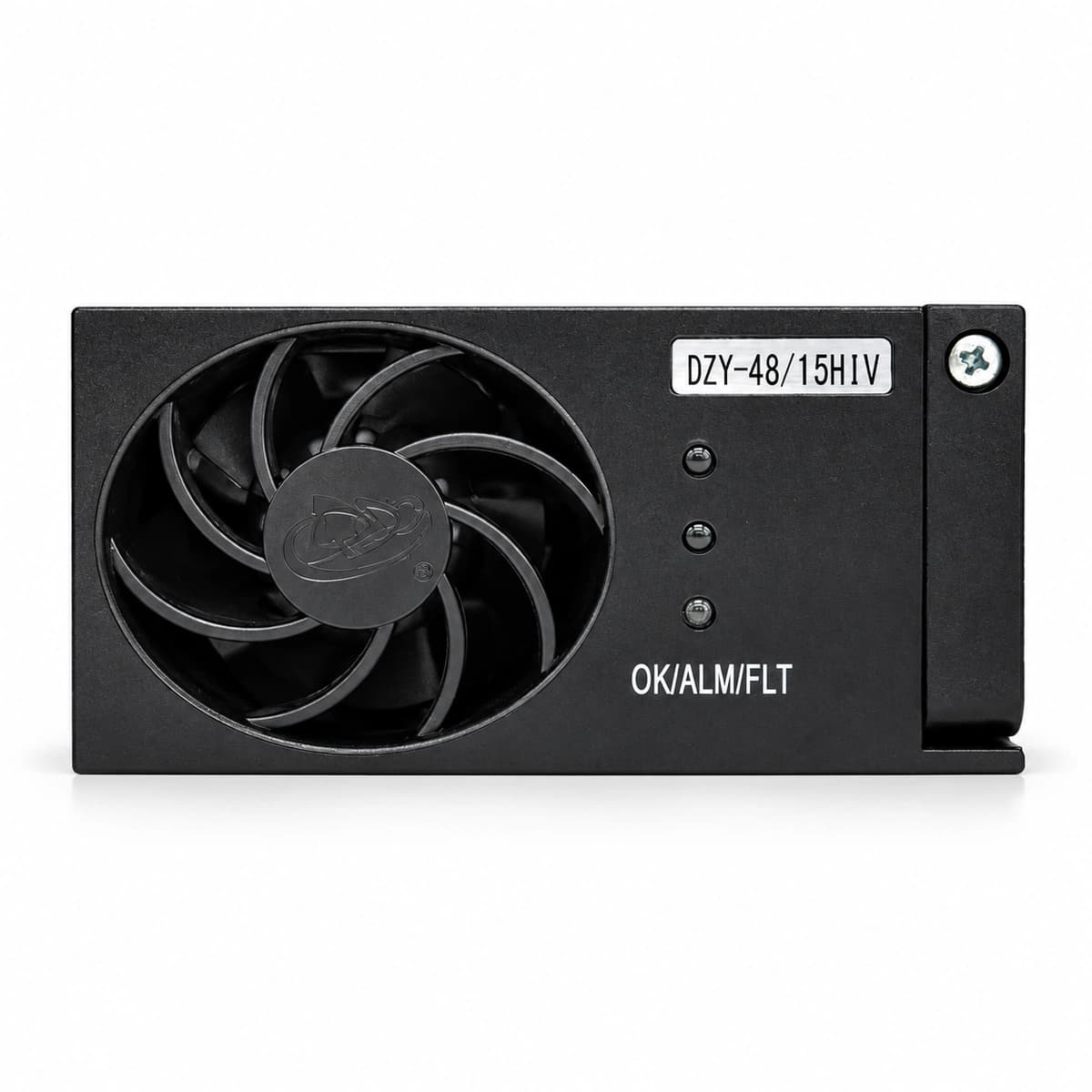
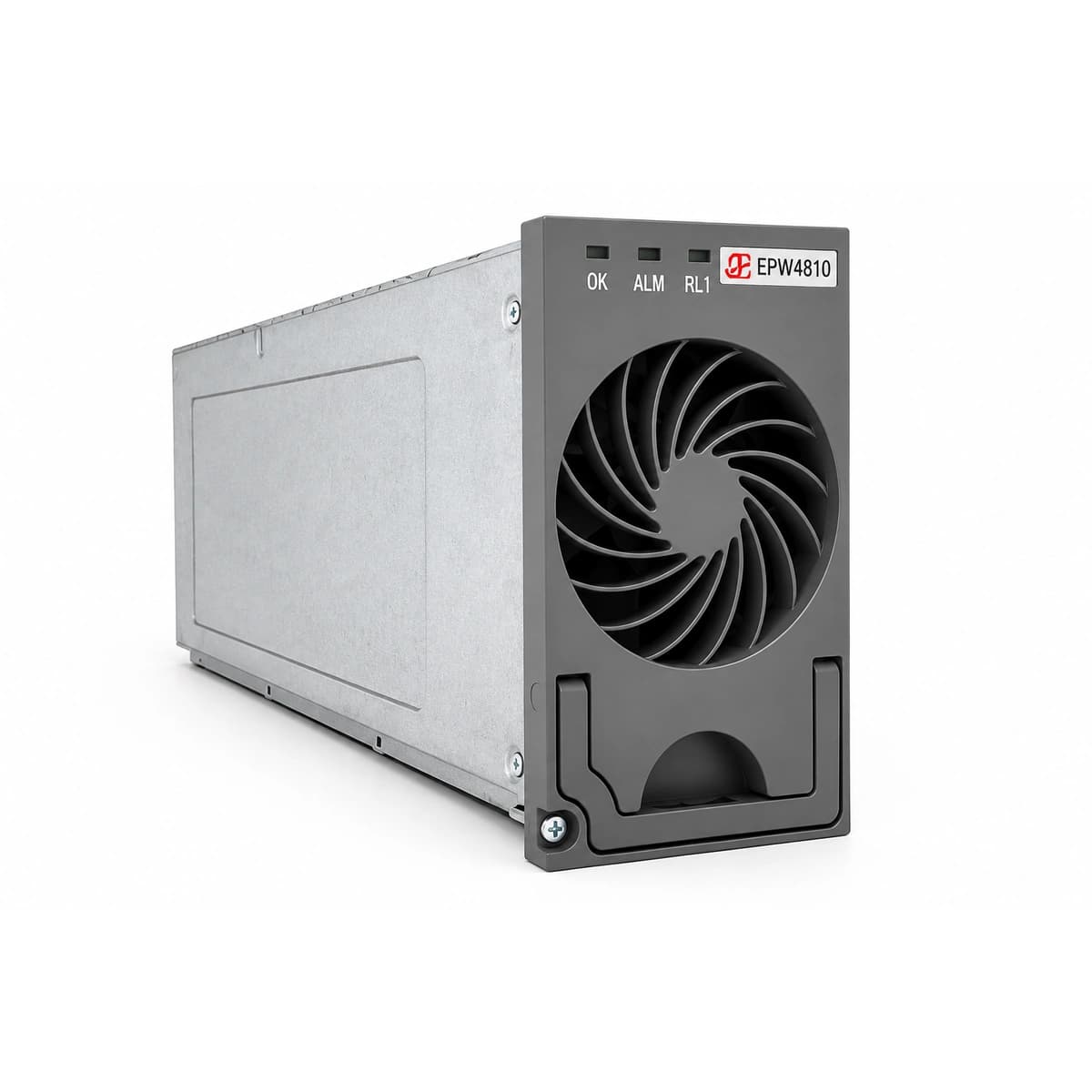
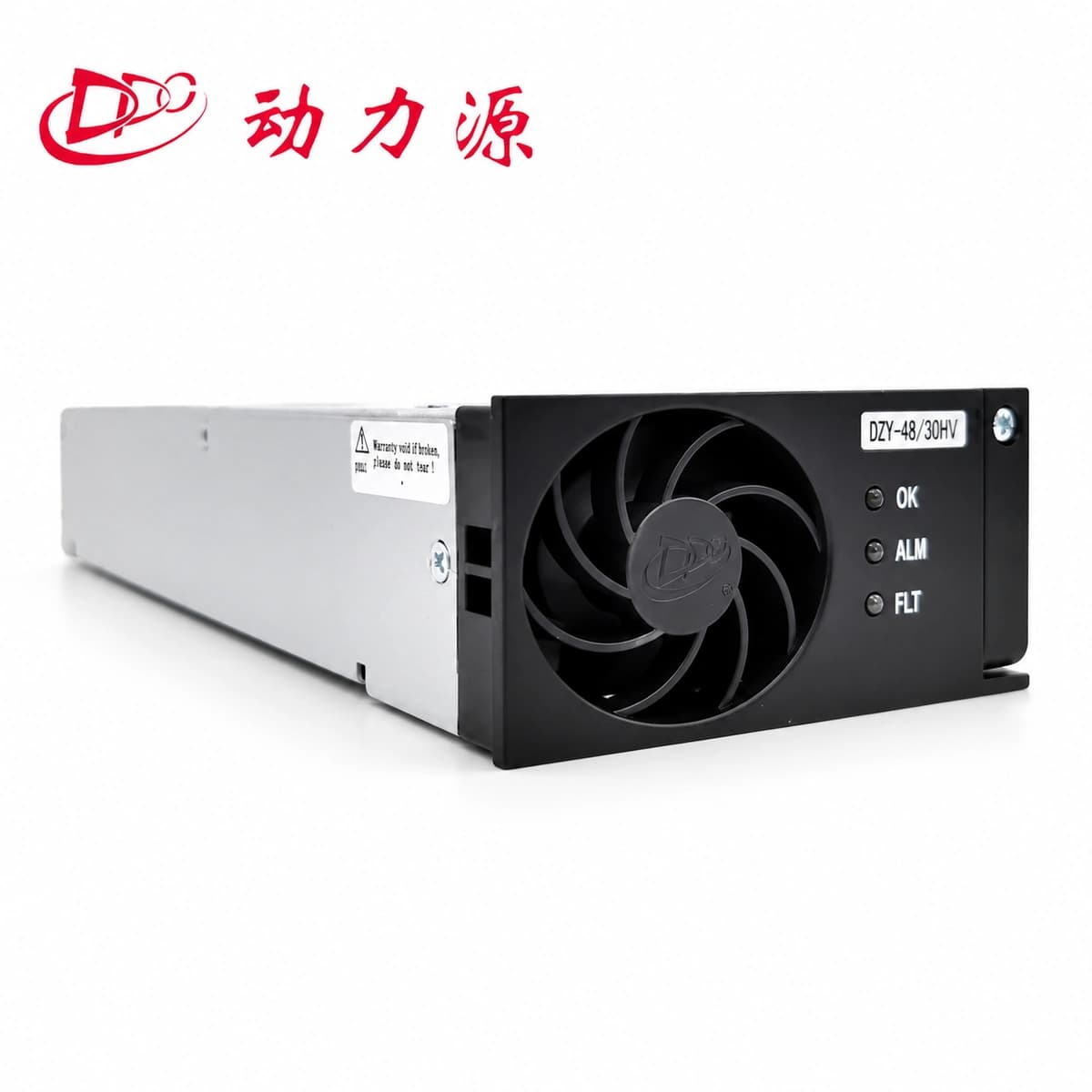
What this product is
Architecturally, the DPC 4850C employs a dual-stage power electronic conversion circuit. The input stage utilizes an active Boost PFC converter operating in continuous conduction mode to enforce near-unity power factor and suppress input harmonic distortion according to international grid standards. The isolated DC-DC stage uses a Phase-Shifted Full-Bridge (PSFB) zero-voltage switching (ZVS) topology that steps down and rectifies high-voltage internal DC into tightly regulated telecom -48V power with low EMI and ripple. The entire unit is supervised by an industrial microcontroller managing dynamic thermal throttling, autonomous current sharing, and safe hot-swap blind-mate backplane communications.
What problem it solves
The 4850C directly solves field challenges related to erratic AC utility networks, lightning surges, and unscheduled maintenance downtime in remote telecommunication shelters. Its wide 90V–290V AC operational window prevents premature battery bank discharge during severe voltage dips. In addition, its precision thermal-controlled air channels and self-locking hardware overvoltage protection (OVP) guard against component thermal fatigue and catastrophic downstream telecom load damage caused by runaway rail voltages.
Who and where it is for
Ideal for wireless cellular macro base stations (4G/5G BTS, BBU, RRU), central offices, broadband optical line terminals (OLT), enterprise telecom server racks, electric utility substation DC panels, and railway trackside signaling communication hubs requiring uninterrupted, battery-backed -48V DC power.