What the comparison actually proves
Both models are candidates for server rooms and edge racks that need online double-conversion protection. Match the UPS to the site's supply, outlets and backup-time requirements before ordering.
Verify the complete SKU, regional suffix and input plug.
Record continuous watts, startup surge, power factor and target runtime.
Do not order from the product family name alone.
Core specifications for procurement
Vertiv Liebert GXT5-3000IRT2UXL is a 230 V, 3000 VA/3000 W online rack/tower UPS in Vertiv's public product record. Eaton 9PX3000IRT2U is listed as a 3000 VA, 3000 W, 2U rack/tower UPS with a C20 input and eight C13 plus two C19 outputs. Both complete configurations still need to be confirmed on the quotation.
Parameter | Vertiv Liebert GXT5-3000IRT2UXL | Eaton 9PX3000IRT2U |
|---|---|---|
UPS topology | Online double conversion | Online double conversion |
Rated apparent power | 3000 VA | 3000 VA |
Rated real power | 3000 W | 3000 W |
Nominal output voltage | 230 V AC | Confirm regional voltage |
Input connection | Confirm plug for the ordered configuration | C20 |
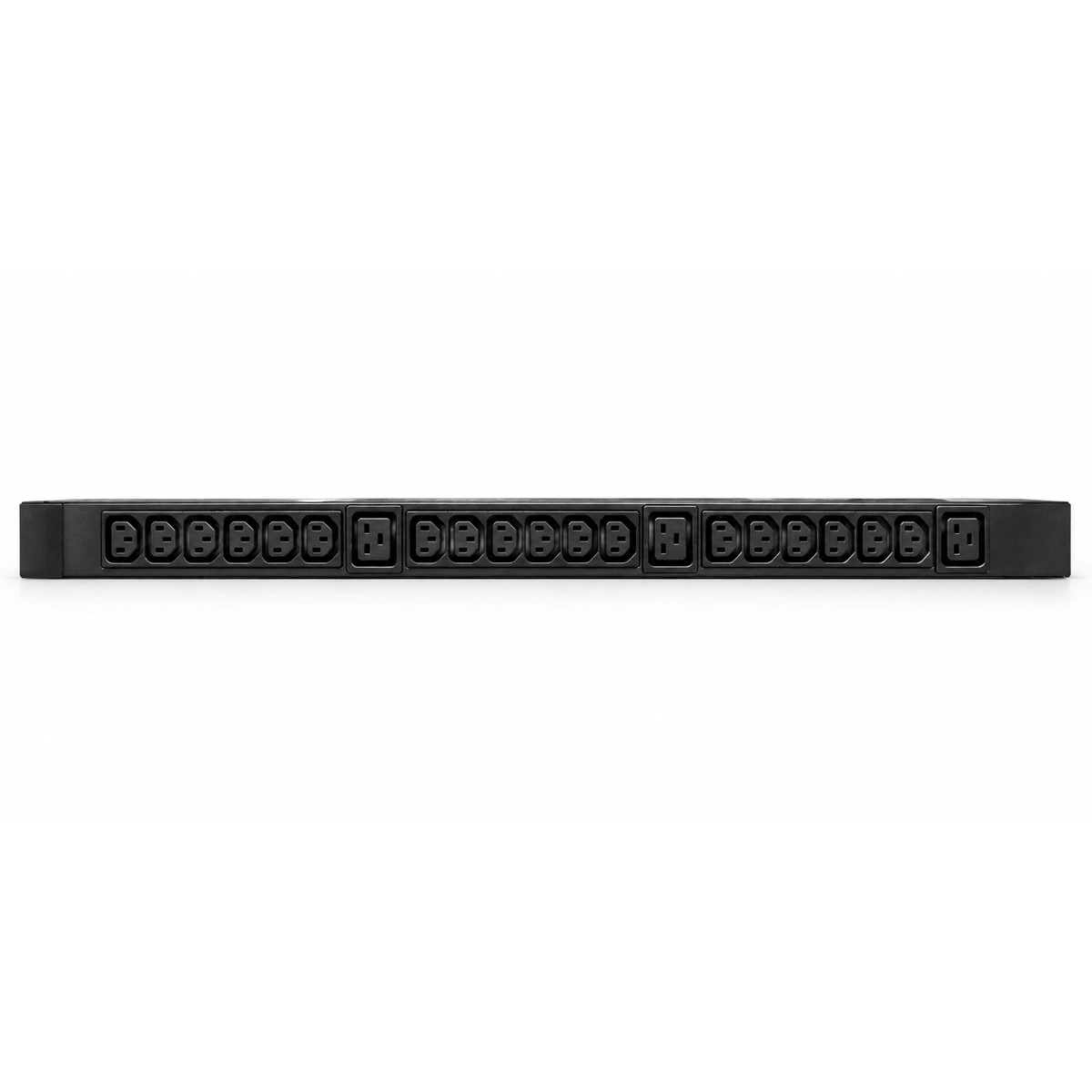
Output receptacles | Confirm rear-panel layout | 8 × C13 + 2 × C19 |
Mounting | Rack/tower | Rack/tower, 2U |
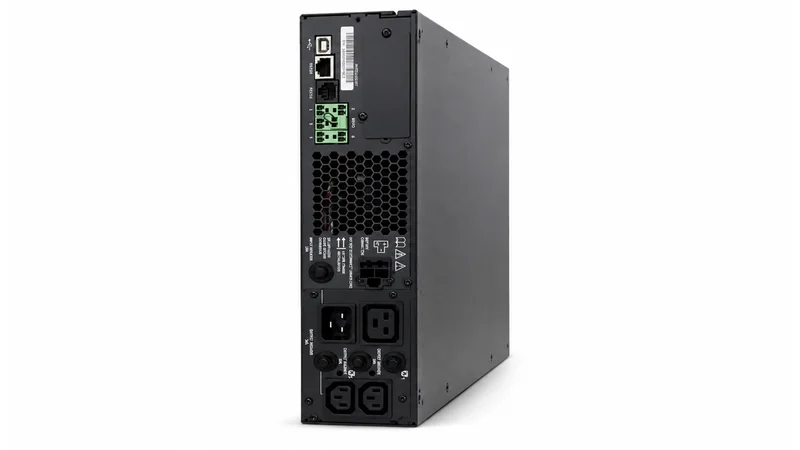
Vertiv Liebert GXT5-3000IRT2UXL
How the differences affect the purchase
Start with the branch circuit and receptacles, not the VA label. A site wired for a 230 V C20 feed and C13/C19 load mix may align naturally with the Eaton order. A site standardized on Vertiv cabinets, cards and service procedures may reduce operational friction with the GXT5. The input connector, breaker rating, bypass arrangement and cable length still need an electrician's check; a rack shape does not make two UPS units plug-compatible.
At a measured 2100 W continuous load, a 3000 W model leaves 900 W of nominal headroom before considering temperature, battery aging, overload behavior and future expansion. At a measured 2700 W load, the remaining 300 W is a narrow planning margin. Runtime must be calculated from the exact battery assembly and tested load, not from the nominal VA rating.
Choose A when the confirmed 230 V GXT5-3000IRT2UXL configuration delivers the required 3000 W, the cabinet already uses Vertiv monitoring or service conventions, and its rear-panel outlets suit the loads. Choose B when the Eaton C20 input and 8-C13/2-C19 distribution better fit the cabinet and Eaton's management-card and service requirements are acceptable. If the site is 120 V, neither international 230 V configuration should be used as a shortcut.
Confirm bypass, breaker and grounding arrangements.
Confirm battery, rail, tower-foot and network-card compatibility.
Confirm the monitoring platform and shutdown agent support the supplied communication path.
Compatibility checks before ordering
Ask the supplier to identify the complete SKU, voltage region, input plug, output receptacles, battery type, battery module count, rack rails, tower feet, network card and firmware baseline. Compare the proposed bypass and maintenance procedure with the site's distribution board. Do not reuse a battery module, rail kit or network card because it fits physically: confirm electrical ratings, connector keying, firmware support and the manufacturer's compatibility list.
Acceptance checklist
At delivery, record the exact model and serial number, photograph the nameplate and rear panel, and compare every connector with the quotation. Check rack depth, rail engagement, grounding, airflow clearance and input protection before energizing. With the approved procedure, verify display status, output voltage, alarms, communications, bypass operation and load transfer. Run the agreed battery test at the agreed load and record start time, end time, battery condition and shutdown behavior. These are acceptance actions, not a claim that either unit has already passed them.
What to include in an RFQ
Send the site voltage and frequency, branch-circuit plug, continuous and peak watts, power factor, number and type of C13/C19 loads, target runtime, rack depth and rail requirements, ambient temperature, monitoring protocol, bypass arrangement, desired battery expansion, destination country, new or refurbished preference and required delivery window. Ask for the exact datasheet revision, battery runtime chart, outlet diagram, warranty terms, test report and region-specific certification. Price, stock, lead time and warranty depend on the quoted configuration and contract.
Request the exact datasheet version and battery runtime curve.
Request the outlet diagram, warranty terms, test report and regional certification.
Engineering Procurement & Technical Desk
For technical datasheets, custom power topology design, or volume export quotations, reach out to RICEWIND engineers.
Read the RICEWIND editorial policy to see how we verify technical content