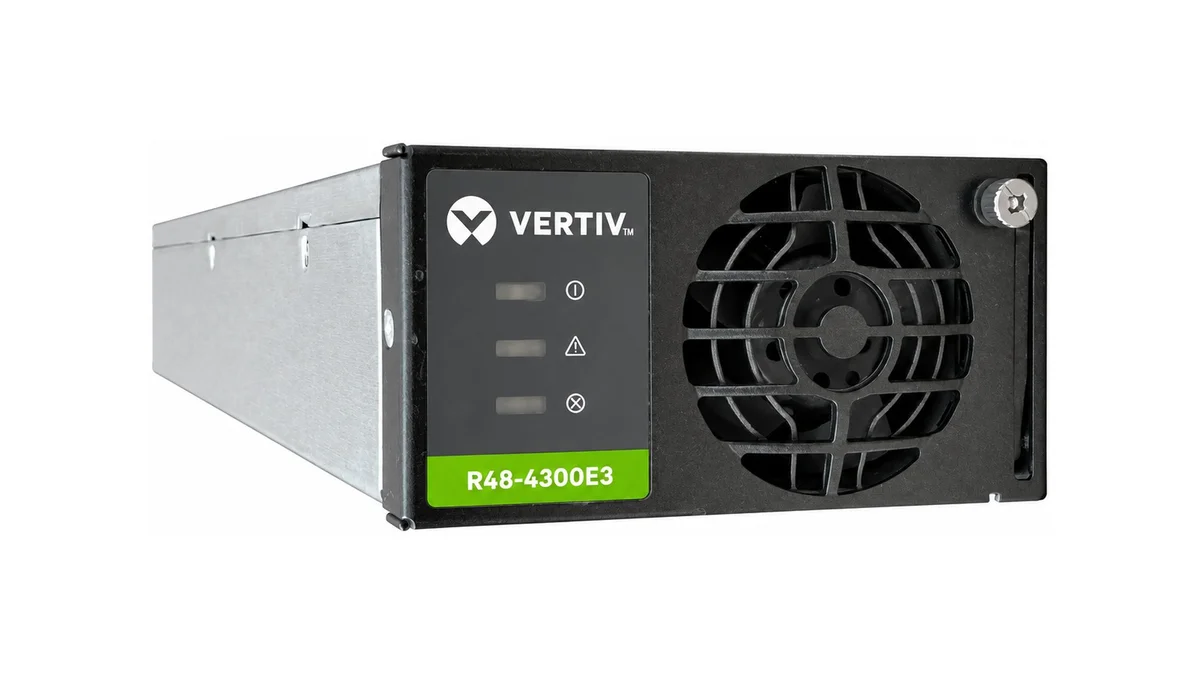
Introduction: Powering Modern AI & High-Density Telecom Infrastructure
With the exponential growth of AI computing clusters, multi-band 5G macro sites, and edge colocation facilities, DC power infrastructure is facing unprecedented power density demands. Legacy 2000W and 3000W rectifier modules often require multiple subracks to satisfy soaring power consumption, occupying valuable rack units and elevating thermal management costs.
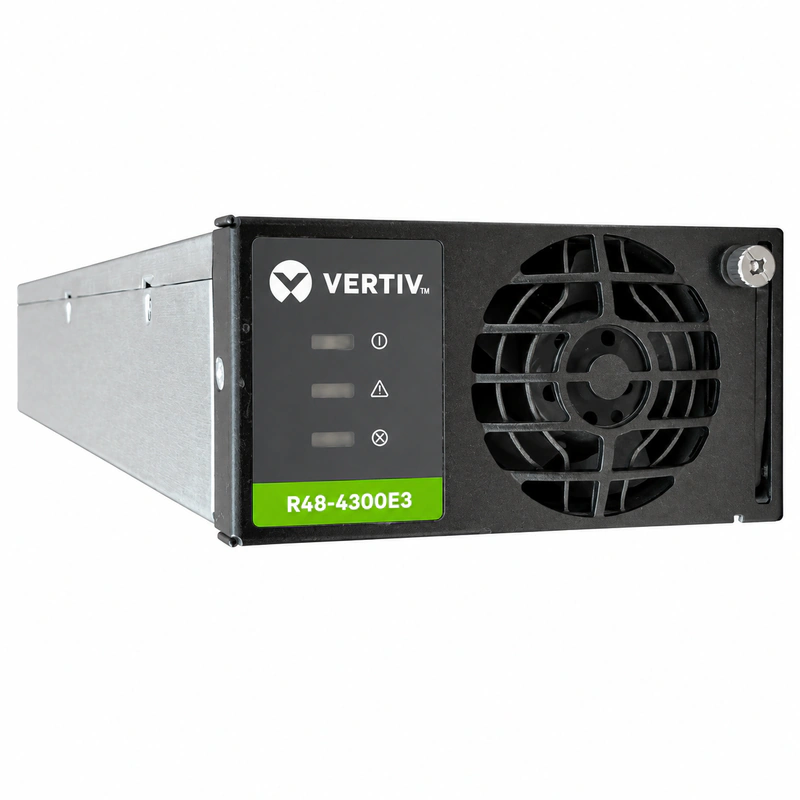
The Vertiv eSure R48-4300E3 digital switch-mode rectifier addresses this challenge by delivering 4300W rated output (89.6A nominal) in a compact 1U form factor. Featuring an outstanding peak efficiency of over 96%, robust utility grid resilience, and smart active load sharing, the R48-4300E3 has become the premier choice for tier-1 telecom operators and enterprise datacenters worldwide.
1. Key Electrical Specifications and Performance Curves
When designing power distribution topologies or retrofitting existing subracks, engineering teams must evaluate the full electrical operating range of the R48-4300E3:
The unit features an ultra-wide AC input range spanning from 85Vac to 300Vac. Full rated output of 4300W is maintained across 176Vac to 300Vac, while smooth linear power derating is applied between 85Vac and 176Vac to guarantee uninterruptible operation under severe voltage sags or diesel generator fluctuations. The DC output is adjustable between -42Vdc and -58Vdc, accommodating both standard VRLA batteries and modern LiFePO4 lithium battery chemistry.
Rated Power Output: 4300W (Max DC continuous current 89.6A)
Input Voltage Window: 85Vac to 300Vac (176Vac to 300Vac full output without derating)
Peak Conversion Efficiency: >= 96.2% (Significantly cuts HVAC cooling overhead and operational expenditure)
Power Factor & THD: Power factor >= 0.99, Total Harmonic Distortion <= 5%
Form Factor: Standard 1U high-density hot-pluggable design with blind-mate rear busbar connector
2. NetSure Subrack Integration and System Topology
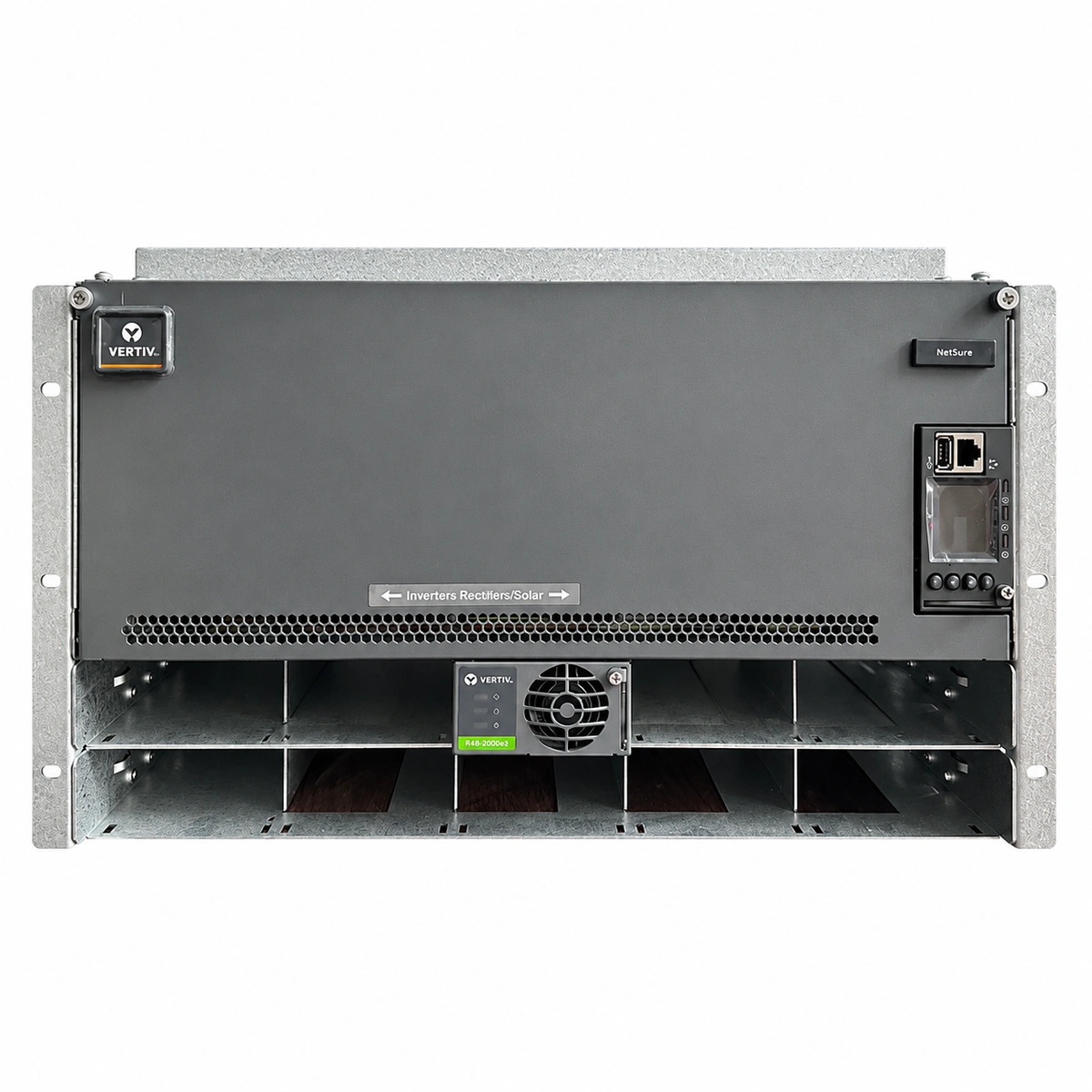
The R48-4300E3 rectifier is engineered to integrate natively into Vertiv NetSure 700, NetSure 731, and NetSure 801 series subracks and modular power cabinets. Recommended deployment architectures include:
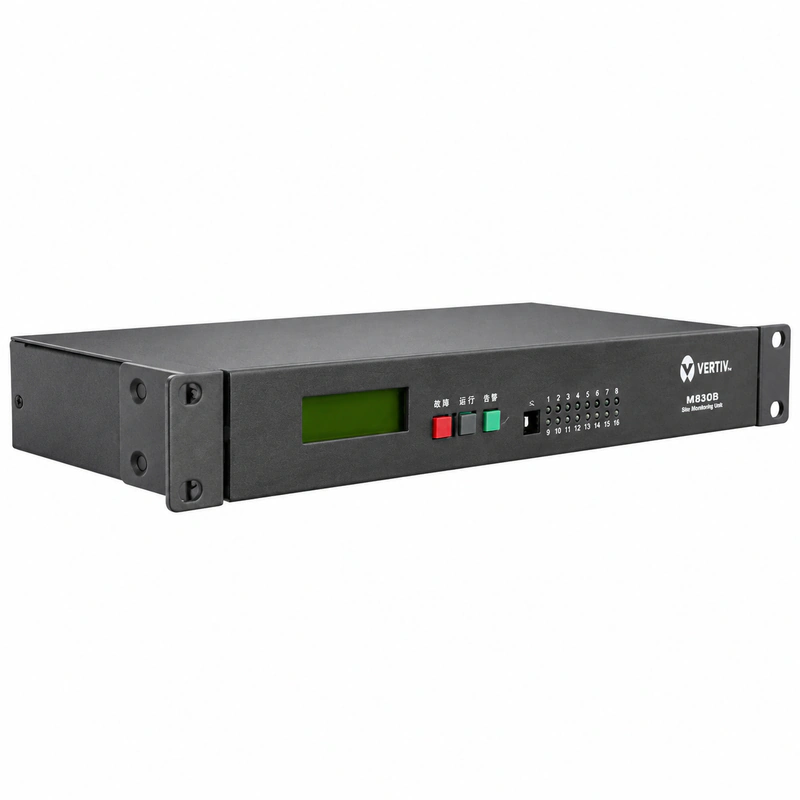
1. Embedded Subracks (NetSure 731 Series): Standard 19-inch rack-mount chassis housing 4 to 8 rectifier slots alongside the M830B or NCU central control unit. This compact configuration delivers 600A to 800A DC power in a minimal footprint, ideal for 5G BBU central rooms and edge computing pods.
2. Free-Standing Power Cabinets (NetSure 801 Series): Utilizing multi-tier rectifier shelves, complete systems support 12 to 24 units of R48-4300E3 modules in parallel, delivering up to 2000A capacity with N+1 or N+2 high-availability redundancy.
Controller Compatibility: Native plug-and-play communication with M830B, M830D, and NCU supervisory modules
Shelf Current Rating: Must utilize high-current rated shelves (4000W/4300W slots); never install in legacy 2000W shelves
Active Current Sharing: Digital CAN-bus load sharing maintains unbalance within +/- 3% across all parallel units
Advanced Battery Care: Automated boost, float, temperature compensation, and battery health diagnostic routines
3. Thermal Management, Environmental Resilience, and Cable Sizing
Despite its internal variable-speed cooling fan, installing multiple 4300W modules in high-density configurations mandates disciplined airflow and cable dimensioning:
Cabinets must preserve unobstructed front-to-back ventilation without thermal recirculation. The module sustains full 4300W output up to +45 deg C ambient temperature, initiating controlled thermal derating up to +75 deg C. Precision computer room air conditioning (CRAC) units, such as Vertiv Liebert DME or PEX systems, must be sized according to total thermal heat dissipation. DC breaker selection must incorporate a 1.25x safety margin; dedicated 100A or 125A DC circuit breakers are recommended per module.
Operating Temperature Range: -40 deg C to +75 deg C (Full 4300W load maintained up to +45 deg C)
Acoustic Optimization: Microprocessor-controlled fan speed balances component longevity and acoustic noise
Comprehensive Protection: AC over/undervoltage, DC output overvoltage hardware latch, short circuit, and overtemperature
Global Certifications: Compliant with CE, UL, TUV, RoHS, and international telecom telecommunications standards
4. Sourcing Authenticity, Hardware Verification, and Procurement Checklist
When procuring genuine or certified refurbished Vertiv R48-4300E3 rectifiers, enterprise procurement managers must enforce rigorous hardware inspection protocols:
Inspect the stamped serial barcode on the chassis to ensure complete parity with the internal PCB identification. Ensure the front bezel mesh is free of spray paint touch-ups and mechanical dents. Examine the rear high-current gold-plated power contacts; excessive micro-arcing marks or dark tarnishing indicates heavy previous duty cycles. Always conduct a live bench test with an M830B controller to verify CAN telemetry and automated addressing.
For verified enterprise supply, bulk project pricing, and global logistics support, contact RICEWIND engineers directly at lee@ricewind.com and +86 17621197907.
Nameplate Verification: Validate Vertiv authentic anti-counterfeit labels and 4300W / 89.6A rating stamps
Fan Health Diagnostic: Verify smooth spin-up during power-on self-test without abnormal bearing rattle
Warranty & Traceability: Procure strictly from verified supply chains with traceable serial numbers
Technical Inquiries: lee@ricewind.com / +86 17621197907
Engineering Procurement & Technical Desk
For technical datasheets, custom power topology design, or volume export quotations, reach out to RICEWIND engineers.