Huawei / SFP optical transceivers

Huawei 100G CFP2 10km Equipment information & support

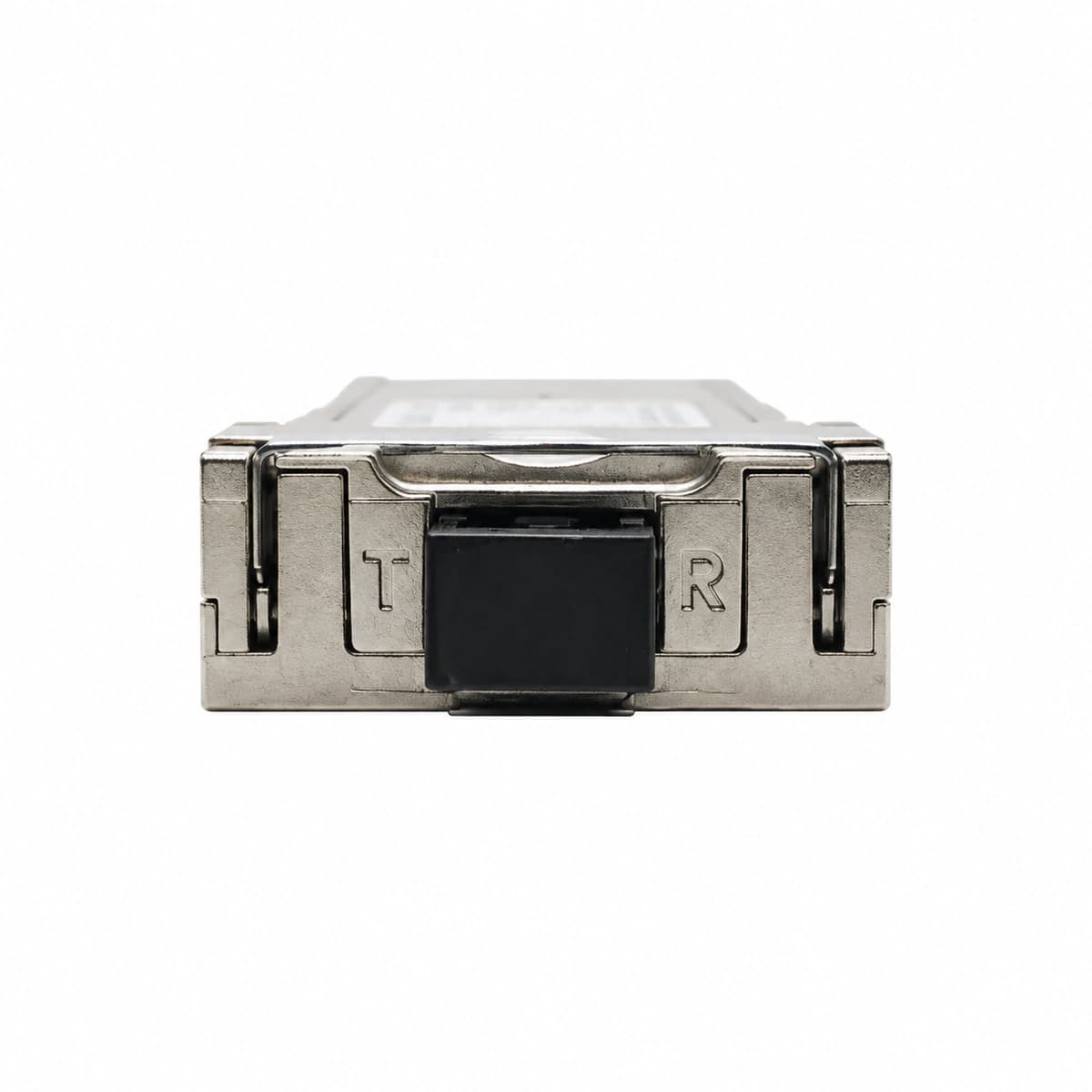
The Huawei 100G CFP2 1310nm 10km is a telecom-grade hot-pluggable optical transceiver module designed for 100G Ethernet core routing and OTN transport links up to 10km over single-mode fiber with duplex LC connectors.

Equipment information

Brand
Huawei
Equipment model
Huawei 100G CFP2 10km
Equipment type
SFP optical transceivers
Controller / software version
Confirm against the installed equipment
View full product specifications
Huawei 100G CFP2 10km Official Product View 1

Information below comes from the current product catalogue. Confirm the controller, software version and configuration of the installed equipment separately.

Physical Form Factor
CFP2
Data Rate
100 Gbps
Central Wavelength
1310 (4x25G LAN-WDM) nm
Maximum Distance
10 km
Fiber Type
Single-Mode Fiber (SMF) (SMF)
Optical Connector
Duplex LC Connector

Alarms & troubleshooting

OPT_LOS (Optical Loss of Signal)
Port LINK/ACT LED off, MPU ALM LED solid red
Input optical power is below receiver sensitivity threshold due to broken fiber patch cord, remote transmitter disabled, or remote CFP2 failure.
1. Execute 'display transceiver verbose' via CLI to verify Rx optical power. 2. Measure input power at fiber connector using an optical power meter (-10.6 dBm to -4.3 dBm nominal). 3. Inspect and clean optical fiber connectors and CFP2 optical receptacles. 4. Verify that the remote port laser is administratively enabled. 5. Replace the fiber jumper or swap the CFP2 module if the fault persists.
TEM_HA (Optical Module High Temperature Alarm)
Port LINK/ACT LED solid amber, chassis fans ramp to 100%
Subrack air filter clogged, fan tray malfunction, elevated ambient data center temperature, or internal CFP2 component degradation causing internal temperature to exceed 70°C threshold.
1. Check equipment room HVAC to ensure ambient temperature is between 20°C and 26°C. 2. Execute 'display fan' to check fan tray operational status and RPM. 3. Clean or replace subrack air filters. 4. Ensure unobstructed airflow around the CFP2 slot. 5. If chassis airflow is normal but specific CFP2 remains overheated, replace the module.
BIAS_HA (Laser Bias Current High Alarm)
Port LINK/ACT LED solid amber
CFP2 internal LAN-WDM laser diode aging or driver circuit degradation causing the automatic power control (APC) to drive bias current beyond warning threshold.
1. Execute 'display transceiver verbose' to query the bias currents across all 4 optical lanes. 2. Compare values with the module specification threshold to confirm progressive degradation. 3. Check 'display interface' for output errors, link stability, and packet drops. 4. Schedule a maintenance window to hot-swap the degraded CFP2 module with a spare unit. 5. Dispatch failed module for RMA processing.
IN_PWR_LOW (Optical Rx Power Low Warning)
Port LINK/ACT LED slow blinking amber (0.5Hz)
Optical Rx power is near receiver sensitivity threshold (-10.6 dBm to -8.6 dBm) due to excessive link attenuation, microbending, contaminated ODF adapters, or splice degradation.
1. Run 'display transceiver verbose' to inspect individual Rx power across all 4 LAN-WDM lanes. 2. Inspect fiber patch cord routing; ensure bending radius exceeds 30mm. 3. Inspect with a fiberscope and clean LC connectors and ODF patch panels with dry lint-free wipes. 4. Perform OTDR testing along the 10km link to identify high-loss events or degraded splices. 5. Adjust optical attenuation or remediate degraded fiber segments.
CRC_EXC (Port Ethernet CRC Errors Excessive)
Port LINK/ACT LED alternating yellow and green
Optical signal degradation, low OSNR, connector contamination causing high bit error rate (BER), or poor contact/oxidation on the CFP2 104-pin host connector interface.
1. Execute 'display interface [interface-name]' to track input CRC/FCS error increment rates. 2. Verify Rx power stability to ensure no intermittent optical dips or marginal power levels. 3. Unseat the CFP2 module, inspect the 104-pin gold finger connector, and clean with electronic contact cleaner. 4. Re-seat CFP2 firmly into the cage and torque both jack screws. 5. If CRC errors continue, perform a cross-swap test to isolate between the port/slot and the CFP2 module, then replace the faulty module.

Access Complete Maintenance & Full Alarm Troubleshooting Manual

This page lists high-frequency critical alarm codes commonly encountered in field maintenance. Comprehensive manufacturer troubleshooting matrices, board-level repair guides, detailed electrical schematics, and firmware commissioning manuals are delivered alongside equipment upon formal project procurement, accompanied by dedicated FAE technical support.

Share on-site information

  1. 01

    Identify the exact model

    Record the nameplate, system model and controller or module model.

  2. 02

    Keep the alarm details

    Record the full alarm text, indicator colour, timing and whether it persists.

  3. 03

    Describe recent changes

    Note recent replacements, software updates or configuration changes.

Record information visible in the existing interface. Electrical measurements, disassembly and replacement should follow the applicable manufacturer's manual and be performed by qualified personnel.

Your model and these details will be added to the enquiry form for you to review before sending.

Related technical articles

Browse the technical guides or send a question about this model.

View all articles

Need a replacement module or supporting equipment?

Confirm the full model, system configuration and compatibility requirements before enquiring about suitable products.

Ask about suitable products

Have a model and an on-site issue?

Share the exact model, alarm text and observed symptoms to help identify relevant information and compatibility requirements.

Request technical support