Vertiv / Precision air conditioning

Liebert CRV4 Precision AC Equipment information & support

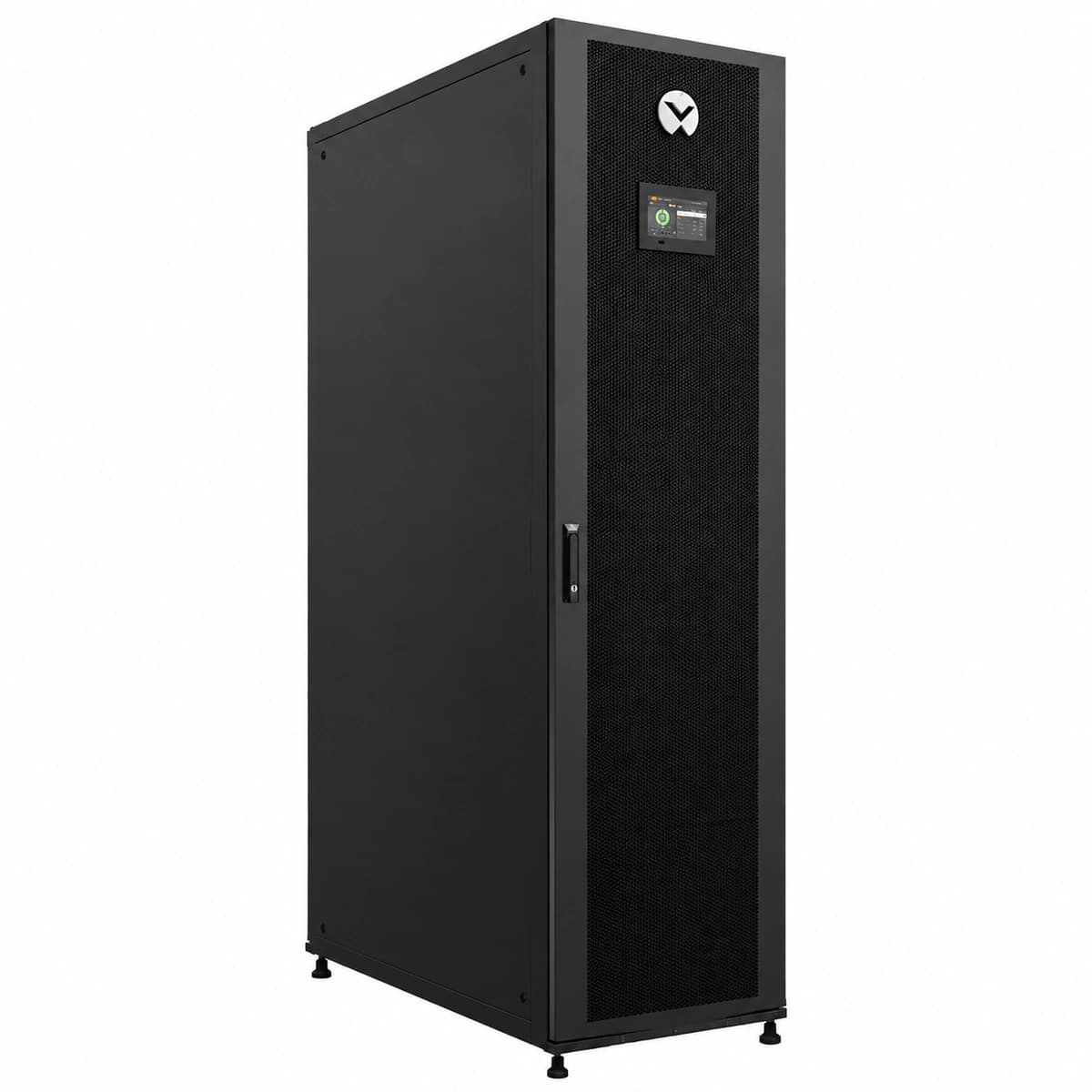
The Vertiv Liebert CRV4 is a row-based precision cooling solution designed for high-density data center environments, utilizing 380V 3-phase AC input, a DC inverter brushless scroll compressor, and premium EC centrifugal fans to deliver horizontal airflow directly neutralizing cabinet hot spots with an SHF exceeding 0.95.

Equipment information

Brand
Vertiv
Equipment model
Liebert CRV4 Precision AC
Equipment type
Precision air conditioning
Controller / software version
Confirm against the installed equipment
View full product specifications
Vertiv Liebert CRV4 In-Row Precision Air Conditioner 25kW-45kW Variable Capacity Cooling (VTV-AC-CRV4-ROW) Official Studio Photo 3

Information below comes from the current product catalogue. Confirm the controller, software version and configuration of the installed equipment separately.

Rated Cooling Capacity
25kW ~ 45kW In-Row Precision Cooling Capacity
Sensible Heat Ratio (SHF)
≥ 0.95 (Ultra-High SHF Designed for High-Density Racks)
Airflow Delivery & Fan Type
Horizontal In-Row Airflow (Eliminates Server Hotspots)
Grid Power Supply System
380V AC 50Hz (Three-Phase Five-Wire)
Supply Fan Type
EC High-Efficiency Backward-Curved Centrifugal Fan
Refrigerant Type
R410A Eco-Friendly Green Refrigerant

Alarms & troubleshooting

HP_ALARM (High Discharge Pressure)
Red Alarm LED solid, audible buzzer active
Outdoor condenser fan failure, clogged condenser coil fins, excessive refrigerant charge, or faulty high-pressure switch tripping the safety threshold (>2.8 MPa).
1. Inspect outdoor condenser circuit breaker and fan speed control board status. 2. Clean dust and debris accumulation from condenser coil fins. 3. Connect manifold gauges to verify actual discharge pressure against sensor readings; reclaim refrigerant if overcharged. 4. Once pressure drops below reset threshold, depress manual HP reset button and clear the alarm on Liebert controller.
LP_ALARM (Low Suction Pressure)
Amber Alarm LED solid
Refrigerant leakage, electronic expansion valve (EEV) stuck closed, clogged liquid line filter drier, or severe air filter blockage causing evaporating pressure below setpoint.
1. Inspect indoor return air filters; clean or replace if clogged. 2. Check EEV opening steps on the Liebert display; test EEV coil resistance and temperature differential across the valve. 3. Measure temperature differential across the liquid line filter drier; replace drier if delta-T exceeds 1.5°C. 4. Perform nitrogen leak detection on piping and fittings, repair identified leaks, evacuate to 500 microns, and recharge refrigerant.
INV_COMP_FAULT (Inverter Compressor Drive Fault)
Red Alarm LED blinking (1Hz)
Inverter drive module (VFD) detects overcurrent, DC bus over/undervoltage, IGBT module failure, or compressor motor winding phase-to-phase/ground fault.
1. Disconnect upstream power and wait 10 minutes for the inverter DC bus capacitors to discharge safely. 2. Measure compressor motor winding resistance (balance deviation <2%) and insulation to ground (>5 MΩ with megohmmeter). 3. Check input 3-phase AC line balance and verify tight connections on inverter terminals. 4. If the compressor motor tests normal but the drive continuously reports hardware/IGBT failure, replace the inverter drive assembly.
FAN_FAIL (EC Supply Fan Failure)
Amber Alarm LED blinking (2Hz)
Indoor EC fan impeller mechanically locked, internal EC motor driver failure, broken 0-10V/PWM control signal line, or Modbus communication feedback timeout.
1. De-energize the unit and manually spin the EC fan impeller to check for mechanical binding or foreign objects. 2. Inspect the individual fan miniature circuit breaker (MCB) in the electrical panel for trips. 3. Measure the 0-10V speed control signal voltage and supply power across the motor terminal strip using a multimeter. 4. Verify RS485 communication line continuity; if power and control signals are verified but motor fails to run, replace the EC fan assembly.
COND_HIGH_WATER (Condensate High Water Alarm)
Red Alarm LED solid
Condensate removal pump failure, drain line kink/clog, stuck check valve, or seized high-level dual float switch contacts.
1. Inspect the condensate collector pan and pump reservoir; clear scale, slime, or foreign debris. 2. Ensure the drain discharge tubing is not kinked; blow through with low-pressure nitrogen to clear obstructions. 3. Check power delivery and start capacitor on the condensate pump; verify the non-return check valve is not stuck. 4. Manually exercise the dual float switch while testing continuity with a multimeter; replace the float sensor or pump assembly if defective.

Access Complete Maintenance & Full Alarm Troubleshooting Manual

This page lists high-frequency critical alarm codes commonly encountered in field maintenance. Comprehensive manufacturer troubleshooting matrices, board-level repair guides, detailed electrical schematics, and firmware commissioning manuals are delivered alongside equipment upon formal project procurement, accompanied by dedicated FAE technical support.

Share on-site information

  1. 01

    Identify the exact model

    Record the nameplate, system model and controller or module model.

  2. 02

    Keep the alarm details

    Record the full alarm text, indicator colour, timing and whether it persists.

  3. 03

    Describe recent changes

    Note recent replacements, software updates or configuration changes.

Record information visible in the existing interface. Electrical measurements, disassembly and replacement should follow the applicable manufacturer's manual and be performed by qualified personnel.

Your model and these details will be added to the enquiry form for you to review before sending.

Related technical articles

Browse the technical guides or send a question about this model.

View all articles

Need a replacement module or supporting equipment?

Confirm the full model, system configuration and compatibility requirements before enquiring about suitable products.

Ask about suitable products

Have a model and an on-site issue?

Share the exact model, alarm text and observed symptoms to help identify relevant information and compatibility requirements.

Request technical support