
Avocent HMX3080R Equipment information & support
The Vertiv Avocent HMX3080R is a high-performance IP matrix KVM receiver delivering pixel-perfect DVI-D video, CD-quality audio, RS-232, and transparent USB 2.0 extension over Gigabit IP networks, featuring dual RJ45 and dual SFP interfaces for mission-critical command centers.
Equipment information
- Brand
- Vertiv
- Equipment model
- Avocent HMX3080R
- Equipment type
- KVM systems
- Controller / software version
- Confirm against the installed equipment
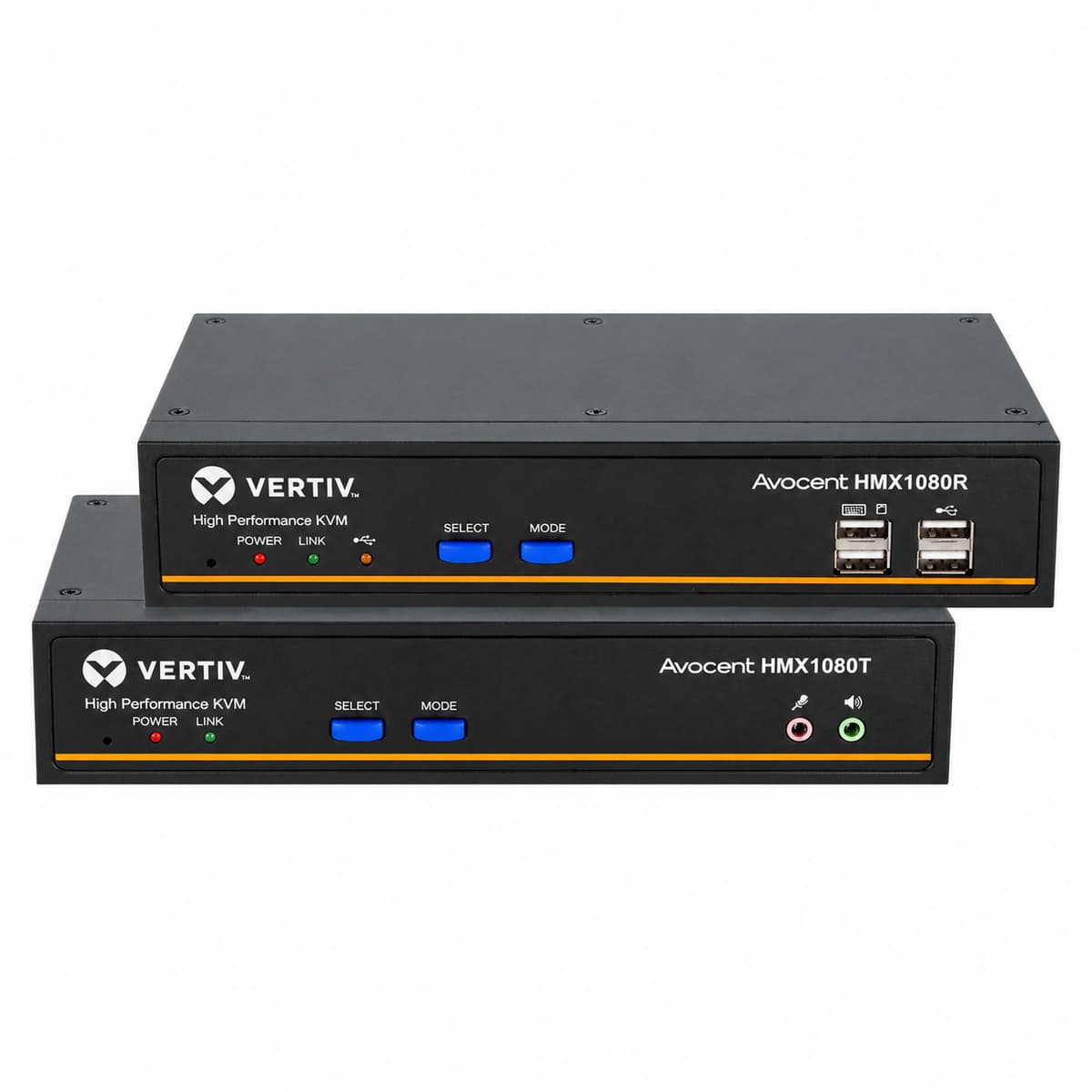
Information below comes from the current product catalogue. Confirm the controller, software version and configuration of the installed equipment separately.
- Video Output Interface
- 1x DVI-D Digital Output (Screw-Lock)
- Max Display Resolution
- 1920x1200 @ 60Hz (Pixel-Perfect)
- Network Interconnect Ports
- Dual GbE RJ45 + Dual SFP Cages (Failover)
- Console USB Ports
- 4x USB-A
- Audio & Serial Interfaces
- 3.5mm Audio I/O + DB9 RS232 + IR-IN
- Power Supply Specification
- DC 5V with Threaded Locking Connector
Alarms & troubleshooting
Access Complete Maintenance & Full Alarm Troubleshooting Manual
This page lists high-frequency critical alarm codes commonly encountered in field maintenance. Comprehensive manufacturer troubleshooting matrices, board-level repair guides, detailed electrical schematics, and firmware commissioning manuals are delivered alongside equipment upon formal project procurement, accompanied by dedicated FAE technical support.
Share on-site information
- 01
Identify the exact model
Record the nameplate, system model and controller or module model.
- 02
Keep the alarm details
Record the full alarm text, indicator colour, timing and whether it persists.
- 03
Describe recent changes
Note recent replacements, software updates or configuration changes.
Record information visible in the existing interface. Electrical measurements, disassembly and replacement should follow the applicable manufacturer's manual and be performed by qualified personnel.
Related technical articles
Browse the technical guides or send a question about this model.
View all articlesNeed a replacement module or supporting equipment?
Confirm the full model, system configuration and compatibility requirements before enquiring about suitable products.
Have a model and an on-site issue?
Share the exact model, alarm text and observed symptoms to help identify relevant information and compatibility requirements.